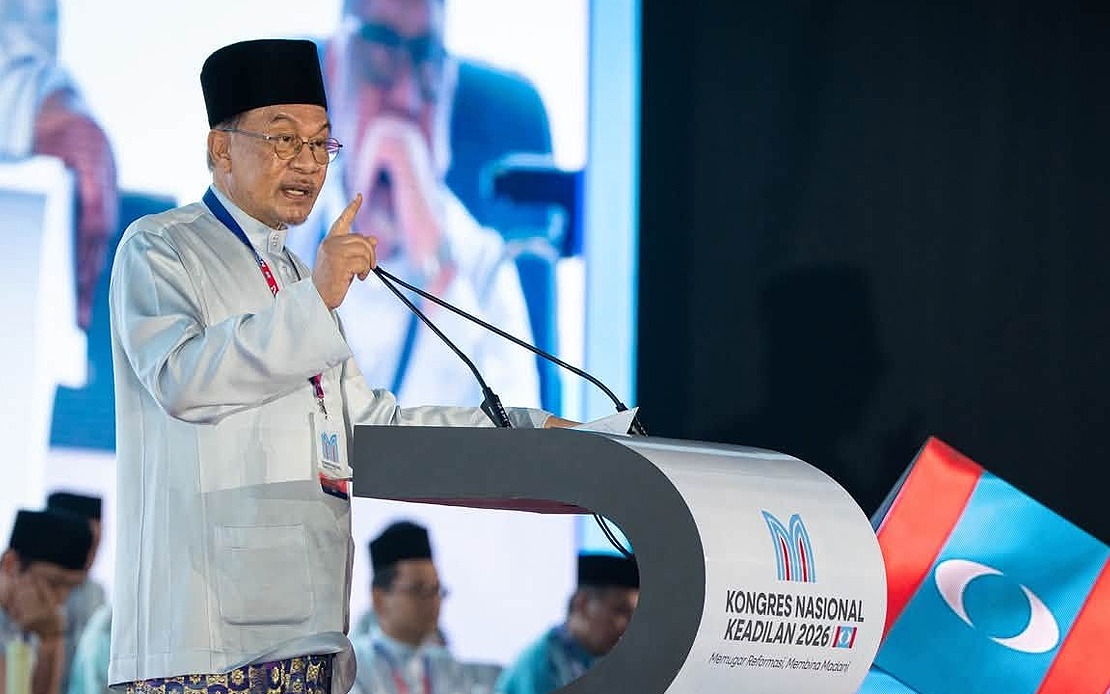
Malaysia's reform agenda risks losing public support unless the MADANI Government can translate its policy achievements into measurable improvements that ordinary citizens experience in their daily lives, warned Prime Minister's Senior Political Advisor Tengku Datuk Seri Zafrul Tengku Abdul Aziz this week. Speaking during the 2026 PKR National Congress in Melaka, Tengku Zafrul articulated a concern that resonates across the political establishment: impressive statistics and government initiatives mean little to voters unless they perceive direct personal benefit from them.
Tengku Zafrul's remarks reflect a critical tension within Malaysia's political landscape. While the MADANI administration has promoted numerous programmes and achieved measurable economic results—most notably gross domestic product growth of six percent, which exceeded forecasts—these headline figures have not necessarily translated into widespread public enthusiasm or confidence. The gap between government announcements and citizen perception represents a significant vulnerability for the coalition, particularly as it approaches future electoral contests. His candid acknowledgement that improved messaging is essential suggests internal recognition that policy success alone is insufficient for political sustainability.
The Prime Minister's advisor emphasized that economic expansion must generate spillover benefits across multiple socioeconomic layers. Malaysia's six percent GDP growth is objectively strong by regional standards, yet household incomes, cost of living pressures, and employment quality remain contentious issues for many Malaysians. Tengku Zafrul's framing of this challenge highlights a sophisticated understanding that macroeconomic metrics and microeconomic realities experienced by ordinary families are distinct matters. Policymakers can point to growth figures while citizens struggle with inflation, affordability, and wage stagnation—a disconnect that undermines political credibility regardless of technical accomplishments.
The congress, held at Melaka International Trade Centre under the theme "Reviving Reform, Building MADANI", served as a platform for the coalition to reassess its communication strategy and policy delivery mechanisms. Tengku Zafrul noted that the PKR President Datuk Seri Anwar Ibrahim's policy speech and subsequent debate sessions maintained alignment with the government's core reform messaging, suggesting internal party discipline around key initiatives. However, this internal coherence appears less important than the external challenge of making ordinary Malaysians aware of what the government has actually accomplished. The recognition that communication gaps exist—and that responsibility for this failure rests with government, not citizens—reveals a self-critical approach that may ultimately strengthen the MADANI administration's ability to reconnect with voters.
Among the substantive policy areas highlighted during the congress were the proposed abolition of the Universities and University Colleges Act (AUKU), long a contentious measure among student activism and civil liberties advocates. The government's efforts to rehabilitate the Federal Land Development Authority (FELDA), a chronically troubled institution central to rural Malay-Muslim livelihoods, also featured prominently. Additionally, several economic initiatives slated for inclusion in upcoming budget proposals demonstrated the administration's intent to address structural economic challenges. These initiatives, taken collectively, suggest MADANI recognizes that genuine institutional reform—not merely rhetorical commitment to change—is necessary to rebuild public trust.
Yet the transformation of institutional reforms into citizen welfare improvements remains arduous. The AUKU abolition, for instance, will primarily benefit future university students and academic staff; current working-age Malaysians may see little immediate personal impact. FELDA rehabilitation, while important for the 112,000 settlers and their families directly dependent on the authority, affects only a fraction of Malaysia's thirty million population. Economic initiatives announced in budgets take months or years to implement and produce tangible employment or income effects. This temporal disconnect between policy announcement and citizen experience creates a window where skepticism and cynicism can flourish, particularly in an era of intense social media scrutiny and partisan political messaging.
Tengku Zafrul's assertion that communication work must be intensified carries particular weight given Malaysia's fractured media landscape. Unlike previous decades when government messaging flowed primarily through mainstream television and press outlets, contemporary Malaysians receive political information through algorithmically-curated social media feeds, WhatsApp networks, and alternative online publishers. Traditional government communication strategies often fail to penetrate these fragmented channels effectively. The MADANI administration faces the challenge of ensuring its narrative about economic growth, institutional reform, and targeted social initiatives reaches citizens through the specific platforms and networks they actually inhabit. Without sophisticated digital communication strategies, even genuinely beneficial policies risk remaining invisible to substantial voter segments.
The broader political context surrounding this reassessment involves PKR's position within the broader MADANI coalition and its ambitions for sustained electoral dominance. PKR emerged from Malaysia's reformist movements and continues to position itself as the agent of systemic change, yet governance inevitably involves compromise, incrementalism, and the sobering reality that transforming institutions is more difficult than critiquing them. Tengku Zafrul's emphasis on translating "struggle and efforts" into "tangible results" reflects the party's need to prove that it can deliver on its reform mandate while managing coalition dynamics, civil service capacity, and fiscal constraints. This represents the perpetual challenge facing progressive parties in developing democracies: maintaining the ideological energy that attracted supporters while acknowledging the limitations of executive power.
Tengku Zafrul concluded by emphasizing that PKR's strength depends fundamentally on institutional readiness—improving party machinery, listening capabilities, and working mechanisms to ensure reform initiatives produce observable citizen benefits. This emphasis on internal party capacity rather than external political opponents suggests that MADANI strategists believe the primary challenge lies not in defeating opposition rhetoric but in proving the government can actually implement its agenda effectively. The confidence expressed that improved internal functioning, combined with party solidarity, will enable the coalition to win renewed voter trust carries an implicit recognition that the current moment represents a critical juncture. Public patience with promises of future benefit has limits, and the MADANI administration must demonstrate that its reform narrative translates into lived improvement for Malaysians across income levels and geographic regions before skepticism crystallizes into electoral rejection. For Malaysian voters and Southeast Asian observers monitoring Malaysia's political trajectory, the crucial test ahead lies not in policy design but in execution and perception—whether the government's initiatives ultimately penetrate the economic and social experience of citizens or remain technocratic achievements divorced from popular consciousness.

