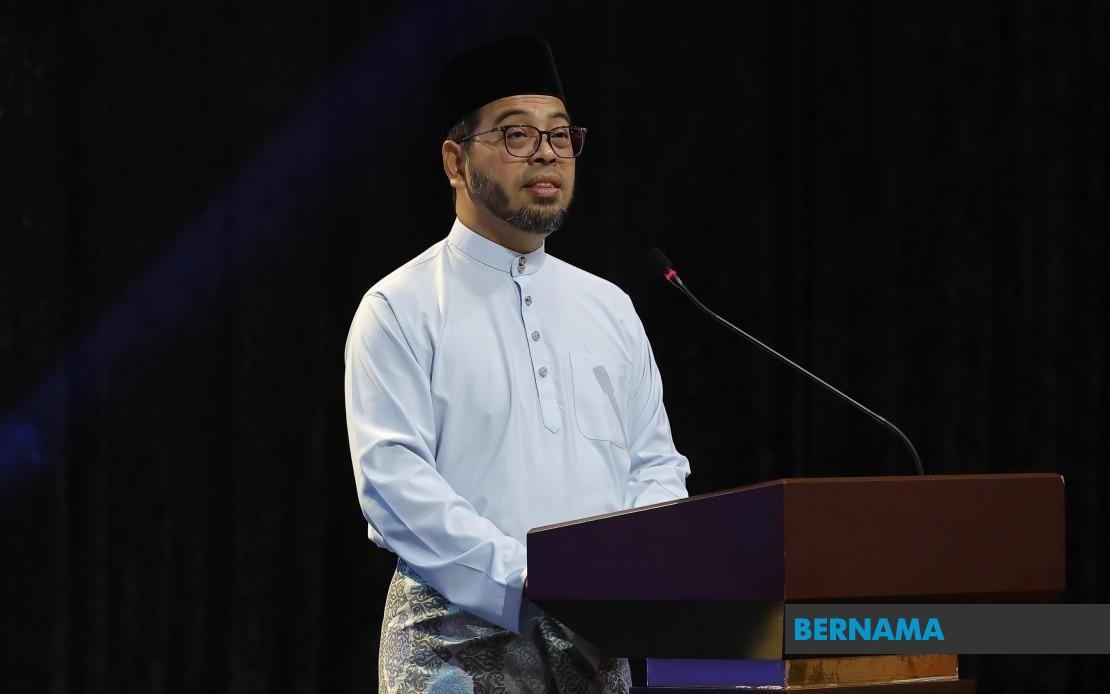
The MADANI Government is doubling down on its pledge to elevate tahfiz education as a vital educational pathway that strengthens rather than competes with the mainstream schooling system. Minister in the Prime Minister's Department (Religious Affairs) Dr Zulkifli Hasan articulated this vision during remarks at the 34th Darul Quran (DQ) JAKIM convocation ceremony in Kuala Lumpur, framing Islamic religious education as fundamental to Malaysia's broader educational and developmental agenda.
The minister's remarks come as the institution marked a significant milestone—60 years since its establishment in 1966. This Diamond Jubilee serves as more than ceremonial recognition; it represents six decades of institutional continuity in producing qualified Quranic scholars and memorisers who have dispersed throughout Malaysian society. The longevity of Darul Quran underscores the sustained importance that successive governments have placed on religious education infrastructure.
Central to Dr Zulkifli's message is a reconceptualisation of what tahfiz education accomplishes. Rather than limiting its purpose to producing individuals capable of memorising the Quran, he positioned these institutions as character-building establishments that cultivate intellectually rounded graduates equipped with both religious knowledge and practical skills applicable to the modern economy. This framing addresses longstanding concerns in educational policy circles about the relevance and integration of religious education within national development frameworks.
The statistics presented illustrate the scale of Darul Quran's influence across Malaysian institutions and sectors. Over its 60-year history, the institution has graduated 12,633 individuals identified as huffaz—those who have memorised the Quran in full. These graduates have subsequently entered diverse professional fields including formal education, Islamic jurisprudence, religious outreach work, research, administration, and technical professions. This distribution across multiple sectors suggests successful integration of tahfiz graduates into the broader Malaysian workforce rather than isolation within purely religious domains.
The 34th convocation processed 700 new graduates through varying credential levels, reflecting the institution's tiered educational structure. The cohort included 37 individuals completing Bachelor's degree programmes developed through partnership with Universiti Sains Islam Malaysia (USIM), demonstrating explicit linkage between tertiary religious education and conventional university credentials. A substantially larger group of 454 received Diploma qualifications in Quran and Qiraat studies, while 204 completed specialised tahfiz certification programmes and five earned basic certificates. This diversified graduation model enables entry into the tahfiz pathway at multiple academic levels and exit points.
The government's emphasis on parallel development rather than hierarchical positioning reflects broader Southeast Asian trends in religious education policy. Malaysia, alongside Indonesia and Brunei, has historically maintained government-funded institutions dedicated to Islamic scholarship while maintaining secular public school systems. The MADANI administration's messaging suggests an intention to position tahfiz education as complementary infrastructure rather than alternative provision, a subtle but significant distinction with implications for resource allocation, curriculum coordination, and graduate pathway recognition.
Dr Zulkifli's invocation of the institution as a source of "knowledge inheritors" and "community leaders" grounds tahfiz education within historical Islamic educational traditions while connecting those traditions to contemporary governance needs. The language implies that these institutions serve functions beyond individual spiritual development—they produce leaders capable of guiding communities through religious and moral questions in an increasingly complex society. For Malaysian policymakers, this represents a strategic investment in religious institutional capacity.
The government's public commitment to strengthening tahfiz institutions carries implications for regional religious education debates. As Southeast Asia navigates questions about the relationship between religious learning and national integration, Malaysia's approach offers one model for institutional coordination. The explicit partnership between Darul Quran and USIM illustrates how government can create pathways permitting tahfiz graduates to attain universally recognised qualifications, potentially addressing concerns about graduate employability and social mobility.
Looking forward, Dr Zulkifli's call to "build the next 60 years with greater excellence" signals anticipated expansion and development within the tahfiz education sector. Whether this translates into additional funding, curriculum modernisation, facilities enhancement, or expanded institutional partnerships remains to be determined through subsequent policy announcements. However, the public ceremonial commitment at a major convocation suggests these developments warrant close monitoring by educational analysts and policymakers tracking Malaysia's religious education evolution.
The institutional trajectory of Darul Quran reflects broader patterns in Malaysian governance regarding religious education. Having survived and expanded through multiple political administrations across six decades, the institution has demonstrated resilience and political support across ideological divides. The MADANI Government's reinforcement of this commitment indicates continuity in viewing tahfiz education as integral to Malaysia's national educational architecture rather than peripheral provision.

