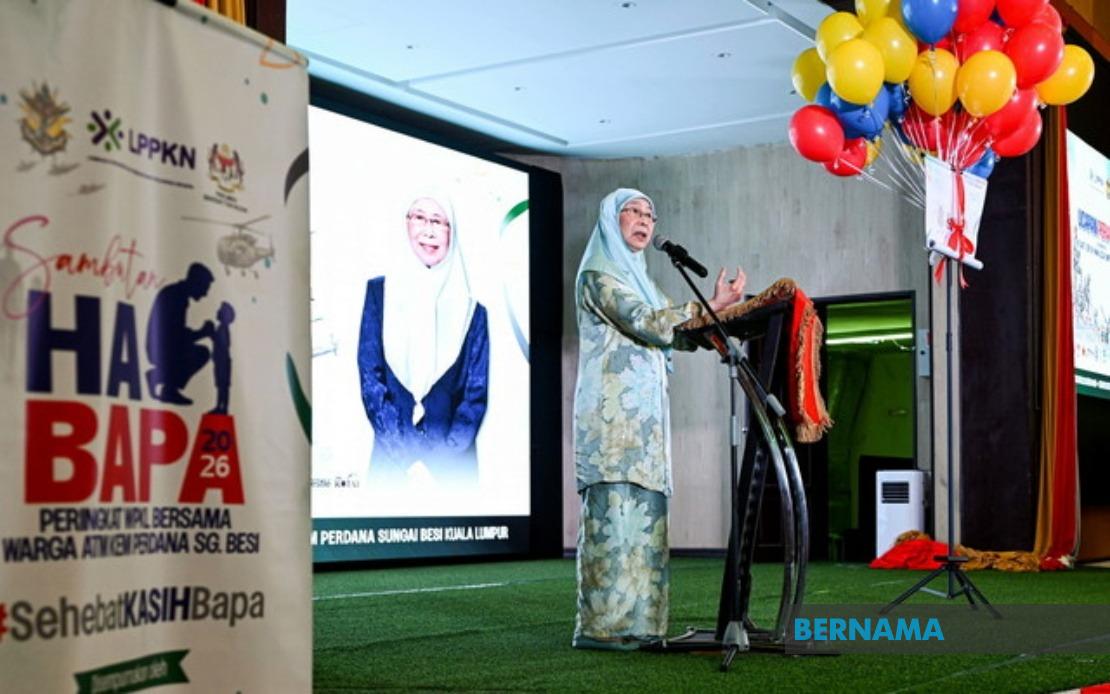
The Prime Minister's wife, Datuk Seri Dr Wan Azizah Wan Ismail, has underscored the imperative to continue strengthening the position of fathers within the Malaysian Armed Forces, recognizing both their dual roles as military personnel and family providers. Speaking at the 2026 Federal Territory of Kuala Lumpur Father's Day Celebration, she stressed that servicemen who shoulder the nation's defence obligations deserve comprehensive backing that extends beyond their professional responsibilities to encompass their domestic commitments.
Dr Wan Azizah, who represents Bandar Tun Razak in Parliament, articulated that fatherhood among military personnel warrants particular attention given the unique pressures they face. The nature of military service frequently demands extended periods away from home, requiring families to adapt to prolonged separations whilst maintaining stability and cohesion. She argued that without deliberate policy interventions and institutional support, these servicemen would struggle to balance their patriotic duties with their fundamental responsibilities as breadwinners and nurturers within their households.
Central to her argument was the role of the National Family Compassion Policy (DKKN) in providing tangible assistance to military fathers. This framework aims to bridge the gap between professional obligations and family needs, offering practical mechanisms through which servicemen can maintain meaningful connections with their children and spouses despite operational demands. The policy recognizes that sustainable defence readiness depends not merely on military preparedness but on the psychological and social wellbeing of personnel, which is inextricably linked to family stability.
Dr Wan Azizah further emphasized that empowering fathers transcends individual benefit and carries broader societal implications. She positioned paternal involvement and support as foundational to institutional family strength, contending that when fathers are equipped to fulfill their roles effectively, the entire family structure becomes more resilient. This perspective aligns with contemporary research suggesting that active, supported fatherhood correlates with improved outcomes in child development, family cohesion, and community stability.
The celebration, orchestrated jointly by the National Population and Family Development Board (LPPKN) of the Federal Territory of Kuala Lumpur and the Malaysian Armed Forces, attracted approximately 500 participants including servicemen, their spouses, children, and government representatives. The event's thematic focus, 'Sehebat KASIH Bapa' (As Great as a Father's Love), underscored the emotional and relational dimensions of military fatherhood, moving beyond conventional recognition ceremonies to acknowledge the profound sacrifices inherent in this dual identity.
Recognizing that rhetoric alone proves insufficient, LPPKN has operationalized its commitment through concrete initiatives designed to bolster paternal capacity. The Fatherhood Module represents a structured educational intervention targeting parenting competencies and domestic leadership skills, acknowledging that modern fatherhood requires cultivated abilities rather than assumed natural aptitudes. By providing training in communication, emotional intelligence, and child-rearing approaches, the initiative seeks to transform paternal roles from passive provision into active engagement.
Complementing this educational dimension is the Men Empowerment Network (MEN), a platform facilitating peer support and knowledge exchange among male family leaders. This network recognizes that fathers often benefit from horizontal solidarity with others navigating similar challenges, creating safe spaces where military fathers can share experiences, discuss coping strategies, and collectively address the distinctive pressures of service life. Such networks have proven particularly valuable in combating isolation and building resilience among male servicemembers.
For Malaysia's defence establishment, this emphasis on paternal support carries strategic implications. Military effectiveness depends substantially on personnel retention, morale, and psychological stability. When servicemen experience stress arising from family separation and domestic pressure, operational effectiveness inevitably suffers. Conversely, robust family support systems generate higher retention rates, improved mental health outcomes, and strengthened institutional loyalty. Countries recognizing this nexus between family wellbeing and military readiness have witnessed tangible improvements in force cohesion and performance.
The timing of these initiatives reflects evolving global perspectives on military personnel management. Modern armed forces increasingly recognize that viewing soldiers merely as combat units ignores the human dimensions essential to sustainable force development. Malaysia's approach, emphasizing fatherhood and family integration within the defence narrative, positions the nation alongside international best practices whilst addressing specific cultural and social contexts relevant to Malaysian servicemen.
Dr Wan Azizah's articulation of paternal empowerment as a national priority signals governmental commitment to holistic servicemen welfare. This approach extends recognition beyond individual decorations to encompass systematic support mechanisms that acknowledge the complexity of military life. For Malaysian fathers in uniform, this represents official validation that their roles as parents carry equivalent weight to their patriotic service, creating frameworks whereby both dimensions can flourish rather than exist in perpetual tension.
As Malaysia continues modernizing its defence capabilities and adapting to contemporary security challenges, the foundation of human capital remains paramount. Initiatives strengthening military fathers ultimately strengthen the nation's defence posture, demonstrating that national security and family welfare are not competing priorities but mutually reinforcing objectives. The sustained empowerment Dr Wan Azizah advocates represents investment not merely in individual wellbeing but in the institutional health and operational resilience of the Malaysian Armed Forces.

