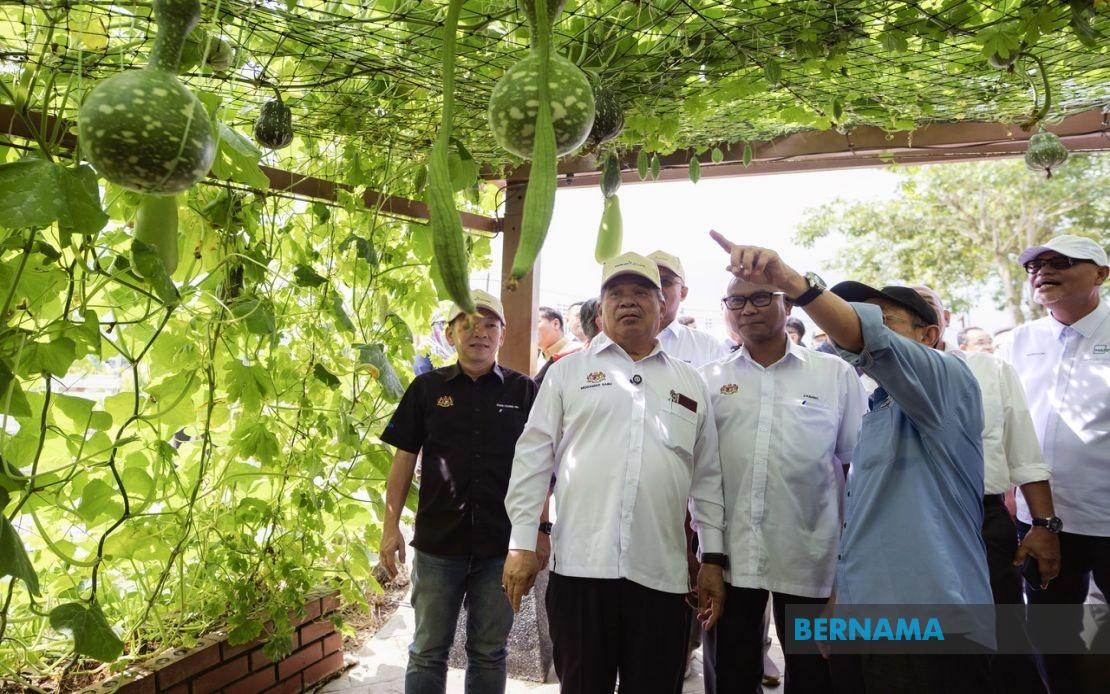
The Malaysia Agriculture, Horticulture and Agrotourism Exhibition (MAHA) 2026 will open its doors on August 28 with final preparations expected to be completed just one day prior, according to Agriculture and Food Security Minister Datuk Seri Mohamad Sabu. Speaking at the Malaysia Agro Exposition Park Serdang (MAEPS) on August 19, Mohamad confirmed that construction and infrastructure work have progressed substantially, with roughly 80 per cent of overall preparations finished. The remaining work focuses primarily on installation of displays and finishing touches across exhibition zones, positioning the venue for a polished debut when the public arrives.
The minister's confidence in meeting the August 27 completion target reflects months of coordinated effort across multiple agencies. Major structural work at the sprawling MAEPS site has concluded, leaving teams free to focus on the aesthetic and logistical elements that define the visitor experience. This phased approach—completing heavy construction before moving to detailed finishing work—is typical of large-scale exhibitions in Malaysia, allowing organisers flexibility if minor issues arise during the final week. Mohamad's inspection visit with media representatives underscored the administration's commitment to transparency, inviting public and press scrutiny of readiness claims.
Running from August 28 to September 6, MAHA 2026 carries the thematic focus 'Penciptaan Nilai Demi Keterjaminan Makanan' (Creating Value for Food Security), reflecting Malaysia's strategic pivot toward agricultural modernisation and self-sufficiency. Minister Mohamad will inaugurate the exhibition, while Prime Minister Datuk Seri Anwar Ibrahim will preside over the closing ceremony. This dual leadership involvement signals the government's classification of MAHA as a marquee national event, positioning it beyond a mere agricultural showcase to a platform for advancing Malaysia's food security agenda amid regional and global economic uncertainties.
A central pillar of MAHA 2026 is demonstrating the transformation of Malaysian farming through technology and innovation. The exhibition will highlight advanced agricultural machinery, autonomous vehicles, and drone applications across commodity sectors including rice, pineapple, and melon cultivation. Mohamad pointed to countries such as China and the Netherlands as benchmarks, where mechanisation and precision agriculture have become standard. For Malaysian farmers and agribusiness operators, exposure to such technologies at MAHA provides tangible examples of how digitalisation and automation can enhance productivity and reduce labour constraints—challenges that have plagued domestic agriculture for years.
Beyond machinery, the minister emphasised the exhibition's focus on value-chain development within agri-food industries. Rather than treating farming as solely primary production, MAHA 2026 will showcase how raw commodities can transition into higher-margin processed goods. Products like milk, pineapple, and cassava illustrate this potential; each can generate dozens of derivative products for domestic and export markets. By highlighting downstream processing opportunities, the exhibition aims to inspire smallholder farmers and emerging entrepreneurs to move beyond commodity production into value-added manufacturing—a strategic shift that could significantly boost rural incomes and reduce agricultural sector vulnerability to commodity price fluctuations.
Perkampungan Abang Mat, a dedicated cultural zone within the exhibition grounds, will operate throughout the 10-day period, featuring traditional communal cooking sessions, heritage food preparation methods, and authentic regional cuisine. Visitors will experience rewang—the Malay tradition of collective cooking—alongside demonstrations of time-honoured culinary techniques. Daily programming ensures that each visit offers fresh cultural content, preventing repetition and encouraging repeat attendance. This integration of heritage and modernity reflects Malaysia's broader narrative: advancing agriculture technologically while preserving cultural and social dimensions of farming communities.
Family-oriented recreational activities will complement the agricultural and cultural offerings. Traditional games such as congkak will provide entertainment particularly suited to elderly visitors, aligning with MAHA's aim to welcome diverse demographic groups. Daily lucky draws with prizes including 20 motorcycles distributed across the 10 days, plus electrical appliances as secondary prizes, add incentive for attendance. These gamification elements reflect modern exhibition design principles, transforming what might be perceived as a technical agricultural display into an accessible, engaging community event.
Projected attendance exceeds four million visitors, a figure reflecting both domestic interest in agriculture and MAHA's reputation as a major national gathering. The event will host approximately 2,000 exhibitors from Malaysia and fourteen foreign countries, with Kenya establishing a pavilion for the first time. This international dimension underscores MAHA's role in facilitating agricultural technology transfer and trade partnerships. Foreign exhibitors gain direct access to Malaysian stakeholders, while domestic participants can evaluate international practices and establish export relationships—dynamics that benefit Malaysia's agricultural modernisation efforts and regional positioning in agri-trade.
Youth engagement constitutes a strategic focus, with MAHA 2026 anticipated to attract around 800,000 young visitors through programmes centred on automation, technology, and modernisation. The ministry is coordinating with the Education Ministry to integrate MAHA activities into school co-curricular programmes, potentially exposing students to agricultural careers at a formative stage. This educational dimension addresses a demographic challenge in Malaysian agriculture: younger Malaysians have traditionally avoided farming as a career, deterred by perceptions of low income and outdated practices. By showcasing technological careers within the sector, MAHA can influence school-age perceptions and gradually reshape the agricultural workforce.
The breadth and ambition of MAHA 2026 reflect Malaysia's recognition that agricultural productivity is integral to national food security and economic resilience. As Southeast Asian nations compete for agricultural market share and contend with climate pressures, exhibitions like MAHA serve multiple functions simultaneously: they disseminate innovation, facilitate networking, preserve cultural heritage, and inspire the next generation of farmers and agribusiness leaders. For Malaysian stakeholders—from smallholder rice farmers to agrotourism entrepreneurs—MAHA 2026 represents a rare, comprehensive platform to assess industry direction and participate in the sector's modernisation narrative.

