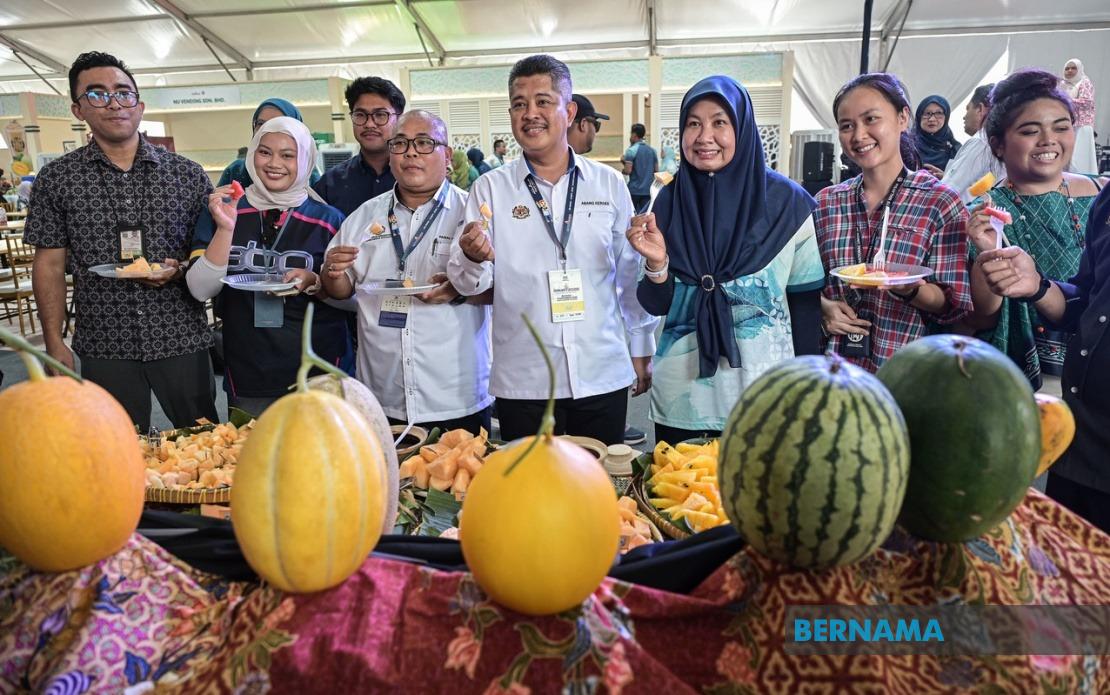
Malaysia's horticultural sector is poised to gain a significant addition to its product portfolio with the official unveiling of a new melon variety at tomorrow's opening of the Malaysia Agriculture, Horticulture and Agrotourism Exhibition (MAHA) 2026. The fruit, designated as the official symbol of this year's festival, represents the culmination of an intensive three-year research collaboration between the Federal Agricultural Marketing Authority (FAMA) and local farming entrepreneurs, marking a notable milestone in domestic agricultural innovation.
The introduction carries particular strategic importance for MAHA 2026, which runs through next Sunday at the Malaysia Agricultural Expo Park in Serdang. FAMA chairman Abang Ahmad Kerdee Abang Masagus explained that the symbolic fruit serves as an essential visual and thematic anchor for the biennial showcase. Without such an icon, the exhibition would lack a cohesive identity and focal point around which to organise programming and promotional messaging. The melon's formal naming and launch will be conducted by Minister of Agriculture and Food Security Datuk Seri Mohamad Sabu during tomorrow evening's ceremonies, underscoring the government's commitment to advancing domestic agricultural research and commercialisation.
The newly developed variety possesses several distinctive characteristics tailored specifically for Malaysian market preferences and consumption patterns. Most notably, the melon achieves a Brix concentration level of 18, a measure of sugar content that directly influences perceived sweetness, while simultaneously delivering a noticeably crunchier flesh texture than competing varieties currently available to local shoppers. These organoleptic qualities have been carefully engineered through systematic R&D to align with domestic consumer expectations and preferences established through market research conducted during the development phase.
Designed as a mini-sized option, the melon weighs approximately 1.3 kilogrammes and features an attractive netting pattern on its exterior. This size positioning represents a deliberate commercial strategy targeting a specific consumer demographic increasingly prevalent in Malaysian urban markets: households seeking ready-to-consume portions requiring no further subdivision or storage complications. Priced at approximately RM15 per unit, the variety sits at a premium market segment while remaining accessible to middle-income purchasers willing to pay for quality and convenience.
The market positioning reflects deeper consumer behavioural trends that FAMA and its private-sector partners identified during their three-year research period. According to FAMA director-general Faisal Sulaiman, contemporary Malaysian consumers demonstrate a clear preference for smaller household serving portions that reduce waste and align with modern living arrangements, including single-occupant households and smaller family units. The mini-melon directly addresses this demographic shift, offering practical advantages including portability, reduced storage requirements, and maintenance of optimal freshness and flavour throughout the consumption period. Such characteristics prove particularly valuable for consumers navigating time constraints and storage limitations inherent to urban lifestyles.
Beyond the flagship variety, MAHA 2026 is positioning itself as a comprehensive showcase for Malaysia's expansive melon production capability. Throughout the ten-day festival, FAMA will supply more than 150,000 melon units representing nearly 100 domestic and international varieties for exhibition, demonstration, and direct sale to visitors. This volume reflects the agricultural authority's strategy to transform MAHA into not merely a promotional platform but an active commercial venue generating direct revenue streams for participating farmers and entrepreneurs. The festival thus functions simultaneously as a consumer-facing retail outlet and a business-to-business networking environment.
The broader significance of this initiative extends well beyond fruit marketing into the structural economics of Malaysia's agri-food sector. By facilitating systematic, focused commercialisation pathways for innovative domestic produce varieties, FAMA and allied stakeholders aim to strengthen the entire value chain from farm to consumer. This approach generates measurable economic benefits for rural farming communities and agribusiness entrepreneurs through guaranteed sales channels, price premiums associated with novelty and quality certifications, and reputational capital within both domestic and international markets. The melon variety thus functions as a tangible demonstration of how strategic R&D investment and public-private collaboration can translate into concrete farmer income improvements.
MAHA 2026 itself occupies a significant position within Malaysia's agricultural promotion calendar. As the country's primary biennial platform dedicated to showcasing agri-food sector achievements, innovations, and technological advances, the exhibition attracts hundreds of domestic and international entrepreneurs, industry professionals, policymakers, and consumers. The 2026 edition encompasses diverse programming elements including agrotech exhibitions, state-specific pavilions, farm-direct sales operations, and structured networking opportunities. This multifaceted approach ensures that MAHA functions as an integrated ecosystem serving multiple stakeholder interests simultaneously: technology transfer for practitioners, business development opportunities for enterprises, consumer education and product sampling, and policy visibility for government agricultural initiatives.
The mini-melon's development trajectory illustrates broader patterns of agricultural innovation emerging across Southeast Asia. As regional consumers increasingly embrace premium positioning for locally produced specialty crops, opportunities expand for countries willing to invest in systematic R&D and sophisticated market segmentation strategies. Malaysia's capacity to develop a melon variety specifically calibrated to documented domestic preferences—rather than simply importing or adapting foreign cultivars—demonstrates institutional capability and entrepreneurial sophistication that can generate competitive advantages in increasingly sophisticated Asian consumer markets. The three-year timeframe required for product development reflects realistic timelines for genuine horticultural innovation, contrasting with rapid-deployment claims that often characterise lower-quality agricultural initiatives.
The melon's positioning within MAHA's broader framework also reflects evolving exhibition philosophy that extends beyond passive product display toward active engagement with contemporary sustainability and efficiency concerns. The emphasis on portion-controlled sizing, reduced waste generation, and optimal freshness maintenance aligns implicitly with environmental sustainability principles increasingly important to affluent consumer segments across Malaysia and the broader region. By framing the mini-melon within narratives of convenience, quality, and reduced waste, FAMA positions domestic agricultural innovation as responsive to consumer values rather than imposed through top-down policy mechanisms. This alignment between commercial opportunity and perceived environmental responsibility strengthens market positioning while addressing stakeholder concerns about agricultural sustainability.
Looking forward, the melon's commercial trajectory will provide instructive lessons regarding market demand for domestically developed premium fruit varieties in Malaysia. If the variety achieves anticipated sales volumes and consumer satisfaction metrics during MAHA and subsequent retail availability, the model could establish templates for developing additional specialty produce targeting specific consumer demographic segments. Agricultural entrepreneurs across Southeast Asia increasingly recognise that success within affluent regional markets requires not volume production of commodity items but rather development of differentiated products aligned with documented consumer preferences. Malaysia's melon initiative thus represents incremental but meaningful progress toward positioning domestic agriculture as an innovation-driven sector capable of competing effectively within increasingly sophisticated regional and global markets.

