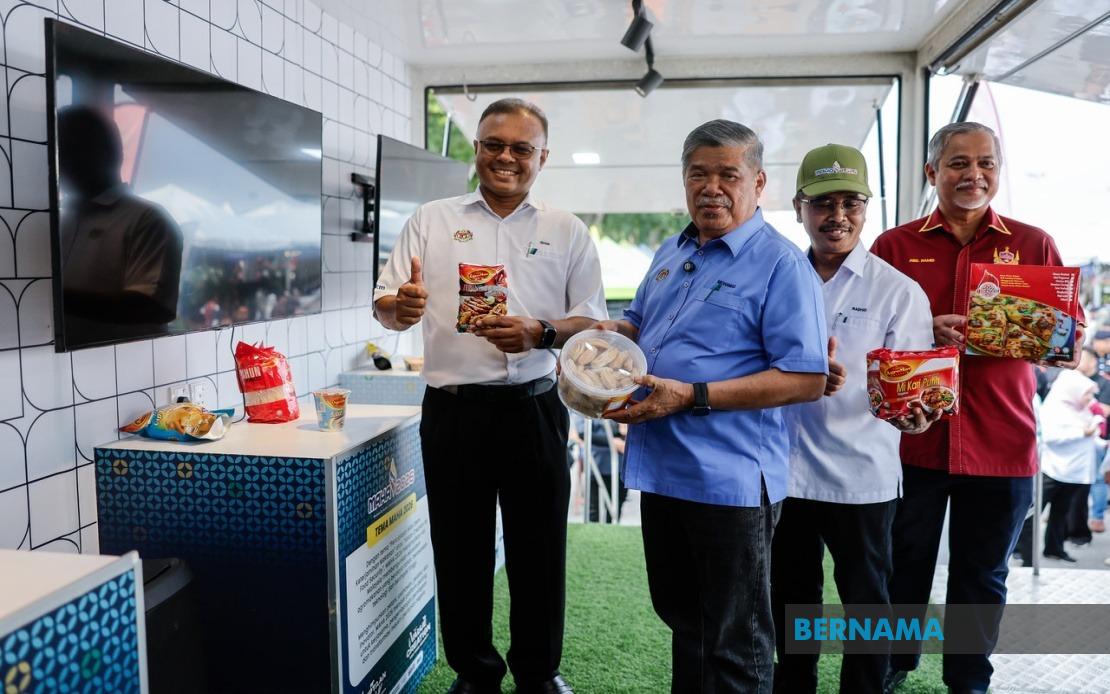
The Malaysia Agriculture, Horticulture and Agrotourism Show (MAHA) 2026 is set to establish itself as a regional gathering point for the agrifood sector, with Agriculture and Food Security Minister Datuk Seri Mohamad Sabu announcing that international exhibitors will participate in the biennial showcase for the first time. This strategic shift represents a significant evolution for the event, which has long served as a domestic platform for Malaysia's agricultural community to display innovations and conduct business with local counterparts.
Countries confirmed to participate in MAHA 2026 include Brazil, China, the United States, Japan, South Korea, Hungary, and China's Guangxi region. Mohamad indicated that Uzbekistan has also signalled its intent to join the exhibition, with several other nations in the pipeline for confirmation. The international participation marks a departure from previous editions and signals the government's confidence in positioning Malaysia as a hub for agricultural knowledge exchange and commerce within the Asian region and beyond.
The rationale behind welcoming foreign exhibitors reflects a broader understanding of global food security dynamics. Mohamad emphasized that no country exists in isolation when managing its food challenges, and that collaborative approaches become essential when crises emerge. By hosting international participants, MAHA provides a platform for Malaysian agricultural stakeholders to tap into global supply chains, understand international best practices, and establish trade connections that can enhance their competitiveness in regional and world markets.
For local exhibitors and visitors, the presence of foreign counterparts promises tangible benefits beyond mere curiosity value. The Agriculture and Food Security Ministry's secretary-general Datuk Isham Ishak outlined that participants will gain exposure to cutting-edge agricultural technologies currently deployed internationally. This access to foreign innovation can help Malaysian farmers and agribusinesses identify productivity-enhancing techniques and modern farming methods that might be adapted to local conditions and contexts.
The exhibition will incorporate dedicated business matching sessions, a format increasingly common at major agricultural fairs across Southeast Asia. These structured networking opportunities will enable local exhibitors to engage directly with international representatives on product sourcing, distribution partnerships, and market entry strategies. Simultaneously, foreign exhibitors will gain insights into Malaysia's agricultural products, competitive advantages, and potential for collaboration with established enterprises operating in Southeast Asian supply networks.
Beyond the trade and technology dimensions, MAHA 2026 positions Malaysia as a serious participant in regional agricultural diplomacy. Countries like Japan and South Korea, both technologically advanced in agriculture, can showcase precision farming techniques and sustainable practices. China's participation, spanning both the national government delegation and the Guangxi region specifically, underscores the economic weight Beijing places on agricultural trade within Asia. Brazil's involvement brings expertise from one of the world's largest agribusiness producers, offering insights into large-scale commercial farming operations.
The timing of this international expansion coincides with another government initiative unveiled at the same event. The Surveillance and Intervention Supply Demand Agrofood system, or SISDA, represents a technological leap in Malaysia's capacity to manage its food ecosystem. Leveraging big data analytics and machine learning, the platform enables policymakers to track supply chains, anticipate price fluctuations, and intervene strategically to stabilize markets. For Malaysian exhibitors at MAHA 2026, this infrastructure signals a government committed to modernizing agricultural governance.
SISDDA's early warning capabilities address a perennial vulnerability in Southeast Asian agriculture: the gap between production and demand that can leave consumers exposed to price shocks. By enabling predictive interventions, the system allows the government to work with the private sector more effectively. International exhibitors will likely pay attention to this technological capacity, as it suggests Malaysia is building a sophisticated agrifood ecosystem capable of managing both domestic food security and integration into regional trade networks.
For Malaysian farmers and agribusinesses, the convergence of international exposure and enhanced government monitoring infrastructure creates a more dynamic operating environment. Small and medium-sized enterprises in the agricultural sector can leverage business matching opportunities to access international markets or source inputs and technologies. At the same time, SISDA provides them with better market information for planning production and pricing strategies, reducing the uncertainty that has historically constrained agricultural development in Malaysia.
The significance of MAHA 2026 extends beyond its immediate economic impacts. The event reflects a strategic recognition that Malaysia's agricultural future depends on integration with global value chains and technology networks. With competition intensifying from other Southeast Asian producers, and challenges from climate variability becoming more pronounced, the country cannot sustain its agricultural sector in isolation. International participation in MAHA creates forums where these conversations can unfold, relationships can form, and partnerships can crystallize.
For regional observers, Malaysia's move to internationalize MAHA signals a willingness to position itself as a credible convening authority within the ASEAN agricultural space. While traditional agricultural exhibitions have long existed across the region, few have systematically attracted participants from multiple continents. As Malaysian agriculture grapples with labour shortages, rising input costs, and changing consumer preferences, the infusion of international perspectives and technology partnerships may catalyze the sector's next phase of development.

