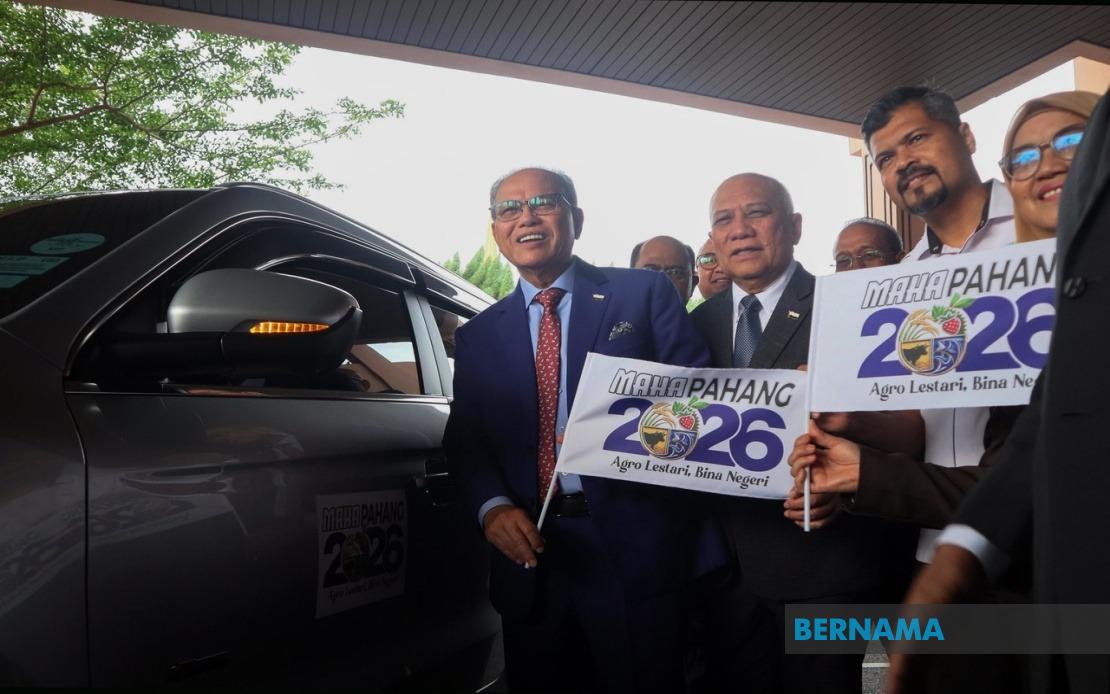
The Pahang state government is banking on its upcoming MAHA 2026 agricultural showcase to become a major economic driver for the region, with Menteri Besar Datuk Seri Wan Rosdy Wan Ismail outlining ambitious targets that reflect confidence in the event's appeal. The four-day gathering, scheduled to take place from July 30 to August 2 at Dataran Raub, is projected to welcome more than 100,000 visitors while generating RM1.3 million in direct sales across participating vendors and entrepreneurs.
The scale of the MAHA Pahang 2026 event underscores the state's commitment to leveraging its agricultural heritage and positioning itself as a vital hub for farming and agribusiness within the East Coast region. With 100 entrepreneurs expected to participate, the initiative represents a significant platform for smallholder farmers, agro-entrepreneurs, and established agricultural businesses to showcase their products and connect with consumers. This concentration of agricultural stakeholders in a single location creates opportunities for networking, knowledge transfer, and the establishment of new commercial relationships that extend well beyond the event itself.
To generate excitement and drive attendance, the Pahang state government has devised an attractive incentive structure centred on a high-value lucky draw. The top prize package includes a Wagyu cow—a valuable asset for anyone interested in premium livestock farming or animal husbandry—alongside a Perodua Bezza vehicle. These substantial rewards signal the state's determination to make MAHA Pahang 2026 a must-attend occasion rather than a routine agricultural fair. The inclusion of additional prizes creates multiple chances for visitors to win, a strategy designed to appeal to both casual attendees and serious agricultural stakeholders.
The formal launch of MAHA Pahang 2026 took place at the Bera District and Land Office, where Wan Rosdy flagged off a ceremonial convoy comprising 20 vehicles from various government departments and agencies. This symbolic gesture underscores the multi-agency coordination required to execute a large-scale agricultural event and signals broad government support across the state bureaucracy. Such coordination typically involves input from agricultural extension services, rural development agencies, local government, and enforcement bodies, all working in concert to ensure the event runs smoothly and achieves its developmental objectives.
Wan Rosdy's public recognition of Agriculture and Food Security Minister Datuk Seri Mohamad Sabu and the event committee chairman highlights the interconnected nature of agricultural promotion at both state and federal levels. Federal support through the agriculture ministry enhances the credibility and reach of state-level initiatives, enabling access to national networks, expertise, and resources that might otherwise be unavailable. This layered governance approach has become increasingly important in Malaysia's push to modernise its agricultural sector and boost productivity in the face of global competition and changing consumer preferences.
Beyond the commercial aspects, MAHA Pahang 2026 is positioned as an educational platform where visitors can access information about innovative crop varieties and emerging agricultural technologies. This educational dimension serves a critical function in the broader agricultural development ecosystem, particularly for smallholder farmers who may lack access to extension services or cutting-edge agricultural knowledge. By bringing together researchers, extension officers, and industry specialists under one roof, the event facilitates the dissemination of best practices and exposure to new farming methods that could enhance productivity and sustainability.
The timing of MAHA Pahang 2026 during late July and early August positions it strategically in the agricultural calendar. This period typically follows the monsoon season in some parts of Pahang, and precedes the preparation phase for subsequent planting seasons. Such timing allows farmers to assess market trends, evaluate new products and technologies, and make informed decisions about their upcoming farming plans. For agribusinesses and input suppliers, the event provides a concentrated window to capture farmer attention when decision-making regarding purchases and crop selection is most active.
From an economic development perspective, MAHA Pahang 2026 exemplifies the state government's broader strategy of developing agriculture-based tourism and commerce as drivers of inclusive growth. Agricultural expos and showcases generate immediate economic activity through visitor spending on accommodation, food, and transportation, while creating longer-term commercial relationships between producers and buyers. The reported RM1.3 million in sales target, while modest compared to the event's visitor numbers, likely reflects conservative accounting that captures only direct vendor transactions rather than the multiplier effects of increased agricultural trade and investment flowing from initial MAHA contacts.
The involvement of such a large number of entrepreneurs—100 in total—suggests that the Pahang state government has deliberately designed MAHA 2026 to be inclusive of businesses of varying sizes and at different stages of development. Inclusion of smallholder farmers alongside more established enterprises creates a tiered marketplace where consumers can compare offerings across the quality and price spectrum, while new entrepreneurs gain exposure and experience in direct-to-consumer selling. This inclusive approach has proven effective in other East Coast events and aligns with Malaysia's commitment to supporting bumiputera agricultural businesses and rural entrepreneurship.
For Malaysian consumers, particularly those from neighbouring states, MAHA Pahang 2026 offers an opportunity to purchase agricultural products directly from producers at competitive prices, thereby avoiding middleman markups. Pahang's geographical position along major transportation corridors makes Dataran Raub relatively accessible to consumers from Kuala Lumpur, Selangor, and other nearby states, potentially explaining why organisers are confident in achieving the 100,000-visitor target. The accessibility factor also means that the event's impact extends beyond Pahang's borders, contributing to agricultural commerce and consumer awareness across a wider region.
The sustainability and long-term viability of MAHA Pahang 2026 will depend on the event's ability to deliver on its ambitious targets and create genuine value for all stakeholders. If the event successfully attracts 100,000 visitors and generates RM1.3 million in direct sales while facilitating knowledge exchange and business connections, it could become an annual fixture on the East Coast agricultural calendar. Success would likely encourage the Pahang government to expand the event in subsequent years, potentially increasing vendor participation, prize values, and marketing reach.

