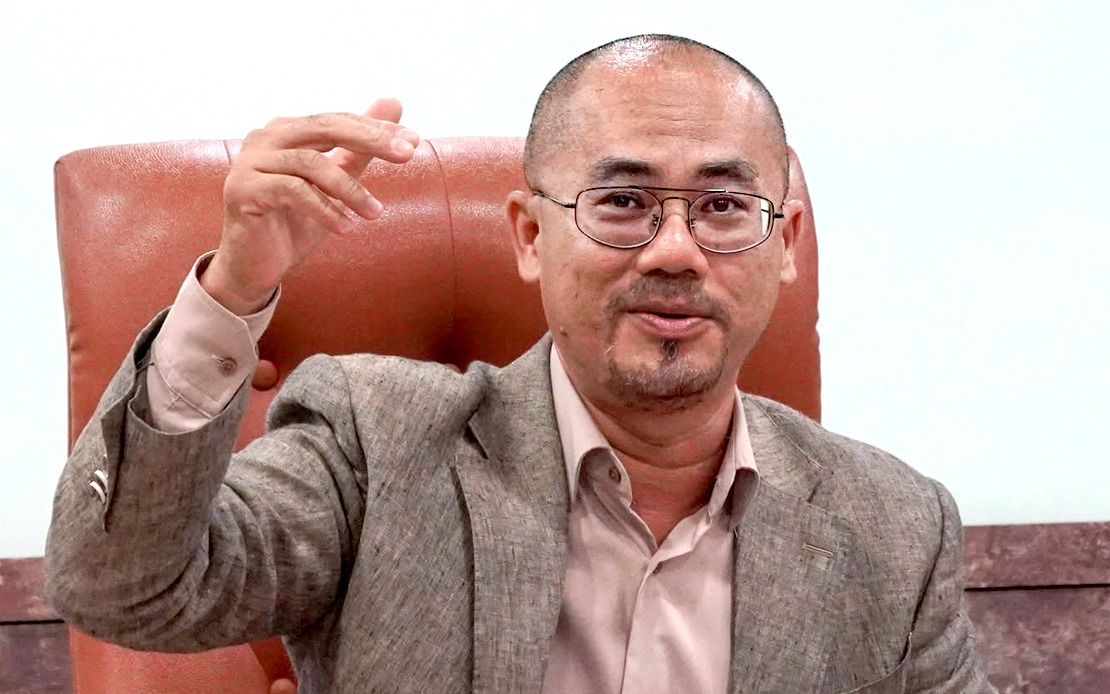
The Perak Islamic Religious and Malay Customs Council (MAIPk) has moved to quash social media claims that it forcibly evicted traders from a commercial site in Ipoh, clarifying instead that a recent notice aimed solely to explain the institution's responsibilities regarding significant infrastructure and financial problems that preceded its ownership of the property. Speaking after the closing of the 2026 Perak State Mosque Committee Convention at the Casuarina Convention Centre, MAIPk chief executive officer Syamsul Hazeman Md Salleh emphasised that no directive was issued instructing business operators to cease activities at the Jalan Panglima Bukit Gantang Wahab location, and that a notice circulated was intended only to protect the council from potential liability and clarify its position regarding matters it had inherited.
The core dispute centres on a severely deteriorating water infrastructure problem combined with accumulated unpaid bills totalling approximately RM100,000. According to Syamsul Hazeman, MAIPk only assumed ownership of the land in 2024 and discovered upon taking possession that the site already harboured longstanding difficulties involving a corroded main water pipeline and substantial payment arrears. During an engagement session held on July 14 with affected traders, MAIPk representatives detailed the necessity for a temporary water supply disconnection to enable essential repair work and to address the outstanding financial obligation, which Syamsul Hazeman stressed was a matter beyond the control or responsibility of individual business operators.
A critical distinction emerges in understanding how the debt accumulated. Syamsul Hazeman explicitly clarified that the arrears did not result from excessive consumption by the traders themselves, as each business operator paid according to their individual water usage. Rather, the substantial outstanding amount stems from systemic failures within the main pipeline infrastructure that supplies the entire premises, a problem that would have accumulated long before MAIPk's recent acquisition of the property. This distinction proves significant for Malaysian property and business law, as it addresses questions of liability transfer and inherited obligations when religious institutions acquire commercial real estate.
The financial and technical dimensions of the crisis present considerable complexity for the council. Syamsul Hazeman noted that resolving the matter falls beyond MAIPk's ordinary capacity and financial resources, as neither zakat funds nor waqf allocations can be deployed to settle such infrastructure-related arrears according to Islamic finance principles. The council is consequently engaged in negotiations with the Perak Water Board to devise a workable solution that acknowledges both the legitimacy of outstanding charges and the impractical burden they impose on a newly acquired property already compromised by engineering defects. This positions the matter as a potential test case for how state-level religious institutions navigate the complexities of inherited liabilities and infrastructure governance.
Recognising the scope of the problem exceeds its institutional mandate, MAIPk has also sought intervention and guidance from the Perak state government. Syamsul Hazeman expressed confidence that a resolution would eventually materialise, though he acknowledged the process would require considerable time and collaborative effort across multiple government agencies and water authorities. This approach reflects a broader pattern in Malaysian public administration where religious bodies increasingly find themselves managing commercial properties and facing technical challenges traditionally handled by municipal or civil authorities, creating jurisdictional and operational friction.
Once the outstanding payment matter reaches resolution, MAIPk intends to proceed with necessary repair works at the facility before establishing fresh rental agreements with existing traders through updated contracts. This sequential approach suggests the council views the current traders as potentially continuing operations at the site, contradicting suggestions that an eviction process had commenced. The new contracts would presumably reflect updated terms regarding utility usage, maintenance responsibilities, and payment obligations, establishing clearer delineation between council responsibilities and trader liabilities moving forward.
A complicating factor emerges from the state government's separate development agenda. MAIPk has disclosed plans for construction of a Perak Islamic Religious Department Complex at the same location, though Syamsul Hazeman indicated that implementation timing remains uncertain and subject to state government decisions. Should this project eventually proceed, current traders would necessarily be required to vacate the premises to accommodate construction. This future uncertainty adds another layer of complexity to the immediate negotiations with traders, as they must simultaneously address current operational challenges while remaining cognisant that their tenure at the location may ultimately prove temporary regardless of how the water supply issue resolves.
The incident illustrates broader challenges facing Malaysia's Islamic institutions as they expand into property management and commercial operations. Unlike purely religious facilities, commercial properties generate operational complications involving utility companies, tenant disputes, and infrastructure maintenance that demand technical expertise and financial resources often outside traditional religious council mandates. The MAIPk situation exemplifies how a relatively straightforward property acquisition can rapidly escalate into multi-stakeholder negotiations spanning government agencies, utility providers, and individual business operators, each with competing interests and different interpretations of responsibility.
For traders currently operating at the Jalan Panglima Bukit Gantang Wahab site, the clarification offers some reassurance that immediate displacement is not imminent, yet leaves fundamental uncertainty regarding their long-term tenure. The dependency on resolution of a RM100,000 debt and infrastructure repairs creates an indefinite timeline for restoration of full water services, complicating business planning. Additionally, the acknowledged possibility of eventual relocation due to the proposed Islamic Religious Department Complex means traders face potential disruption regardless of the current water crisis outcome.
The broader regional implications warrant consideration as well. Malaysia's states increasingly see religious institutions acquiring commercial properties and managing multiple stakeholder interests simultaneously. How authorities like MAIPk navigate these situations—balancing religious institutional interests, trader welfare, infrastructure governance, and development planning—may establish precedents affecting similar situations across other Malaysian states. The resolution approach chosen here could influence how other religious bodies subsequently manage inherited property problems and commercial tenant relationships.

