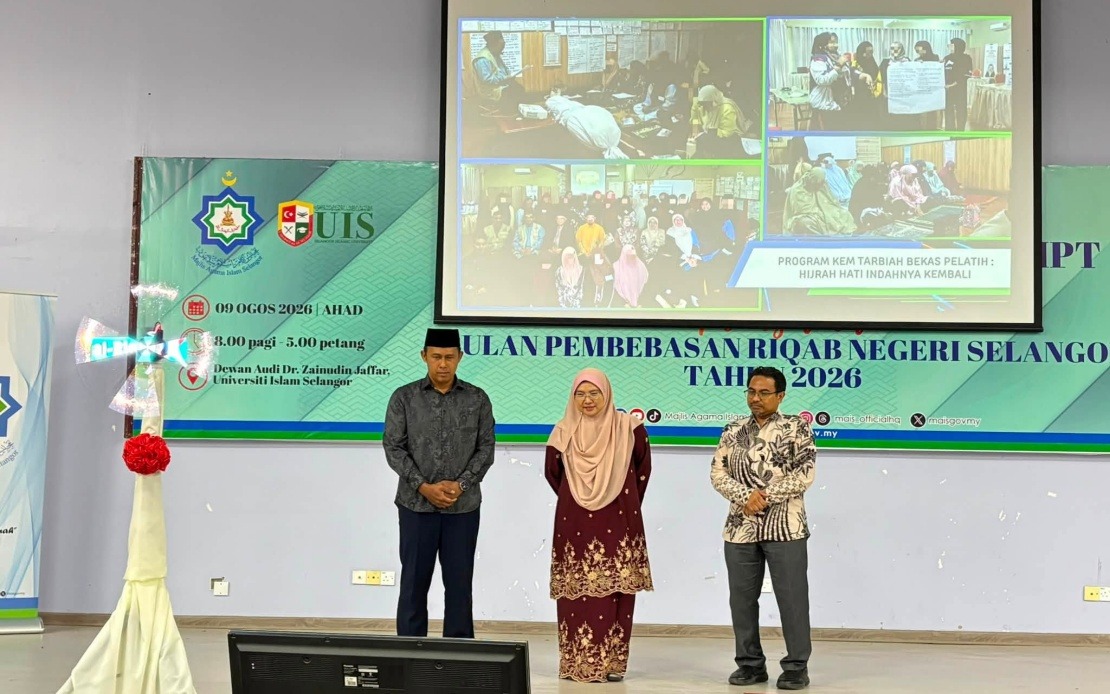
The Selangor Islamic Religious Council (MAIS) has channelled substantial zakat resources to address pressing social welfare concerns within its jurisdiction. Over the past year, the council distributed more than RM17 million to support 13,945 individuals classified as asnaf riqab—a designation referring to Muslims facing complex social and spiritual difficulties. This substantial allocation underscores the council's commitment to comprehensive rehabilitation and preventative interventions across Selangor's vulnerable populations.
The systematic deployment of these funds reflects a multi-faceted approach to social rehabilitation. MAIS administered the zakat allocation through carefully structured programmes encompassing residential rehabilitation facilities, vocational training initiatives, professional counselling services, and targeted welfare contributions. The council operates three dedicated rehabilitation homes alongside 24 additional facilities, creating an expansive support network. This infrastructure enables individualized assessment and tailored interventions addressing each beneficiary's specific circumstances and needs.
Continuity of funding remains a priority for the council's ongoing work. During the first half of 2024, MAIS provided assistance to 1,656 asnaf riqab, channelling RM4.1 million through integrated guidance and welfare programmes. The pace of allocation suggests MAIS maintains commitment to sustained intervention throughout the financial year. Beyond financial disbursement, the council has strengthened its human resources by recruiting 213 specialized Al Riqab guides tasked with shepherding vulnerable individuals toward rehabilitation and spiritual reorientation.
The Al Riqab guide initiative represents a significant investment in personalized mentorship. These trained practitioners serve as bridges between institutional support structures and individuals navigating complex personal challenges. The recruitment of over 200 guides suggests recognition that financial assistance alone proves insufficient without dedicated human engagement and ongoing pastoral support. This approach acknowledges the psychological and spiritual dimensions of rehabilitation beyond material need.
The asnaf riqab classification encompasses a broad spectrum of individuals requiring intervention. Recognized through a 2012 fatwa, this category includes persons struggling with substance addiction, individuals navigating gender identity questions, and Muslims perceived to have strayed from orthodox religious practice. This inclusive definitional framework reflects evolving understanding of social vulnerability within religious contexts. The breadth of this classification demonstrates willingness to address contemporary social phenomena through established zakat mechanisms traditionally reserved for economic hardship.
August's Riqab Liberation Month Campaign represents MAIS's commitment to public engagement and awareness-raising. Running throughout August 2026, this initiative encompasses forums, educational seminars, guidance sessions, and experiential activities at rehabilitation facilities. The campaign seeks to destigmatize discussion of social challenges affecting Muslims while mobilizing community participation in prevention and intervention efforts. By normalizing these conversations and inviting broader societal involvement, MAIS attempts to shift perception and build social consensus around supporting vulnerable populations.
The multifaceted campaign structure indicates sophisticated understanding of communication strategies. Information counters, seminar sessions, and facility-based events create multiple engagement pathways accommodating different community members and preferred learning modalities. The Ihtifal Amal Islami Riqab Rehabilitation Homes component allows public interaction with actual facilities and beneficiaries, potentially humanizing abstract policy through direct observation and testimony. The Selangor Riqab Seminar provides dedicated space for deeper academic and policy-oriented discussion.
MAIS's reliance on digital communication channels reflects contemporary outreach practices. Directing interested parties toward social media platforms and the official website acknowledges evolving information-consumption patterns while creating accessible repositories for campaign details and resource materials. This digital emphasis enables efficient information dissemination across Selangor's geographically dispersed population while reducing administrative barriers to participation.
The substantial RM17 million allocation carries implications beyond Selangor's boundaries. As Malaysia's largest and most urbanized state, Selangor's approach to asnaf riqab rehabilitation potentially influences other state Islamic councils considering comparable initiatives. The scale of MAIS's commitment, institutional infrastructure, and personnel investment establish practical precedent for managing social issues through zakat mechanisms. Other jurisdictions may draw lessons from Selangor's comprehensive approach or adapt elements to local circumstances.
Integrating social rehabilitation within zakat frameworks represents creative institutional adaptation. Traditional zakat distribution emphasizes economic need; MAIS's expansion toward psychological, spiritual, and behavioral dimensions reflects broadened understanding of Islamic social welfare obligations. This evolution potentially establishes templates for other religious authorities and social institutions across Southeast Asia confronting comparable challenges among Muslim populations.
The engagement of 13,945 beneficiaries demonstrates significant prevalence of circumstances triggering asnaf riqab classification. These numbers suggest social challenges extend substantially beyond visible welfare statistics, indicating hidden populations requiring specialized intervention. The council's systematic documentation and resource allocation implies recognition that unaddressed issues perpetuate across generations and community networks, justifying preventative investment.
MAIS's emphasis on rehabilitation over punitive approaches signals values-based institutional positioning. Rather than stigmatizing or marginalizing vulnerable individuals, the council opts for engagement, support, and reintegration pathways. This rehabilitative orientation aligns with contemporary understandings of effective social intervention while reflecting Islamic principles emphasizing compassion and redemption. The approach may resonate with Malaysian stakeholders prioritizing social cohesion over exclusionary responses to vulnerability.

