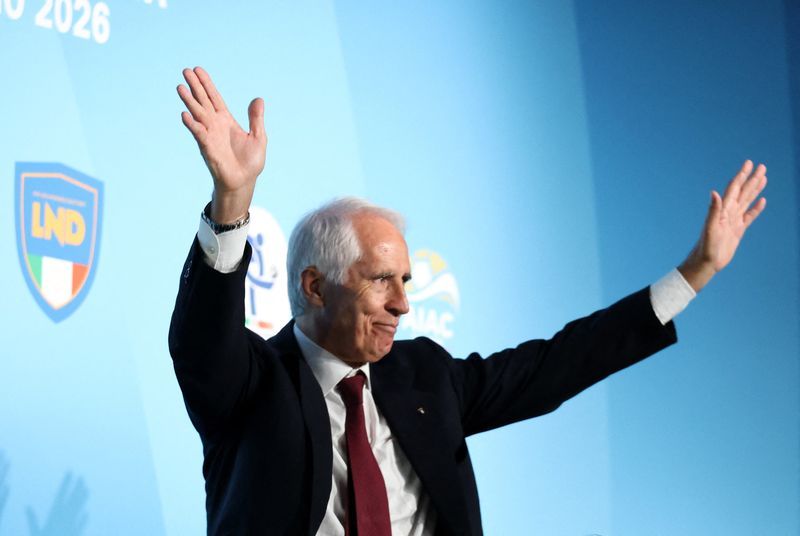
Giovanni Malago, a 67-year-old businessman and sports administrator, has assumed leadership of Italian football at its most fragile moment in four decades. Elected president of the Federazione Italiana Giuoco Calcio on Monday with 68.58% of the vote, Malago replaces Gabriele Gravina in a role that demands nothing less than the resurrection of a four-time World Cup champion now teetering on the edge of relevance. His appointment comes in the immediate aftermath of Italy's failure to reach the 2026 World Cup, extending a humiliating streak to three consecutive tournaments from which the Azzurri have been absent—a drought unprecedented in modern Italian sporting history.
The magnitude of the challenge facing Malago cannot be overstated. Italy's April playoff defeat to Bosnia & Herzegovina sent shockwaves through the federation and triggered a national crisis that extended well beyond football's playing field. Politicians and fans alike expressed fury at a system that had allowed the guardian of Italian football heritage to slip so dramatically from grace. The damage to Italian football's prestige proved far-reaching: domestic clubs subsequently collapsed out of European competitions, painting a portrait of a nation's football infrastructure simultaneously weakened across multiple levels. This compounding failure crystallised what many observers had long suspected—that fundamental problems in how Italy develops, selects, and prepares its footballing talent had gone unaddressed for years.
Malago arrives with credentials that extend beyond the football pitch. He recently completed a successful tenure leading the organising committee for the Milano Cortina Winter Olympics in February, an assignment he executed with sufficient competence to earn widespread recognition for operational excellence. Prior to that role, he had served as head of the Italian National Olympic Committee, bringing administrative experience and an understanding of how to navigate large sporting institutions through periods of transition. During his younger years, he competed as a futsal player, granting him at least a modest personal familiarity with competitive sport, though his background differs markedly from those who rose through football's traditional pathway.
His predecessor's departure underscores the severity of the institutional crisis. Gabriele Gravina, who had steered the federation since 2018, submitted his resignation following the Bosnia & Herzegovina outcome. Reflecting on his departure as the voting began, Gravina acknowledged the decision with characteristic candour, telling reporters that he should have stepped aside even earlier. His departure marked the beginning of a more comprehensive overhaul that Malago now inherits and must accelerate. The federation required not merely new leadership but a thorough recalibration of philosophy, strategy, and operational culture.
The immediate fallout from the World Cup elimination laid bare structural vulnerabilities that had accumulated over years of complacency. Head coach Gennaro Gattuso resigned in the aftermath, while Gianluigi Buffon, the legendary goalkeeper who had served as national team delegation head, also stepped down from his position. These departures, though necessary, nonetheless left the federation facing a transitional void precisely when stability was most urgently required. The timing could scarcely have been more damaging, forcing Malago to begin his tenure by assembling an entirely new coaching architecture.
Warning signs had been accumulating long before the qualification exit materialised. Roberto Baggio, one of Italy's greatest strikers, had previously sounded alarms about the inadequacy of the nation's youth development infrastructure. His assessment, shared by numerous prominent figures within Italian football, reflected a growing consensus that the systems responsible for identifying and cultivating emerging talent had become functionally obsolete. Young Italian players were increasingly finding themselves disadvantaged when measured against peers from other European nations, a gap that the senior team's failures only served to emphasise.
Malago's articulation of his vision suggests both awareness of the depth of the challenge and determination to approach reconstruction holistically. Speaking prior to the election, he rejected the notion that Italy's football roots should be treated as a source of nostalgic reflection or, worse, as an emotional burden that constrains ambition. Instead, he proposed transforming that heritage into a galvanising force—a reminder of what Italian football achieved historically and what it remains capable of achieving. His comments indicate someone conscious that Italian football requires not merely tactical adjustments or superficial restructuring but a fundamental recalibration of purpose and identity.
The most pressing operational priorities demand immediate attention. Malago must recruit a new men's national team coach—a decision that will reverberate through Italian football for years to come. He must simultaneously orchestrate a comprehensive overhaul of youth development structures, addressing the systemic inadequacies that Baggio and others had flagged. Additionally, preparations for Euro 2032, which Italy will co-host alongside Turkey, must accelerate substantially. That tournament represents both an opportunity for redemption and a firm deadline against which Malago's tenure can be measured.
During the election process, Malago articulated a conception of the football federation's role that transcends mere administrative competence. He characterised Italian football as the nation's largest social institution, implying that its responsibilities extend beyond selecting teams and organising matches. This broader perspective suggests he understands that restoring Italian football's competitive standing requires cultural and institutional renewal, not merely better player selection. The federation must function as an inspirational force, he suggested, capable of channelling Italian football's considerable heritage toward renewed ambition and success.
Malago closed his election victory statement with an appeal for collective effort, declaring that singular leadership accomplishes nothing while collaborative commitment achieves everything. This emphasis on unity carries particular relevance given the divisions that had fractured Italian football during the decline preceding his election. Rebuilding institutional cohesion—among federation officials, club representatives, coaches, and players—constitutes a prerequisite for any broader sporting recovery. The challenge now lies in translating these principled statements into concrete reform, a process that will determine whether Malago's appointment inaugurates a genuine renaissance or merely represents another false start in Italian football's ongoing crisis.

