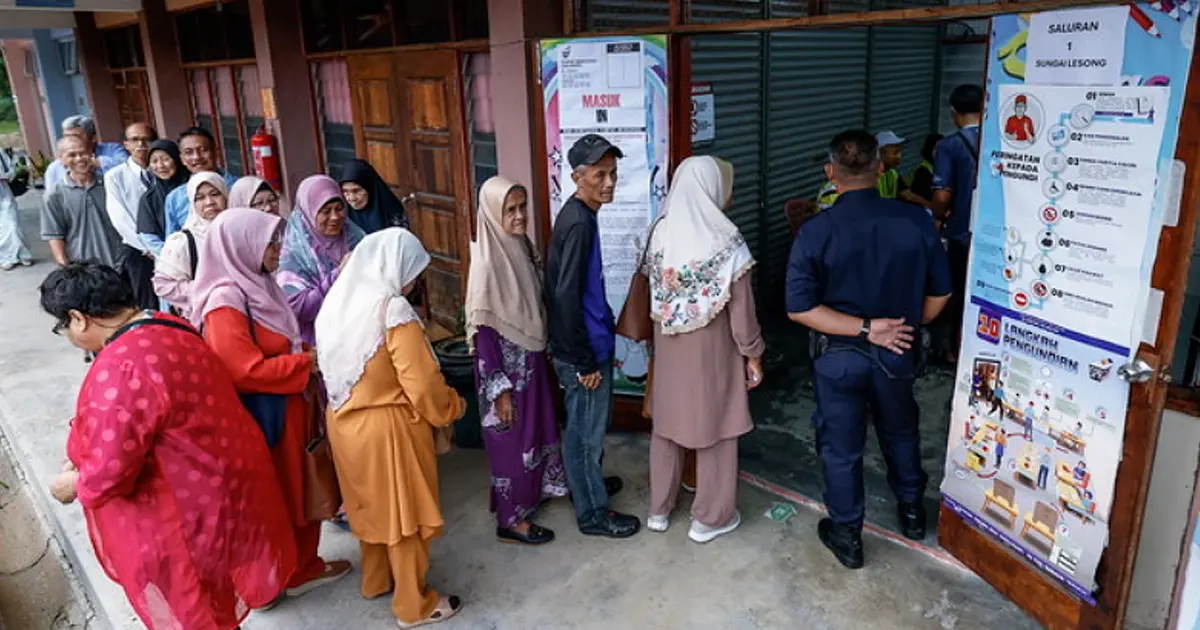
Sustained political debate around the 3R issues—race, religion, and royalty—risks depleting the emotional energy and interest of Malay voters, according to Awang Azman Pawi, a political analyst at Universiti Malaya. His assessment suggests that the Malaysian electorate, particularly the Malay-Muslim demographic, may be reaching a saturation point with rhetoric centred on these traditionally sensitive topics, signalling a potential realignment in voter priorities ahead of future electoral contests.
The concept of emotional fatigue in politics operates similarly to fatigue in other domains: repeated exposure to charged messaging, without substantive resolution or tangible outcomes, eventually dulls public receptiveness and engagement. When voters are bombarded with divisive rhetoric around race relations, religious affairs, and institutional matters related to the monarchy, the initial emotional resonance of such messaging begins to diminish. Analysts have observed this pattern in other democracies, where voters eventually demand that political parties shift focus toward bread-and-butter issues that directly affect daily life.
For Malaysian political parties competing for Malay support, this presents a critical juncture. The traditionally dominant appeal of 3R messaging—which has long anchored Malay-Muslim political identity and mobilisation—may be losing its mobilising power if voters feel these issues are repeatedly raised without meaningful political resolution or if parties fail to address them effectively. This does not mean the issues are no longer important to this constituency, but rather that their salience diminishes when parties fail to demonstrate concrete action or progress.
The cost of living has emerged as a counterweight to identity-based politics in Malaysia's current economic environment. Inflation, rising prices of essential goods, increased utility bills, and growing concerns about wage stagnation have collectively shifted voter attention toward economic management and fiscal responsibility. When households struggle with grocery bills and housing affordability, abstract political debates—however emotionally resonant—begin to feel disconnected from lived reality. This economic pressure creates space for parties to be evaluated primarily on their competence and performance in managing the economy rather than their rhetorical positioning on cultural and religious matters.
Awang Azman's analysis suggests that political parties will ultimately be assessed by their track record in delivering tangible improvements to voters' material circumstances. Whether a party can demonstrate that it has effectively managed inflation, created employment, controlled housing costs, or improved public services becomes the true metric of electoral success. In this framework, promises about defending religious interests or protecting Malay privileges ring hollow if party leaders cannot simultaneously show they are addressing the economic anxieties that define contemporary Malaysian life.
This shift in voter priorities reflects broader patterns observed across Southeast Asia and beyond, where economic development and improved living standards have gradually transformed electorates' expectations. As countries grow wealthier and more educated, voters increasingly demand performance-based governance. The Malaysian electorate, particularly younger Malay voters who have grown up during periods of relative prosperity, may be less automatically responsive to identity-centred mobilisation and more attuned to questions about whether their government is delivering competent administration and economic stewardship.
The danger for political parties lies in becoming trapped in an older playbook. Continuously recycling 3R rhetoric without offering solutions to contemporary economic problems risks alienating voters who feel their concerns are being ignored or dismissed. A government or opposition that appears more interested in cultural combat than in reducing living costs may find its support eroding among pragmatic voters focused on immediate household welfare. Conversely, parties that acknowledge the importance of identity-based concerns while clearly prioritising economic management and delivery may gain electoral advantage.
For Malaysia specifically, this trend carries implications for coalition politics and campaign messaging. Parties will need to demonstrate that they can hold multiple priorities simultaneously—respecting the cultural and religious sensitivities of the Malay-Muslim base while also delivering measurable economic improvement. This requires sophisticated political communication that does not dismiss 3R issues as unimportant but frames them within a broader agenda that emphasises competent governance and economic prosperity.
The concept of emotional fatigue also raises questions about political sustainability. If parties rely too heavily on a single set of emotional triggers, those triggers eventually lose potency. Voters may begin to tune out, to view political discourse as repetitive and disconnected from their concerns, or to punish parties for failing to evolve their messaging and policy agenda. In this sense, Awang Azman's warning reflects not merely contemporary voter sentiment but also a fundamental principle about how political systems adapt and survive over time.
Looking forward, Malaysian political parties of all stripes will face pressure to prove they understand what their constituents actually need and care about most urgently. The next electoral cycle will likely showcase attempts by competing coalitions to rebalance their platforms, demonstrating competence in economic policy while still maintaining their respective positions on cultural and religious matters. Parties that successfully navigate this transition—taking 3R issues seriously without making them the entirety of their political identity—may prove more resilient than those that remain locked in older patterns of mobilisation.

