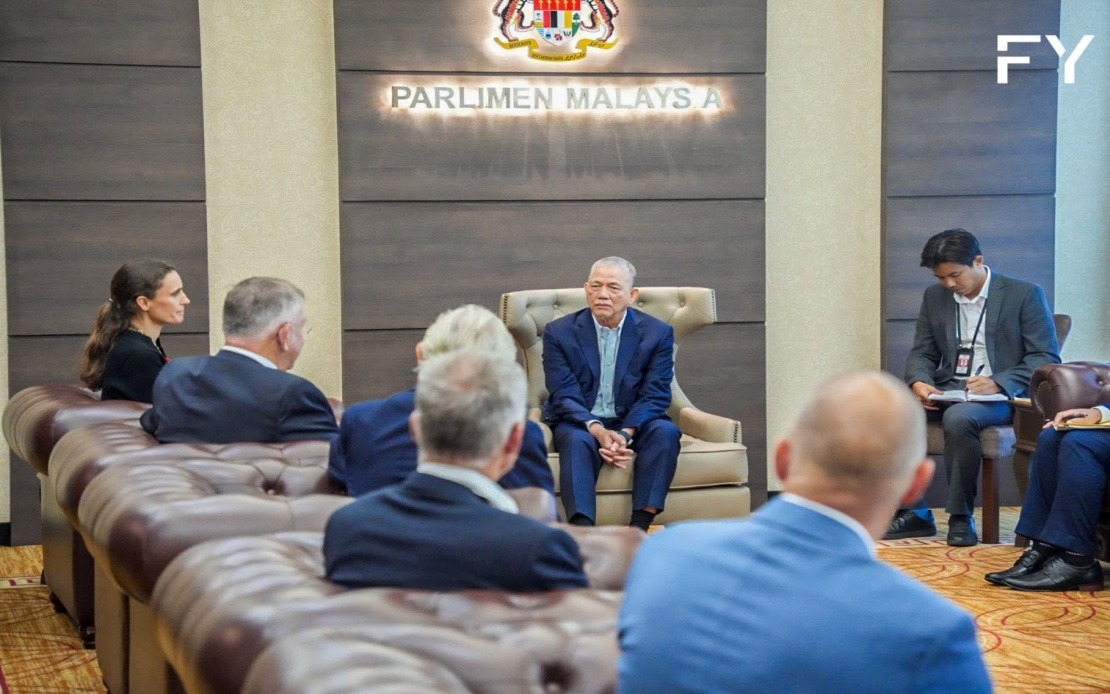
Deputy Prime Minister Datuk Seri Fadillah Yusof has signalled Malaysia's receptiveness to German small and medium-sized enterprises seeking investment opportunities, with particular emphasis on sectors that align with the nation's environmental and economic priorities. The statement comes following a high-level courtesy call at Parliament House involving German Ambassador to Malaysia Silke Riecken-Daerr and representatives from the German SME Business Association, underscoring the continued importance both governments place on strengthening bilateral commercial ties.
The focus on green technology, renewable energy, and water management reflects Malaysia's broader commitment to sustainable development and its transition towards a lower-carbon economy. These sectors represent not merely niche opportunities but rather strategic pillars within Malaysia's medium-term economic planning, where technological expertise from advanced industrial nations can significantly accelerate progress. The emphasis on environmental solutions also positions Malaysia competitively within the Association of Southeast Asian Nations, where competing demands for clean energy infrastructure and water security solutions present substantial growth potential for specialised foreign investors.
Germany's existing economic footprint in Malaysia is substantial and diversified. With more than 800 German companies already operating across various Malaysian industries, the country ranks among Malaysia's most significant trading partners, particularly in mechanical engineering and advanced manufacturing technology. This established presence demonstrates the viability of long-term German business operations in Malaysia and suggests that further expansion into emerging sectors like renewable energy and environmental technologies could build naturally on existing supply chains, expertise networks, and operational infrastructure.
The mechanical engineering and manufacturing sectors have historically formed the backbone of German-Malaysian economic relations, and these foundation industries remain crucial to the proposed expansion. German firms operating in these established fields possess considerable experience navigating Malaysia's regulatory environment, understanding local market dynamics, and building relationships with Malaysian partners. This institutional knowledge creates natural pathways for diversification into complementary green technology ventures, where manufacturing expertise and engineering rigour intersect with environmental innovation.
Vocational and technical education emerged as a second strategic pillar in the discussions, with Malaysia demonstrating keen interest in adopting German approaches to workforce development. Germany's vocational education and training system is internationally recognised for producing highly skilled workers equipped for advanced manufacturing and technical sectors. The dual education model combining classroom instruction with on-the-job training has proven exceptionally effective at maintaining workforce competitiveness across generations and could address Malaysian challenges in producing workers with practical skills for emerging industries.
The human capital dimension proves particularly significant for Malaysia's economic trajectory. As the nation aims to transition from labour-intensive industries towards higher-value manufacturing and technology sectors, the availability of appropriately trained workers becomes increasingly critical. German expertise in TVET could help Malaysian institutions design curricula and teaching methodologies specifically calibrated to industry needs, reducing skills mismatches and enhancing the attractiveness of Malaysia as a destination for technology-intensive foreign investment across multiple sectors beyond just German enterprises.
Bilateral trade relationships increasingly depend on technological complementarity and supply chain integration rather than comparative labour costs alone. By positioning itself as an adoption hub for German green technology and learning from German vocational training models, Malaysia strengthens its appeal to German SMEs seeking reliable partners for regional expansion. German companies looking to serve Southeast Asian markets increasingly favour establishing operations in countries with strong institutional frameworks, educated workforces, and demonstrated commitment to the same sustainability standards they maintain domestically.
The timing of this diplomatic overture carries broader regional significance. Southeast Asia faces mounting pressure to decarbonise energy systems while managing rapid industrial growth, creating substantial demand for renewable energy solutions, water treatment technologies, and environmental management systems. German SMEs, often world leaders in specialised green technology niches, can address these needs while accessing the rapidly expanding Southeast Asian market. Malaysia's explicit welcome of such investments signals willingness to position itself as a regional hub for environmental technology deployment and adaptation.
For Malaysian policymakers, attracting German SME investment in green sectors accomplishes multiple simultaneous objectives. It accelerates Malaysia's transition towards sustainable industries, creates high-skill employment opportunities, facilitates technology transfer and knowledge diffusion, and strengthens bilateral relationships with a key developed economy partner. The emphasis on TVET cooperation simultaneously addresses medium-term structural challenges in Malaysian workforce development without requiring massive public expenditure, instead leveraging German institutional expertise and proven methodologies.
The commitment to strengthening strategic cooperation extends beyond immediate commercial transactions. By formalising discussion channels around TVET and green technology development, Malaysia and Germany create frameworks for ongoing dialogue around emerging industrial challenges and opportunities. Such institutional cooperation often catalyses unexpected commercial connections and enables faster adaptation to technological disruptions, positioning both nations to benefit from future innovations neither can predict today.
The broader context reveals Malaysia's strategic shift towards attracting higher-quality foreign investment focused on innovation and sustainability rather than chasing volume-based manufacturing relocation. This approach reflects evolving global patterns where developed-economy SMEs increasingly prioritise stable regulatory environments, skilled workforces, and alignment with corporate sustainability commitments over minimal labour costs. By meeting these criteria and actively cultivating relationships with key trading partners like Germany, Malaysia differentiates itself within Southeast Asia as a destination for discerning investors seeking long-term partnerships rather than short-term arbitrage opportunities.

