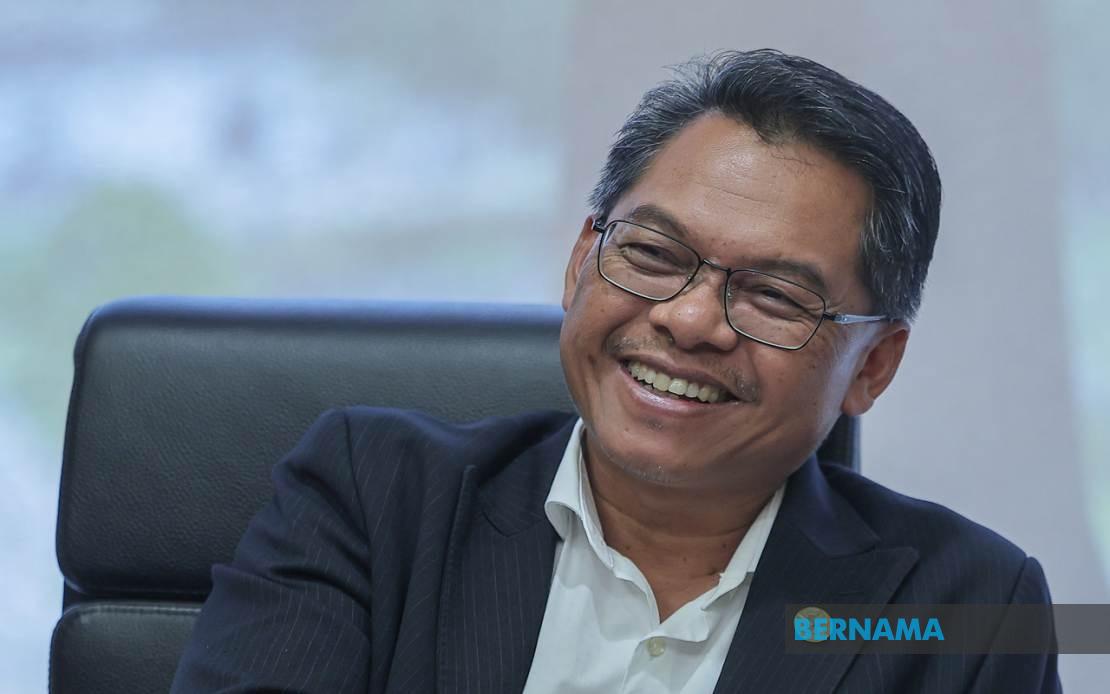
The Technical Committee overseeing implementation of the Malaysia Agreement 1963 has issued a directive requiring all federal ministries and agencies to accelerate their efforts in resolving longstanding issues tied to the historic accord. The instruction, delivered at a meeting in Putrajaya on August 3, signals the government's determination to make tangible headway on a matter that remains politically sensitive in both Sabah and Sarawak, where the agreement continues to shape state-federal relations and resource distribution.
Chaired by Datuk Mustapha Sakmud, the Minister in the Prime Minister's Department overseeing Sabah and Sarawak affairs, the committee emphasised that unresolved MA63 matters require immediate attention ahead of a planned review by Prime Minister Datuk Seri Anwar Ibrahim scheduled for next month. The emphasis on urgency reflects growing pressure from the two East Malaysian states to see commitments under the 1963 accord translated into concrete action rather than prolonged administrative deliberation. For Malaysian readers, this acceleration matters because MA63 implementation directly affects how resources, autonomy, and services are distributed between Kuala Lumpur and the two largest states by geographic area.
During the meeting, committee members conducted a comprehensive assessment of current implementation status across multiple MA63-related portfolios. This review process allows officials to identify bottlenecks and allocate responsibility for outstanding tasks, converting what has historically been a drawn-out negotiation into a more structured timeline. The focus on preparation for the Prime Minister's involvement suggests that political leadership now views MA63 implementation as sufficiently important to warrant direct oversight at the highest level, potentially enabling faster decision-making on contested issues.
The committee's agenda extended beyond administrative mechanics to encompass three substantive policy areas central to East Malaysian development. The concept of Borneonisation—the preference for recruiting public service staff from Sabah and Sarawak to work in those states—represents a long-standing demand from both governments seeking greater local control over administration. Progress on this front would reshape the federal-state relationship by increasing local ownership of governance structures. Healthcare service equity also featured prominently, reflecting genuine disparities in medical access and facilities between the peninsula and Borneo. Education sector strengthening completes a development trilogy addressing fundamental human capital challenges in both states.
Minister Mustapha's statement underscored a collaborative approach built on consensus, trust, and mutual respect between federal and state authorities. This rhetorical emphasis matters because it contrasts with the adversarial tone that occasionally characterised MA63 discussions in previous years. By framing progress as consensual rather than imposed, the government aims to depoliticise implementation and position it as a shared undertaking serving all parties' interests. For Malaysian federalism more broadly, this tone-setting from the centre could influence how other federal-state disputes are negotiated.
Two concrete achievements were highlighted as evidence that the current administration takes MA63 commitments seriously. Sabah's Special Grant under Article 112D of the Federal Constitution has been increased to RM1.5 billion for the current year, representing a direct financial commitment to the state. While substantial in absolute terms, observers will note that interpreting whether this increase fully addresses long-standing Sabah grievances about federal resource allocation requires detailed fiscal analysis. Nevertheless, the increase provides tangible proof that MA63 implementation extends beyond rhetorical affirmation to budgetary reallocation.
The successful transfer of Bintulu Port to the Sarawak government on July 21 constitutes a more structurally significant development. Control over the port provides Sarawak with direct authority over a critical economic asset and potential revenue stream. This transfer reflects recognition that MA63 implementation must include genuine devolution of commercial and economic assets, not merely technical adjustments to administrative procedures. For regional observers, the port transfer signals that Malaysia is willing to redistribute control over economically meaningful infrastructure—a substantial political decision.
Minister Mustapha characterised these outcomes as evidence that MA63 implementation under the current administration is both honouring earlier commitments and evolving to address contemporary requirements. This framing attempts to navigate between competing narratives: acknowledging that previous governments underdelivered on MA63 promises while positioning the Anwar Ibrahim administration as genuinely committed to forward progress. The invocation of the MADANI framework—the government's broader policy agenda—situates MA63 implementation within a comprehensive governance philosophy rather than treating it as an isolated political issue.
For Sabah and Sarawak, the committee's directive carries both promise and burden. Promise, because it suggests sustained senior-level attention to grievances that have accumulated for decades. Burden, because the acceleration timeline creates expectations that must be met or risk amplifying perceptions of continued federal procrastination. State governments will likely interpret the August timeline and September prime ministerial review as firm deadlines, placing pressure on federal agencies to demonstrate concrete progress rather than merely revising implementation plans.
The broader significance for Malaysian federalism lies in whether this committee process can establish sustainable mechanisms for resolving centre-state disputes. MA63 represents a constitutional agreement predating Malaysian independence itself, yet implementation has proceeded sporadically and incompletely across sixty-plus years. If the current accelerated framework proves effective, it could provide a model for addressing other federal-state grievances, from revenue distribution to constitutional interpretation. Conversely, if the timeline slips or promised resources fail to materialise, it may reinforce East Malaysian perceptions that federal commitments remain largely rhetorical.
The reference to the MTPMA63 council meeting scheduled for September indicates that political leadership is personally invested in tracking progress. The fact that the Prime Minister intends to chair this meeting personally rather than delegating it to a minister underscores the government's assessment that MA63 carries sufficient political weight to warrant his direct involvement. This personal engagement could either accelerate decision-making or, if disagreements emerge, risk escalating disputes to the highest political level. Either way, the next few weeks will prove decisive in determining whether this acceleration translates into substantive resolution or merely reshuffles the timeline without addressing underlying disputes.
As implementation efforts proceed, Malaysian policymakers and observers should monitor whether the promised acceleration focuses primarily on distributing financial benefits and devolving selected assets, or whether it also addresses more fundamental constitutional questions about Sabah and Sarawak's place within the federation. The distinction matters enormously, as superficial gains might temporarily satisfy state governments while leaving deeper structural grievances unresolved.

