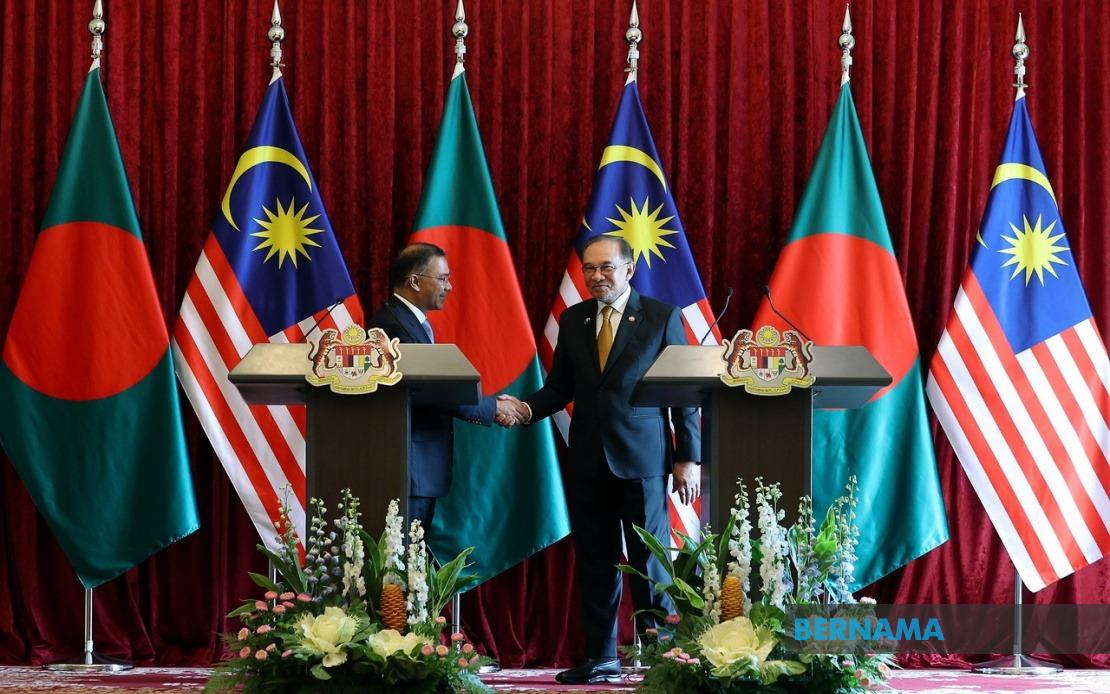
Prime Minister Datuk Seri Anwar Ibrahim and his Bangladeshi counterpart Tarique Rahman have pledged to activate a comprehensive Memorandum of Understanding on Defence Cooperation during an official visit to Putrajaya this week, marking a significant escalation in bilateral military engagement between the two nations. The initiative aims to institutionalise defence partnerships across military science, technical expertise, and defence industry linkages, transforming ad-hoc cooperation into a structured strategic framework. According to a joint statement released by Malaysia's Foreign Ministry, the two governments intend to operationalise mechanisms that will enable deeper integration of defence capabilities and knowledge-sharing across multiple operational domains.
The foundation for this expanded cooperation rests on established channels that have proven effective over decades. Both countries have maintained robust defence relations characterised by regular high-level military visits, formal personnel training exchanges, and goodwill naval port calls that have cultivated mutual understanding and interoperability. These existing mechanisms, while valuable, have operated largely on an informal basis. The new MoU represents an attempt to systematise these interactions through regular institutional engagement, signalling that defence cooperation has matured beyond occasional diplomatic gestures into a strategic necessity for both nations.
Central to the reinvigorated partnership is the establishment of a bilateral Joint Committee on Defence Cooperation, which will serve as the primary mechanism for charting a comprehensive defence roadmap. This committee will likely oversee coordination between Malaysia's Ministry of Defence and Bangladesh's defence establishment, creating clear governance structures and accountability frameworks for implementation. The committee's work is expected to identify priority areas for collaboration, establish timelines for capacity-building initiatives, and monitor progress against agreed benchmarks. Such institutional architecture is particularly important given the complexity of modern defence challenges and the need for sustained commitment across political transitions.
Capacity enhancement represents a cornerstone of the cooperation framework, with both nations recognising that military effectiveness depends on continuous professional development. Malaysia and Bangladesh have agreed to expand training and educational opportunities, including mutual seat allocations at their respective National Defence Colleges and Command and Staff Colleges. These institutions serve as incubators for strategic thinking and military leadership, and cross-posting military officers and defence specialists will facilitate the exchange of doctrine, operational concepts, and best practices. By exposing each nation's defence personnel to different strategic traditions and problem-solving approaches, such exchanges create networks of understanding that persist long after formal assignments conclude and can prove invaluable during bilateral military operations or crisis management scenarios.
United Nations peacekeeping operations provide another significant avenue for bilateral cooperation, reflecting the commitment both nations have demonstrated to global stability and humanitarian protection. Malaysia and Bangladesh have pledged to collaborate through joint tactical exercises, pre-deployment training coordination, and the systematic exchange of expertise and knowledge. This cooperation is particularly relevant given the increasingly complex security environment characterised by hybrid threats, asymmetric conflicts, and multifaceted humanitarian crises. Nations with peacekeeping experience can leverage lessons learned in one theatre to improve effectiveness in others, and joint preparation enhances interoperability when both contribute to the same UN-mandated mission. The agreement explicitly acknowledges these evolving challenges and positions bilateral defence cooperation as a mechanism for building collective capacity to respond effectively.
Counter-terrorism and violent extremism prevention have become paramount security concerns across South and Southeast Asia, necessitating coordinated responses that transcend national boundaries. Malaysia and Bangladesh have committed to strengthening cooperation through intelligence sharing, information exchange, capacity-building programmes, training initiatives, and the dissemination of best practices in countering terrorism. The region has witnessed transnational terrorist networks exploiting porous borders and leveraging sophisticated recruitment and financing mechanisms, making bilateral and multilateral intelligence cooperation essential. By establishing formal channels for intelligence exchange and standardising approaches to counter-terrorism training, the two nations can improve early warning capabilities, disrupt terrorist financing networks, and enhance investigation and prosecution of terror suspects. This aspect of the defence MoU carries direct implications for regional stability and civilian security.
Beyond traditional military dimensions, the two leaders have recognised that comprehensive strategic partnership must address educational and human capital development. The agreement encompasses educational cooperation including university-to-university partnerships and joint research initiatives, with particular emphasis on technical and vocational education. This expansion into civilian sectors reflects an understanding that national security and economic prosperity are inextricably linked, and that workforce development in critical technical fields serves both immediate defence needs and longer-term economic competitiveness. The acknowledgment of approximately 11,000 Bangladeshi students currently studying in Malaysia underscores the depth of people-to-people linkages and academic exchange that already characterises the bilateral relationship. These students serve as cultural ambassadors and knowledge conduits, facilitating information exchange that enriches both societies.
The focus on technical and vocational education training deserves particular attention given its implications for regional employment and skills development. Both nations have committed to expanding mutually recognised qualifications, joint degree programmes, and flexible learning pathways that enable graduates to work across borders. This approach addresses labour market mismatches in both countries by aligning academic programmes with actual employment needs in priority sectors. Graduate mobility provisions enable talented individuals to pursue opportunities throughout the region, creating a more efficient allocation of human capital while strengthening economic ties. For Malaysia, which faces skills shortages in critical sectors, access to trained Bangladeshi professionals could address immediate labour gaps. For Bangladesh, graduate mobility provides returnees with international experience and advanced technical skills that support their home country's development agenda.
Tourism cooperation represents the agreement's most visible dimension for ordinary citizens, with both nations expressing optimism about expanded travel and cultural exchanges. Malaysia's Visit Malaysia 2026 campaign and Malaysia Year of Medical Tourism 2026 initiative will benefit from enhanced Bangladeshi participation, reflecting recognition that tourism drives economic growth, employment, and cultural understanding. The extension of a warm welcome to Bangladeshi travellers signals policy-level support for visa facilitation, marketing promotion, and tourism infrastructure development that will make travel more convenient and appealing. Medical tourism cooperation is particularly noteworthy, as it positions Malaysia as a destination for Bangladeshi patients seeking advanced healthcare services while generating revenue for Malaysian medical institutions and hospitality sectors. This cooperation transforms tourism from a simple leisure activity into a vehicle for service delivery and revenue generation with multiplier effects throughout the economy.
The timing of this defence MoU activation during a prime ministerial visit underscores its political importance and reflects high-level commitment to implementation. Such visits typically occur when both governments wish to signal strategic alignment and deliver tangible outcomes demonstrating the value of bilateral relationships. The coordination of the defence agreement with expanded cooperation across education, peacekeeping, counter-terrorism, and tourism suggests an integrated approach to partnership that recognises multiple dimensions of national interest. For Malaysia, strengthened ties with Bangladesh support regional stability, enhance defence capabilities, and create economic opportunities across multiple sectors. For Bangladesh, partnership with Malaysia provides access to advanced defence technology, training expertise, and market opportunities while elevating its strategic profile in Southeast Asia.
The implications of this cooperation framework extend beyond the bilateral relationship to encompass broader regional dynamics. A closer Malaysia-Bangladesh defence partnership may influence regional power balances, particularly given Bangladesh's significant military capacity and geographic position in South Asia. Enhanced cooperation could create positive spillover effects, encouraging other regional nations to pursue deeper integration. Conversely, deepening ties between Southeast Asia and South Asia through defence cooperation help bridge the artificial divide between these regions and create interconnected security architectures. The explicit focus on UN peacekeeping and counter-terrorism reflects shared commitment to international rules-based order and multilateral cooperation, positioning both nations as constructive regional actors contributing to global stability.
Implementation challenges should not be underestimated, despite the clear political commitment demonstrated through this MoU. Translating aspirational defence agreements into concrete operational cooperation requires sustained bureaucratic coordination, resource allocation, and technical planning across multiple military and civilian institutions. The Joint Committee on Defence Cooperation will bear responsibility for overcoming institutional inertia, managing competing budget priorities, and ensuring that ambitious goals translate into measurable achievements. Success will depend on developing detailed implementation plans, establishing clear accountability structures, and maintaining momentum across political transitions in either nation. The Malaysian and Bangladeshi governments would be wise to establish dedicated secretariat functions to support the Joint Committee and maintain progress tracking.
Looking forward, this defence MoU represents an opportunity for Malaysia and Bangladesh to construct a durable partnership spanning military, educational, counter-terrorism, and economic domains. The agreement reflects recognition that twenty-first-century security challenges require integrated responses addressing military capability, human capital development, intelligence cooperation, and economic interdependence. By formalising cooperation across these multiple dimensions and establishing institutional mechanisms for sustained engagement, the two nations are positioning themselves to navigate an increasingly complex regional and global security environment. Whether this framework ultimately succeeds will depend on implementation quality, sustained political commitment, and the willingness of both governments to invest resources in translating shared aspirations into operational reality.

