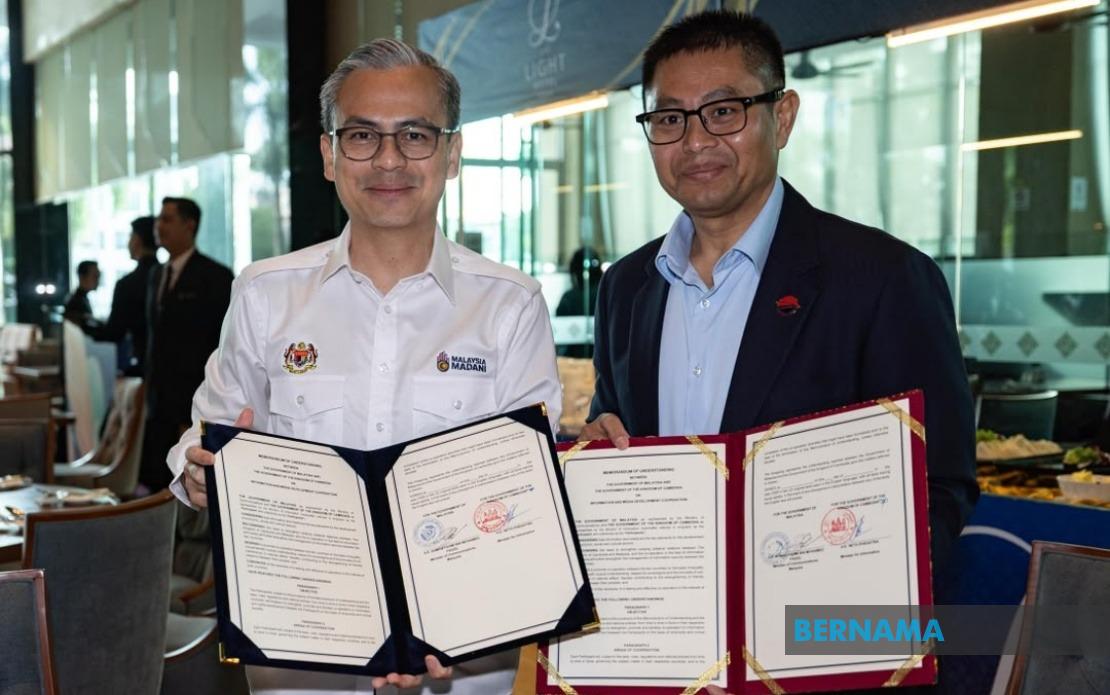
Malaysia and Cambodia have moved to deepen their long-standing relationship by formalising cooperation in the media and communications sector, signalling a strategic commitment to collaborative growth in an increasingly digital landscape. Communications Minister Datuk Fahmi Fadzil and Cambodian Information Ministry's Under Secretary of State, Prak Thaveak Amida, signed the memorandum of understanding on information and media development at the Light Hotel in Butterworth on June 20, with the accord presented on behalf of Cambodian Information Minister Neth Pheaktra.
The agreement establishes a comprehensive framework for bilateral engagement spanning multiple dimensions of the modern media ecosystem. Both nations have committed to facilitating the exchange of news and information, strengthening radio and television broadcasting standards, improving printing and publishing practices, and investing in human capital development within their respective sectors. Beyond these traditional media concerns, the MoU extends to cutting-edge areas including film and documentary production, media cybersecurity, information policy harmonisation, regulatory practices, and innovation in broadcasting technologies.
For Malaysia, the partnership represents an opportunity to position itself as a regional leader in media development while sharing expertise with a neighbour navigating its own media transformation. Cambodia has undergone significant changes in its communications landscape in recent years, and formalised cooperation with Malaysia provides a structured pathway for knowledge transfer and capacity building. The agreement acknowledges that both countries operate within a broader Southeast Asian context where media practices and standards increasingly intersect, particularly regarding digital content distribution and audience engagement.
The timing of the MoU signing during National Journalists' Day celebrations underscores the importance both governments place on media industry development and professional standards. Amida's attendance at the sixth edition of HAWANA 2026, held at PICCA convention centre in Penang under the theme "Media Integrity Strengthens Credibility," positioned the bilateral agreement within the wider context of regional media excellence. Prime Minister Datuk Seri Anwar Ibrahim was scheduled to officiate the event, signalling high-level political endorsement for initiatives strengthening journalism and media integrity across the region.
The emphasis on media integrity and credibility in the HAWANA theme resonates deeply with contemporary challenges facing newsrooms throughout Southeast Asia. Both Malaysia and Cambodia confront questions about maintaining journalistic standards amid rapid digitalisation, the proliferation of misinformation, and evolving audience expectations. By establishing formal cooperation mechanisms, the two countries create opportunities for their respective media practitioners to learn from each other's experiences and develop shared best practices for tackling these common challenges.
Cybersecurity provisions within the MoU carry particular significance for Malaysian stakeholders, given the increasing sophistication of attacks targeting media infrastructure and communications platforms. As newsrooms become more technology-dependent and broadcast systems more networked, vulnerabilities multiply. A bilateral framework for sharing cybersecurity knowledge and techniques helps both nations strengthen their defences while building institutional capacity to identify and respond to emerging threats targeting the information sector.
The regulatory and policy harmonisation components of the agreement open avenues for discussing how different jurisdictions approach media licensing, content standards, and digital platform governance. While Malaysia and Cambodia operate within distinct political and legal frameworks, identifying areas of regulatory alignment or learning from divergent approaches can inform how each nation refines its own policies. This is particularly relevant as both governments grapple with balancing press freedom, national security interests, and public interest protections in an increasingly complex media environment.
The agreement also recognises the transformative potential of digital technologies in media and broadcasting. By committing to innovation cooperation, Malaysia and Cambodia signal their intention to move beyond legacy approaches and position their respective industries for future growth. This includes exploring emerging technologies, new distribution models, and audience engagement strategies that reflect how people consume information in the digital age. For Malaysian media companies and broadcasters, partnerships with Cambodian counterparts can provide testing grounds for new approaches and access to growing Southeast Asian markets.
The bilateral cooperation reflects broader trends within ASEAN regarding functional cooperation on non-political issues where mutual benefit is clear. Media development, information standards, and journalism excellence are areas where countries can collaborate constructively without the sensitivities that sometimes attend diplomatic negotiations on other matters. By investing in these relationships, Malaysia and Cambodia strengthen the professional bonds between their respective media communities and create informal networks that complement formal government-to-government engagement.
For Malaysian audiences and media professionals, the partnership offers potential benefits including increased exposure to Cambodian perspectives and content, professional development opportunities through exchange programmes, and access to regional best practices. Journalists and broadcasters gain chances to participate in training initiatives, attend conferences, and collaborate on stories of regional interest. The agreement also positions Malaysian media organisations to explore opportunities in Cambodia's growing information sector while welcoming Cambodian counterparts to learn from Malaysia's more developed media infrastructure and institutions.
The MoU's emphasis on knowledge and expertise exchange acknowledges that media development is not a zero-sum competition but rather a mutual endeavour where both parties benefit from improved capabilities across the region. As digital platforms increasingly blur national boundaries for news and information distribution, having coordinated approaches to common challenges—whether cybersecurity, misinformation, or content standards—strengthens the entire Southeast Asian media ecosystem. The partnership signals recognition that media industry excellence in one country creates positive spillover effects for neighbouring nations.

