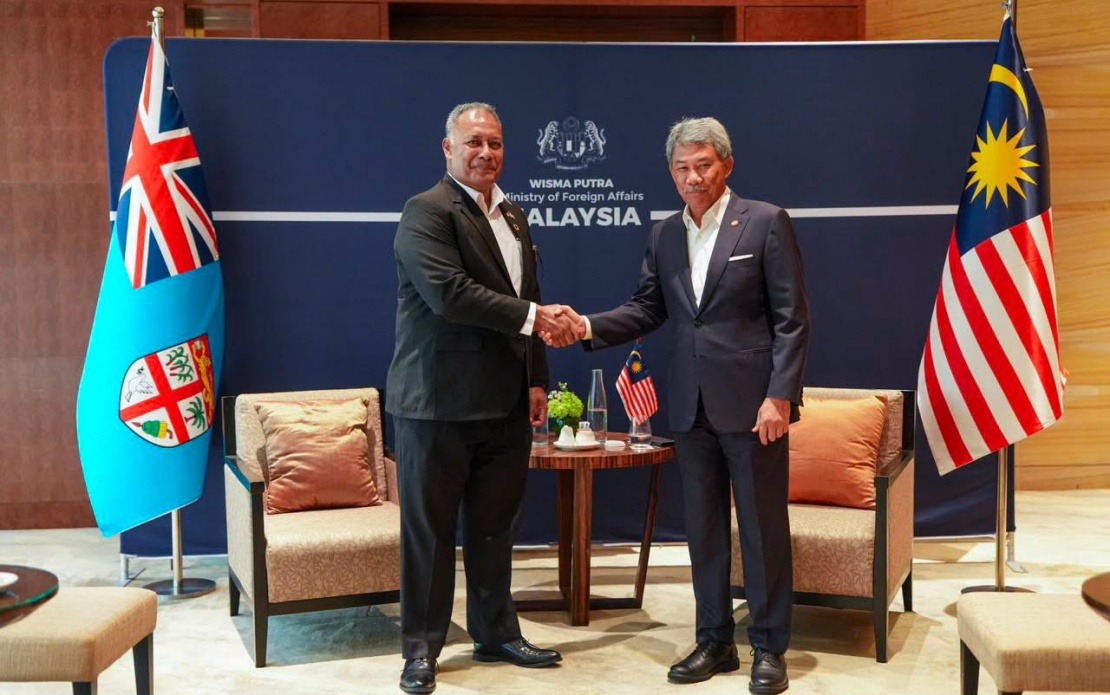
Malaysia and Fiji are charting an expanded diplomatic and economic partnership, with both nations identifying multiple sectors for deeper engagement. During talks on Tuesday, Foreign Minister Datuk Seri Mohamad Hasan and visiting Fijian Foreign and External Trade Minister Sakiasi Raisevu Ditoka outlined an ambitious agenda spanning trade, investment, human capital development, forestry, renewable energy, and cultural cooperation.
The discussions represent a significant moment for ties between Kuala Lumpur and Suva at a time when both nations are reassessing their regional strategies in the Indo-Pacific. Ditoka's working visit, which runs from August 9 to 12, has already included a high-profile engagement: on Monday, he officially reopened the High Commission of Fiji in Kuala Lumpur, underscoring the symbolic importance both sides attach to rekindling institutional presence and diplomatic channels.
Bilateral trade figures provide a foundation for optimism about commercial expansion. In 2025, two-way commerce between the countries totalled RM880.01 million, equivalent to approximately US$206.2 million. However, the trade relationship remains heavily skewed toward Malaysian exports, which accounted for RM867.92 million (US$203.41 million) of total flows, while Fiji's shipments to Malaysia reached just RM12.09 million (US$2.80 million). This asymmetry presents both a challenge and an opportunity for policymakers seeking to foster more balanced and mutually beneficial engagement.
The rebalancing conversation is particularly relevant for Malaysia's foreign economic policy. As a trading nation with established supply chains and manufacturing capabilities, Malaysia has historically dominated bilateral commerce with smaller Pacific partners. Yet the reopening of Fiji's diplomatic mission in Kuala Lumpur signals a renewed commitment to relationship-building beyond transactional trade flows. For Fiji, strengthened ties with a Southeast Asian economic hub like Malaysia could unlock pathways for agricultural products, marine resources, and tourism services that have struggled to penetrate regional markets.
Renewable energy cooperation emerged as a strategic priority in the talks. Both nations face mounting pressure to transition away from fossil fuels and meet climate commitments. Fiji, as a Pacific island nation vulnerable to rising sea levels and extreme weather, has positioned clean energy adoption as central to its national survival strategy. Malaysia, with its tropical geography and growing commitment to carbon neutrality targets, possesses expertise in solar technology deployment and biomass utilisation that could complement Fijian efforts. Collaborative projects in this space would align with broader Southeast Asian and Pacific regional frameworks aimed at decarbonisation.
Forestry cooperation also featured prominently in the bilateral discussions. Malaysia's advanced timber processing industry and forestry management practices could inform Fijian efforts to balance resource extraction with environmental protection. Conversely, Fiji's experience managing tropical forest ecosystems in a climate-vulnerable context offers lessons for Malaysian policymakers addressing deforestation and biodiversity loss in their own jurisdiction. Such knowledge exchanges, when formalised through institutional partnerships, generate tangible benefits beyond monetary value.
Human capital development represents another avenue with considerable potential. Malaysia has established reputation in technical and vocational training, higher education, and professional workforce development. Fijian professionals seeking specialised skills in fields ranging from maritime commerce to hospitality management could access Malaysian institutions and corporate training programmes. Reciprocally, Malaysian firms operating in the Pacific region would benefit from a pipeline of trained Fijian workers familiar with both local contexts and international standards.
Cultural and people-to-people exchanges form the final pillar of the strengthened partnership. These dimensions, while less quantifiable than trade statistics, create social foundations for sustained diplomatic relationships. Educational exchanges, artistic collaborations, and tourism initiatives help embed political cooperation in broader communities and generate domestic constituencies invested in bilateral friendship.
The timing of Ditoka's visit carries geopolitical significance. Pacific nations are increasingly focal points in strategic competition between major powers, with the United States, China, and Australia competing for influence. Malaysia's engagement with Fiji, through mechanisms like the reopened High Commission, demonstrates that Southeast Asian middle powers are actively investing in Pacific relationships independent of great power dynamics. This positioning strengthens Malaysia's voice in multilateral forums and diversifies its strategic partnerships across ocean basins.
Looking forward, the challenge lies in translating diplomatic commitments into concrete outcomes. Trade imbalances will only narrow if concrete mechanisms—such as tariff concessions, joint ventures, or technical assistance programmes—are implemented. The success of renewable energy cooperation depends on funding, technological transfer agreements, and compatible regulatory frameworks. Human capital initiatives require sustained funding and institutional linkages that extend beyond initial enthusiasm.
For Malaysian readers and policymakers, the Fiji engagement illustrates a deliberate strategy to maintain diplomatic presence and economic footprint across the Indo-Pacific. As regional competition intensifies and supply chains reconfigure, nurturing relationships with resource-rich Pacific nations offers Malaysia insurance against future trade disruptions and strategic isolation. The path forward requires patience, investment, and genuine commitment to shared prosperity rather than asymmetrical advantage.

