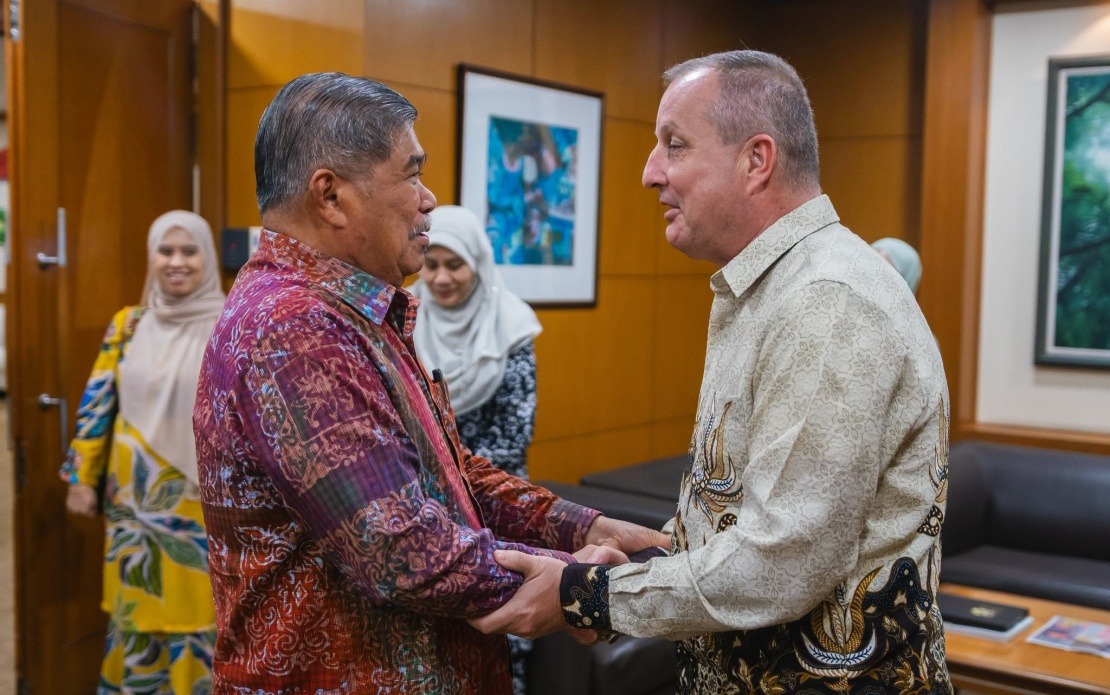
Malaysia and Hungary are embarking on a comprehensive partnership to strengthen their agricultural sectors and enhance food security, signalling growing bilateral engagement in a domain critical to both nations' long-term sustainability. The initiative encompasses multiple fronts, from institutional research collaboration to market participation and formal government coordination structures, reflecting a coordinated approach to addressing shared challenges in modern agriculture.
During a recent courtesy meeting between Agriculture and Food Security Minister Datuk Seri Mohamad Sabu and Hungarian Ambassador to Malaysia Dr. Sándor Sipos, both countries confirmed their commitment to advancing several concrete projects. A significant element of this partnership involves Hungary's confirmed participation in the Malaysian Agriculture, Horticulture and Agrotourism Exhibition (MAHA) 2026, one of the region's premier agricultural showcases. This participation represents more than ceremonial engagement; it signals Hungary's intent to introduce its agricultural expertise and innovations directly to Malaysian stakeholders, including farmers, agribusiness operators, and government officials.
Central to the bilateral framework is the establishment of the first Malaysia-Hungary Joint Working Group (JWG) meeting, a formal mechanism designed to coordinate policy and operational matters across both governments. Such structured dialogue provides the institutional foundation necessary for deeper cooperation, allowing both nations to align their agricultural development priorities and identify complementary areas where knowledge transfer and investment can flourish. The JWG format enables regular review of progress, problem-solving at the diplomatic level, and strategic planning for the medium to long term.
At the research level, collaboration between Malaysia's Agricultural Research and Development Institute (MARDI) and Hungary's University of Agriculture and Life Sciences (MATE) represents the technical backbone of this partnership. These institutions are already demonstrating tangible progress through the Erasmus+ Researcher exchange programme, which facilitates the movement of scientists and academics between the two countries to share methodologies and findings. Research domains under collaborative focus include genetics and breeding technology—fields where Hungary's well-established agricultural science capacity can benefit Malaysian researchers and vice versa—as well as the development of superior livestock products, addressing a sector of strategic importance to Malaysia's agri-food ambitions.
The emphasis on livestock product development reflects broader regional dynamics. Malaysia, as a significant food importer and a nation with growing protein consumption driven by rising incomes and urbanisation, stands to gain considerably from advanced breeding and production techniques. Hungary, meanwhile, possesses deep expertise in animal husbandry and value-added processing, competencies earned through centuries of agricultural tradition and decades of modern scientific advancement. By establishing formal research pathways, both nations create environments where innovation becomes systematic rather than sporadic, ultimately translating laboratory breakthroughs into practical improvements on farms and in processing facilities.
Minister Mohamad Sabu emphasised that this cooperation extends beyond academic institutions to encompass a broader ecosystem of stakeholders. Farmers, breeders, entrepreneurs engaged in agri-food ventures, and technology developers all stand to benefit through structured knowledge-sharing arrangements. Such inclusive framing acknowledges that agricultural advancement requires not only research excellence but also effective dissemination of innovations to those who implement them on the ground. When Hungarian researchers develop a superior crop variety or livestock strain, Malaysian farmers need accessible pathways to adopt and adapt these innovations to local conditions.
For Malaysia specifically, the partnership addresses longstanding priorities outlined in national food security strategies. Malaysia has consistently aimed to increase domestic production of key food categories while reducing import dependency, particularly in protein sources, fresh produce, and specialty agricultural products. By engaging with Hungary—a nation with strong European Union connections and experience in modern, regulated agriculture—Malaysia positions itself to benefit from best practices that meet international standards. This becomes increasingly important as Malaysian agri-exports target quality-conscious international markets where adherence to rigorous production and safety protocols determines competitiveness.
Hungary's interest in deepening Malaysian ties also reflects broader Central European strategic calculations. As Hungary seeks to expand its international agricultural trade and influence, partnerships with dynamic Southeast Asian markets offer expansion opportunities. Malaysia, with a population exceeding 33 million, rising middle-class purchasing power, and growing demand for diverse food products, represents an attractive market for Hungarian agricultural exports and technology licensing arrangements. The bilateral relationship thus embodies reciprocal advantage rather than one-directional benefit.
The trade and investment expansion component of the partnership remains deliberately open-ended, suggesting that both governments anticipate identifying opportunities as foundational collaboration deepens. Historical experience shows that research partnerships frequently generate commercial applications—a university collaboration on livestock genetics, for instance, might lead to joint ventures in breeding programme management or the establishment of training centres. Similarly, participation in MAHA 2026 may reveal specific market niches where Hungarian suppliers can compete effectively or where Malaysian producers might benefit from Hungarian investment and partnership.
From a Southeast Asian perspective, the Malaysia-Hungary cooperation exemplifies a broader trend wherein regional nations diversify their agricultural partnerships beyond traditional neighbours. By engaging with Central European expertise, Malaysia taps knowledge pools developed in climatic and economic contexts somewhat different from its own, potentially generating innovative solutions to local challenges. This diversification strategy strengthens regional food systems resilience by reducing concentration of expertise and avoiding over-reliance on any single partner for critical agricultural technologies or knowledge.
The government's commitment to sustaining and expanding this agricultural relationship reflects recognition that food security has become a geopolitical imperative. As climate change and resource constraints complicate global food production, nations that build diversified, capability-rich partnerships position themselves to navigate uncertainties more effectively. Malaysia's engagement with Hungary demonstrates strategic foresight in cultivating relationships that enhance domestic agricultural productivity while simultaneously opening export pathways and attracting quality foreign investment into the sector.
Moving forward, the practical success of this partnership will depend on consistent execution of the research collaborations, meaningful outcomes from the JWG meetings, and substantive business generated through increased trade engagement. If the foundational initiatives deliver results—whether through improved crop varieties, better livestock breeds, or expanded Malaysian agricultural exports to European markets—the partnership may evolve into a model for agricultural cooperation that Southeast Asian nations can replicate with other capable agricultural partners. For now, Malaysia and Hungary have established the framework; implementation will determine whether this cooperation delivers transformative benefits to both nations' farmers and food systems.

