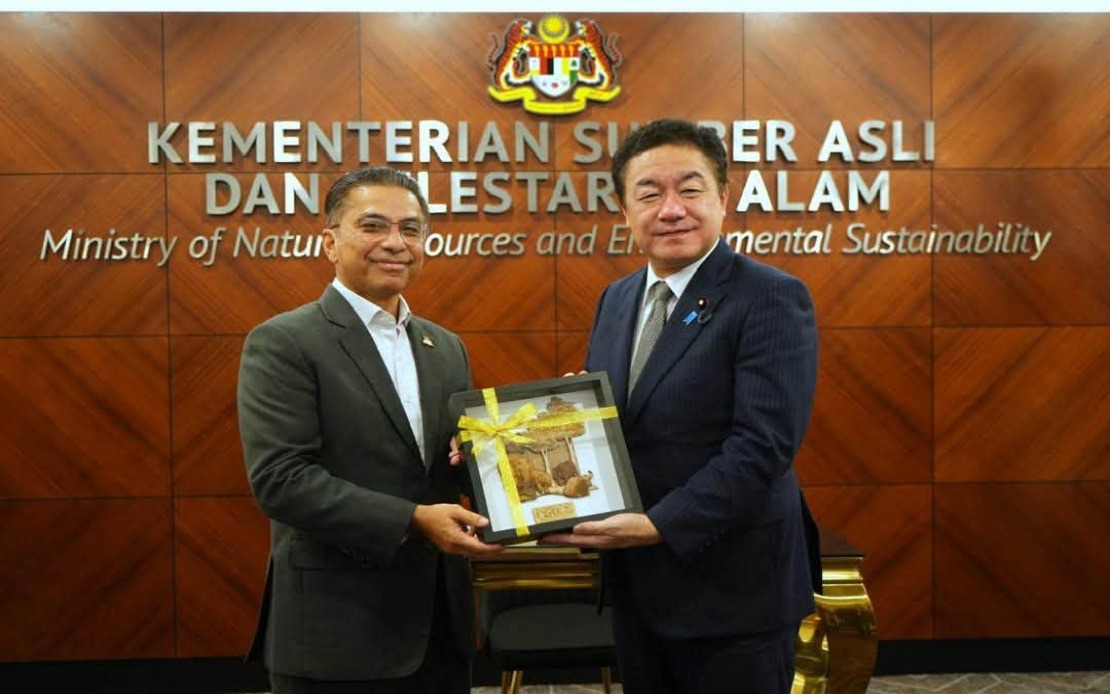
Strategic cooperation between Malaysia and Japan in critical sectors has entered a new phase following high-level discussions in Putrajaya this week. The engagement, centred on rare earth elements, minerals processing, and climate action, reflects both nations' commitment to deepening economic ties through the Malaysia-Japan Comprehensive Strategic Partnership framework. During the meeting, Japan's Parliamentary Vice-Minister of Economy, Trade and Industry, Komori Takuo, visited the Ministry of Natural Resources and Environmental Sustainability, signalling Tokyo's sustained interest in Malaysia's resource sector and environmental initiatives.
The discussions were led by Malaysia's Deputy Natural Resources and Environmental Sustainability Minister Syed Ibrahim Syed Noh and attended by senior officials from both governments, including Japanese Ambassador to Malaysia Shikata Noriyuki. The timing of this engagement follows key decisions made during a bilateral summit in June, with both countries now formalising concrete actions to translate strategic ambitions into tangible outcomes. For Malaysia, the visit underscores the nation's pivotal role in the global rare earth supply chain and its importance as a technology partner for Japan's industrial strategy.
Malaysia's position on rare earth processing stands at the centre of these discussions. The country has maintained a firm moratorium on exporting raw rare earth materials, a policy designed to capture greater economic value through domestic value-added processing and manufacturing. This approach contrasts with nations that export unprocessed minerals, allowing Malaysia to develop a competitive rare earth refining and manufacturing sector. Japan, which depends heavily on imported critical minerals for electronics, automotive, and renewable energy industries, has expressed appreciation for Malaysia's technical cooperation arrangements and the knowledge transfer initiatives facilitated through agencies like the Japan International Cooperation Agency (JICA) and the Japan Organisation for Metals and Energy Security (JOGMEC).
The technical cooperation frameworks mentioned during the meeting extend beyond mining and processing. Japan has been instrumental in supporting Malaysia's capacity-building efforts in rare earth technology and mineral beneficiation through JICA projects. JOGMEC's involvement brings Japanese expertise in energy security and metals sourcing, areas where both nations share strategic interests. These institutional partnerships represent a maturing relationship that moves beyond simple trade in raw commodities toward shared technological development and industrial ecosystem building.
Climate action constitutes the second pillar of this strengthened cooperation. Both countries have welcomed the finalisation of negotiations on a Memorandum of Cooperation for the Joint Crediting Mechanism, a framework operating under Article 6.2 of the Paris Agreement. This carbon market mechanism allows countries to cooperate on emissions reductions while creating tradeable carbon credits, enabling investment flows toward low-carbon technologies. The expected finalisation by year-end provides a concrete timeline for operationalising this arrangement, which has implications across Southeast Asia as other nations consider similar frameworks.
For Malaysia, participation in this joint crediting mechanism directly supports its Nationally Determined Contribution targets—the country's official commitments under the Paris Agreement to reduce emissions intensity and expand renewable energy. The mechanism also facilitates targeted investment in green technologies by Japanese companies seeking to offset emissions or access growing markets for clean energy solutions. This creates mutual benefits: Japan gains access to carbon credits and investment opportunities, while Malaysia receives capital and technology for its energy transition.
The convergence of rare earth cooperation and climate action reflects deeper economic logic. Japan's energy transition toward renewables and electric vehicles requires both critical minerals for battery production and carbon-neutral energy sources. Malaysia's rare earth processing capacity, combined with its renewable energy potential, positions the country as an essential partner in Japan's decarbonisation strategy. The discussions therefore represent aligned national interests rather than mere diplomatic courtesy, making the partnership sustainable beyond current political cycles.
Malaysia's advantage in these negotiations stems partly from its geographic and geological endowments, but also from deliberate policy choices. The rare earth moratorium reflects national prioritisation of downstream industries over simple resource extraction. This stance attracts technology partners like Japan, which prefer engaging with nations capable of sophisticated processing rather than competing on price for raw materials. Similarly, Malaysia's renewable energy transition creates investment opportunities aligned with Japan's green technology sector, particularly in solar, hydroelectric, and emerging technologies like green hydrogen.
The broader regional context amplifies the significance of this cooperation. Within Southeast Asia, few nations possess both substantial rare earth resources and the technical infrastructure for advanced processing. Malaysia's policy thus positions it as a strategic node in regional and global supply chains increasingly concerned with supply security and carbon footprints. For Japan, strengthening ties with Malaysia reduces dependence on other suppliers and diversifies access to critical inputs essential for technological industries.
Climate cooperation through the joint crediting mechanism also demonstrates how bilateral partnerships can advance regional climate ambitions. As Southeast Asian nations develop their own Paris Agreement commitments and transition strategies, frameworks like the Malaysia-Japan mechanism provide tested models for mobilising investment and facilitating technology transfer. The two countries' experience could inform similar arrangements across the region, potentially accelerating decarbonisation efforts.
The involvement of Malaysia's Foreign Ministry alongside the natural resources ministry signals the diplomatic weight attached to these discussions. Critical minerals and climate technology increasingly intersect with foreign policy and national security considerations, particularly as global competition intensifies for supply chain advantages. Japan's high-level engagement, through its Parliamentary Vice-Minister, emphasises Tokyo's strategic interest in locking in access to Malaysia's resources and technologies while presenting itself as a capable partner in green development.
Looking forward, the success of these initiatives depends on translating diplomatic agreements into functional cooperation. The joint crediting mechanism's finalisation by year-end will be closely watched by other nations considering similar frameworks. Similarly, sustained technical cooperation on rare earth processing must yield tangible improvements in Malaysia's value-added manufacturing capacity. Both outcomes would reinforce the Malaysia-Japan partnership while demonstrating practical benefits that justify continued high-level political engagement and resource allocation.

