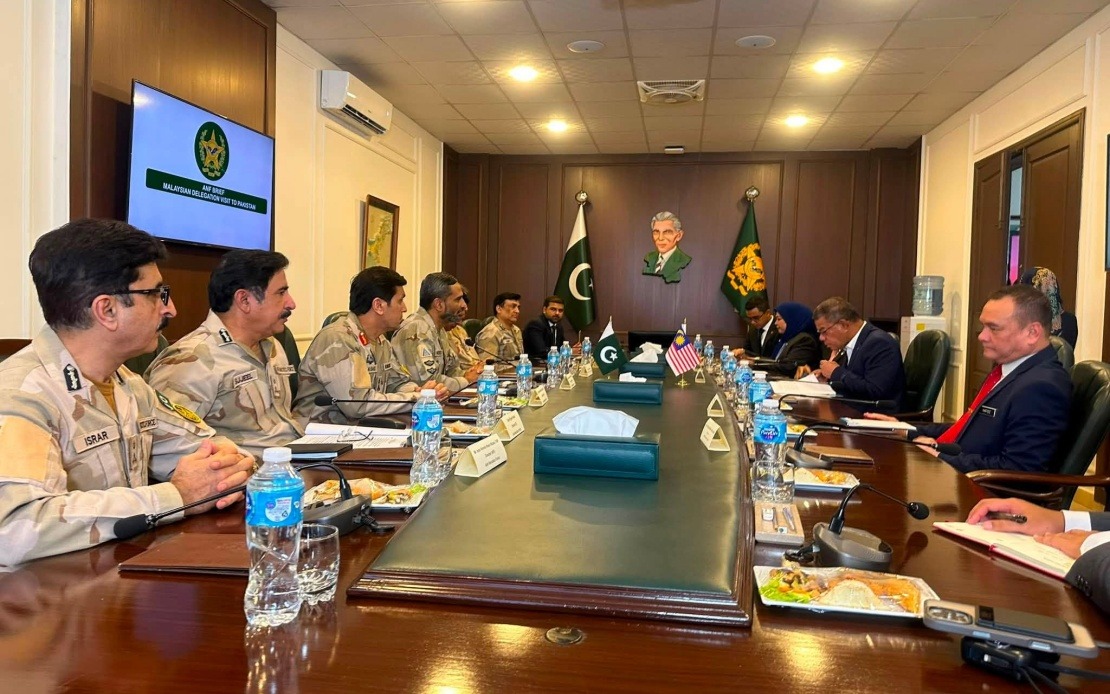
Malaysia and Pakistan are moving to formalise their drug-fighting efforts through a structured memorandum of understanding that will replace ad-hoc arrangements with systematic operational coordination. Home Minister Datuk Seri Saifuddin Nasution Ismail unveiled the initiative following discussions at Pakistan's Anti-Narcotics Force headquarters in Islamabad, signalling a strategic shift toward more rigorous regional partnership in tackling narcotics trafficking. The timing reflects mounting pressures from increasingly sophisticated criminal networks that exploit geographical and institutional vulnerabilities across borders.
The proposed framework addresses a critical security reality for Malaysia and Southeast Asia: Pakistan occupies a strategic position in global drug flows, sitting directly in the transit corridor from Afghanistan to East Asia. For Malaysian authorities, this proximity is not merely an academic concern but an operational imperative. Synthetic drugs including methamphetamine and heroin produced or transited through Afghanistan and Pakistan regularly reach Malaysian ports, street markets, and consumption centres. By establishing formal cooperation mechanisms, Malaysia acknowledges that its own enforcement efforts, however robust, cannot effectively interdict supply chains that originate thousands of kilometres away without coordinated intervention at source and transit points.
The historical foundation for this partnership is substantial. Between 2012 and 2018, Malaysian and Pakistani enforcement agencies jointly coordinated more than 28 significant narcotics cases, demonstrating both operational compatibility and mutual commitment to disrupting traffickers. However, Saifuddin Nasution has emphasised that future cooperation must transcend ceremonial agreements and paper protocols. Intelligence sharing must become continuous rather than episodic, joint operations must be planned with precision timing to prevent smugglers from exploiting gaps between national enforcement actions, and personnel exchanges must build institutional knowledge about trafficking methodologies and criminal networks operating across both countries.
The drug threat landscape has fundamentally shifted over the past decade. Organised crime syndicates now employ sophisticated logistics, exploit darknet markets, utilise cryptocurrency for transactions, and maintain operational security measures that rivals government agencies in complexity. Methamphetamine production has industrialised across Southeast Asia, with precursor chemicals sourced globally and finished products distributed through transnational networks. Malaysia, with its strategic port facilities in Klang and Penang and its established role as a regional financial hub, remains an attractive transshipment and distribution point. Pakistani authorities similarly confront enormous challenges managing their own domestic consumption problems whilst serving as a conduit for Afghan production.
During his visit, Saifuddin Nasution also engaged Pakistan's Interior and Narcotics Control Minister Syed Mohsin Raza Naqvi, resulting in agreement to establish a Joint Working Group focused on security, narcotics control, and police training. This institutional mechanism signals commitment beyond rhetoric. Regular meetings, shared standard operating procedures, and coordinated training programmes create the infrastructure necessary for sustained collaboration. The agreement also included signing of the International Transfer of Prisoners Agreement, enabling both nations to manage criminals convicted on opposite sides of the border with greater administrative efficiency.
The visit extended beyond narcotics considerations to encompass broader security and digital governance cooperation. Malaysian officials visited Pakistan's National Database and Registration Authority, observing systems for identity management, biometric verification, and border control. For a Malaysian Home Ministry navigating digital transformation priorities under the MADANI Government framework, exposure to Pakistan's technological approaches offers practical insights. Enhanced border security through better identity verification systems, improved passport data sharing, and integrated law enforcement databases could strengthen Malaysia's capacity to track suspected trafficking networks and identify individuals with criminal histories attempting cross-border movement.
Economic dimensions also featured prominently in discussions with Pakistan's Deputy Prime Minister and Foreign Minister Mohammad Ishaq Dar. Trade cooperation, investment opportunities, and food security arrangements were discussed alongside security matters, reflecting recognition that regional stability and prosperity are interconnected. Pakistan's potential as a supplier of rice and meat to Malaysia addresses food security concerns whilst strengthening bilateral economic ties that create incentives for sustained diplomatic engagement. When countries maintain robust trade relationships, they invest greater political capital in cooperative security arrangements, making enforcement cooperation more durable.
For Malaysia, this initiative carries implications extending beyond bilateral relations into Southeast Asian regional architecture. ASEAN member states collectively confront massive narcotics pressures originating from Golden Triangle production zones in Myanmar, Laos, and Thailand. Coordinating with Pakistan, a major player in global drug policy frameworks and a nation experiencing its own severe synthetic drug epidemic, positions ASEAN more effectively within international narcotics control mechanisms. The proposed MoU demonstrates willingness to engage beyond regional boundaries, potentially serving as a model for similar arrangements with other nations positioned along trafficking routes.
The enforcement challenges ahead remain formidable. Afghan opium production reached record levels in recent years before declining following Taliban cultivation restrictions, creating uncertainty about supply patterns. Synthetic drug manufacturing has become increasingly decentralised, with clandestine laboratories operating across multiple countries. Cryptocurrency transactions and darknet markets have obscured financial flows that traditionally offered investigation opportunities. Yet the Malaysia-Pakistan framework acknowledges these challenges as reasons for deepening cooperation rather than retreating into isolated national responses. By institutionalising intelligence sharing, coordinating operations with precision timing, and investing in personnel training, both nations signal recognition that compartmentalised enforcement inevitably fails against networks designed to exploit borders.
The broader geopolitical context also matters. Malaysia and Pakistan share Islamic heritage, participate in overlapping international forums, and increasingly recognise mutual interests in regional stability. For Pakistan, stronger enforcement cooperation with Southeast Asian nations addresses concerns about drug precursor chemicals and finished products flowing through the region. For Malaysia, engagement with Pakistan reflects strategic positioning as a serious player in global security challenges whilst building relationships that strengthen ASEAN's collective security posture. This memorandum of understanding thus represents more than a technical narcotics arrangement; it embodies Malaysia's commitment to addressing transnational security challenges through structured regional partnerships and acknowledgment that geographically dispersed threats demand geographically coordinated responses.

