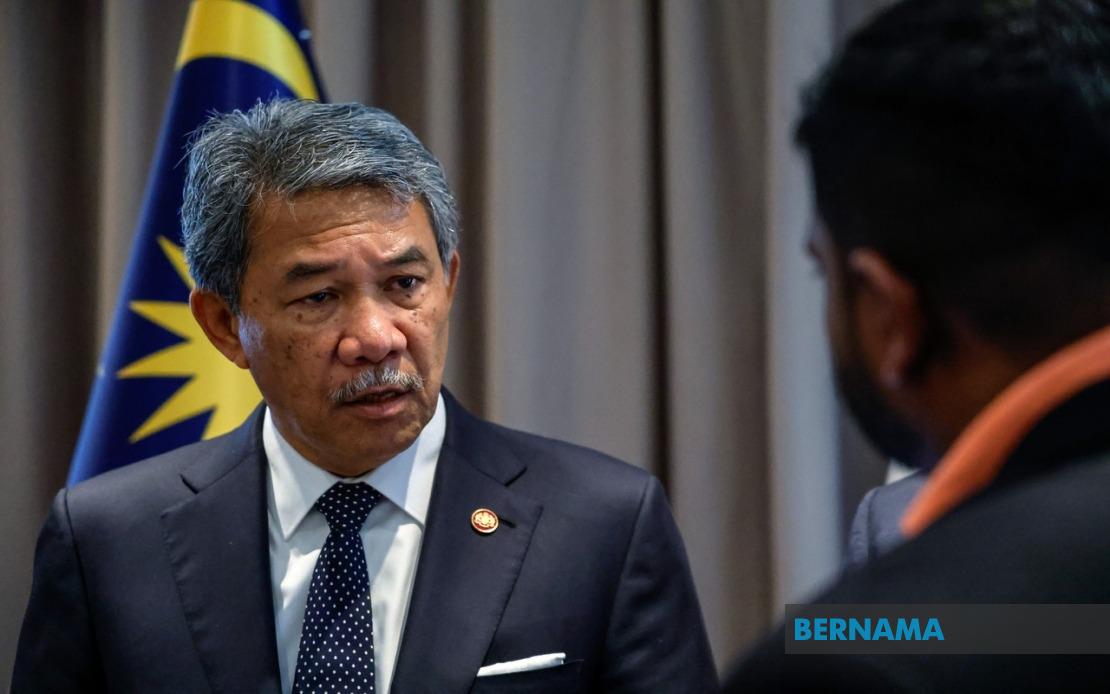
Malaysia and the Philippines have moved to fast-track the repatriation of more than 5,000 undocumented Philippine nationals currently held in four immigration detention facilities across Sabah, acknowledging that capacity at these centres has reached critical levels. The two nations outlined their commitment during the 9th Malaysia-Philippines Joint Commission Meeting in Manila, where Malaysian Foreign Minister Datuk Seri Mohamad Hasan and Philippine Secretary of Foreign Affairs Ma. Theresa P. Lazaro co-chaired discussions focused on resolving the protracted migrant detention issue that has strained relations and resources on the Malaysian side.
Screening conducted by the Philippine Embassy in Kuala Lumpur has already identified more than 1,000 individuals from the detained population who meet criteria for immediate deportation, allowing both governments to begin prioritising the most straightforward cases for swift processing. The scale of the detained population underscores a long-standing challenge for Malaysia, particularly in Sabah where undocumented migration from the Philippines and other Southeast Asian nations remains a persistent border management concern. Malaysian officials have repeatedly raised concerns about infrastructure constraints at these detention facilities, which were never designed to accommodate such sustained population levels over extended periods.
The agreed approach involves utilising multiple logistical pathways, including sea routes and other transport methods deemed viable by both administrations, to move detainees back across the maritime border. This flexibility in repatriation mechanisms reflects recognition that traditional channels have been insufficient given the volume involved. Malaysia has pressed the Philippine government to act with urgency in processing and receiving its citizens, emphasising that prolonged detention creates humanitarian and operational complications. The detention centre overcrowding issue has become a focal point of bilateral discussion, with Malaysian authorities viewing rapid repatriation as essential to restoring operational capacity and addressing the humanitarian dimensions of prolonged confinement.
Beyond immediate repatriation logistics, the two countries have initiated dialogue around educational provision for children of undocumented migrants currently residing in Sabah. This reflects a nuanced understanding that not all migrants can be immediately processed, and that vulnerable dependents warrant attention even within the broader context of irregular migration management. Malaysia has committed to examining what educational continuity looks like before affected families return to the Philippines, signalling a willingness to address the welfare of individuals caught in legal limbo. However, both nations have established a clear parameter: any educational arrangements must remain under direct Philippine government administration rather than being delegated to private entities, ensuring proper oversight and preventing the emergence of unregulated alternative schooling structures.
Foreign Minister Mohamad emphasised that Malaysia opposes the creation of unmonitored private educational facilities serving migrant populations, viewing such arrangements as potential vectors for exploitation or further irregular settlement consolidation. This stance reflects broader concerns about preventing the institutionalisation of undocumented communities, which could inadvertently entrench irregular status across generations. The insistence on government-to-government educational responsibility represents a diplomatic formula that maintains sovereignty while acknowledging humanitarian imperatives for affected children. The inclusion of education discussions in bilateral talks signals recognition that migration issues extend beyond border enforcement into social policy domains affecting vulnerable populations.
The Joint Commission Meeting also addressed the contentious question of Sabah's territorial status, with Senator Robin Padilla's recent statements urging President Ferdinand Marcos Jr to revive the Philippines' historical claim over Sabah creating diplomatic friction. Mohamad stated that while the claim question was not a primary discussion item during the formal meeting, he used the opportunity to reaffirm Malaysia's position grounded in international law and United Nations recognition. He noted that the UN Secretary-General presented a commission recognising Sabah as integral Malaysian territory, a determination that should, in Malaysia's view, render further claims unjustifiable within the framework of global legal norms and established borders.
Malaysia had previously indicated its intent to lodge a formal diplomatic note with the Philippine government following Padilla's remarks, treating the territorial assertion as sufficiently significant to warrant official protest. This response reflects Malaysian sensitivity to statements perceived as challenging its territorial integrity, even when originating from individual senators rather than official government position. Mohamad's appeal to Asean member states to respect international law when addressing border questions represents an attempt to frame the matter within regional norms of peaceful dispute resolution and respect for established sovereignty arrangements. The dual focus on cooperation regarding migration management alongside defence of territorial claims illustrates the complex interplay between practical bilateral cooperation and deeper historical grievances within Malaysia-Philippines relations.
The repatriation acceleration initiative carries significant implications for Sabah's immigration administration and budget allocation. Detention centre operators have reported challenges maintaining adequate facilities, healthcare, and security protocols given persistent overcrowding. Relieving this pressure through expedited repatriation could free resources for other immigration enforcement priorities and improve conditions for remaining detainees undergoing processing. For the Philippines, receiving and reintegrating several thousand nationals, many of whom have limited formal documentation and may face reintegration challenges, represents a substantial undertaking requiring coordination across multiple government agencies and potentially development assistance to affected communities of origin.
The bilateral dialogue also extends to broader Southeast Asian migration challenges, as the region continues grappling with large undocumented populations displaced by conflict, economic pressures, and trafficking networks. The Malaysia-Philippines approach—combining enforcement through detention and repatriation with humanitarian considerations for vulnerable dependents—mirrors efforts across the region to balance border security imperatives with human rights obligations. However, the success of any repatriation initiative depends critically on sustained political will, adequate funding, and coordination across bureaucratic structures in both countries that often struggle with information sharing and administrative alignment.
Moving forward, the effectiveness of this accelerated repatriation framework will test both nations' capacity for sustained cooperation on migration issues. The identification of over 1,000 immediate deportees provides an opportunity to demonstrate progress that could build momentum for handling remaining cases. However, underlying issues regarding economic migration drivers, labour recruitment channels, and transnational family networks suggest that bilateral cooperation alone cannot resolve structural factors perpetuating irregular migration flows. The Philippine government's willingness to coordinate logistics and expedite reception procedures will be critical determinants of whether the repatriation initiative achieves its targets within reasonable timeframes.

