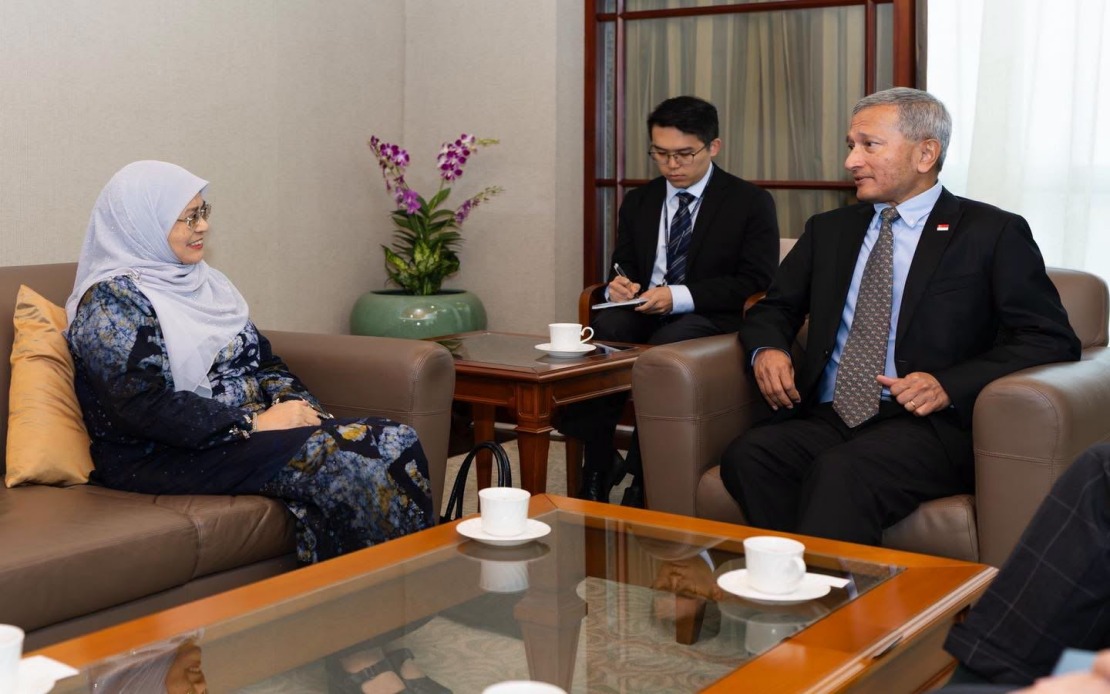
Malaysia and Singapore have jointly emphasised their determination to sustain the positive trajectory of their bilateral partnership and expand collaborative efforts across diverse fields, according to statements from the Malaysian High Commission in Singapore. The two nations signalled their resolve to maintain momentum in their long-established relationship during an official courtesy visit held this week in the city-state.
The reaffirmation of this commitment occurred when Datin Paduka Anizan Siti Hajjar Adnin, who recently took office as Malaysia's High Commissioner to Singapore, met with Singapore's Foreign Minister Dr Vivian Balakrishnan on Wednesday. The introductory meeting provided an opportunity for the newly appointed envoy to present her credentials and establish working relations with Singapore's foreign affairs leadership at the outset of her tenure.
Beyond ceremonial protocol, both delegations engaged in substantive discussions regarding the state of Malaysia-Singapore relations and identified shared priorities for the months and years ahead. The dialogue centred on the practical dimensions of bilateral cooperation that directly touch the lives of citizens on both sides of the border. Officials acknowledged the significant interdependence between the two nations, where substantial populations maintain family connections, employment arrangements, and business interests across the Johor-Singapore boundary.
The high commissioner's diplomatic mission underscores the importance of maintaining the institutional frameworks and personal relationships that underpin Malaysia-Singapore ties. According to the Malaysian High Commission's account of the meeting, both sides recognised that sustained attention to bilateral matters remains essential for ensuring mutual prosperity and regional stability. This emphasis on continuity reflects a broader understanding that the relationship requires ongoing investment and careful stewardship, particularly given the complexity of their shared border and overlapping economic interests.
Singapore's Foreign Minister articulated the foundation upon which the two nations have constructed their partnership. Balakrishnan characterised the Malaysia-Singapore relationship as inherently unique, rooted in historical connections that predate modern statehood and reinforced by organic ties that link ordinary citizens across communities and families. He highlighted the dense networks of people-to-people engagement that have accumulated over decades, creating a bedrock of mutual familiarity and understanding that complements official diplomacy.
Balakrishnan's public endorsement of the incoming high commissioner carries significance for signalling continuity in Singapore's approach to the relationship. His statement commended Anizan's extensive diplomatic background and expressed confidence that she would build productively upon the foundations laid by her predecessors. This framing positions the new high commissioner within a tradition of exemplary diplomatic service while acknowledging both the institutional memory embedded in the role and the individual agency she brings to the position.
Datin Paduka Anizan officially commenced her responsibilities as Malaysian High Commissioner to Singapore on July 2, 2026, arriving as the relationship enters a particular phase. Her appointment reflects Malaysia's commitment to sustaining senior diplomatic representation in the neighbouring city-state, signalling the importance Kuala Lumpur attaches to this bilateral relationship. The timing of her introductory courtesy call and the emphasis placed on the meeting in official communications underscore mutual interest in demonstrating renewed focus on the partnership.
The reference to improving living standards for ordinary citizens represents an important framing of bilateral cooperation. Rather than limiting discussions to high-level political or strategic matters, both governments acknowledged that the practical benefits of good relations must be visible and tangible to the populations of both countries. This includes facilitating cross-border mobility for workers, enabling families to maintain connections, and providing stable environments for businesses operating across both jurisdictions.
The cooperative relationship between Malaysia and Singapore extends across economic, cultural, security, and social domains. Water agreements, transportation connectivity, defence coordination, trade arrangements, and educational exchanges constitute the architecture of the relationship. Each of these areas requires ongoing attention and periodic recalibration to respond to changing circumstances, technological developments, and evolving needs within both societies.
For Malaysian readers, the significance of this diplomatic engagement lies in its reflection of how bilateral relationships function in practice. High commissioners serve as crucial intermediaries, and their effectiveness in establishing productive working relationships with host government counterparts directly influences the quality of diplomatic outcomes achieved. Anizan's long diplomatic career positions her to navigate the nuances of Malaysia-Singapore relations, where historical sensitivities, contemporary practical concerns, and future aspirations must be balanced carefully.
Regionally, Malaysia and Singapore's commitment to strengthening cooperation carries implications beyond the bilateral framework. Both nations occupy important positions within Southeast Asian architecture, and the stability of their relationship contributes to broader regional coherence. When Malaysia and Singapore demonstrate commitment to resolving issues and expanding cooperation, they provide a model of pragmatic diplomacy that influences the wider regional environment.
The deliberate public communication surrounding this meeting, through official Facebook posts and High Commission statements, reflects both governments' interest in demonstrating their commitment to the relationship to domestic audiences and international observers. In an era of social media diplomacy, such statements serve multiple purposes: they reinforce internal messaging about foreign policy priorities, signal continuity to bilateral partners, and document for historical record the state of relations at particular moments.

