The rapid evolution of artificial intelligence and emerging defence technologies has reshaped how nations approach security planning and military modernisation. Malaysia has positioned itself at the forefront of this transformation by formalising a comprehensive defence partnership with South Korea through a Memorandum of Understanding signed during the Association of South-East Asian Nations Summit last October. Rather than a conventional vendor-buyer relationship, this collaboration represents a strategic commitment to technology transfer, capability building, and joint industrial development that extends across multiple defence sectors including aerospace, surveillance systems, cyber defence, and advanced manufacturing.
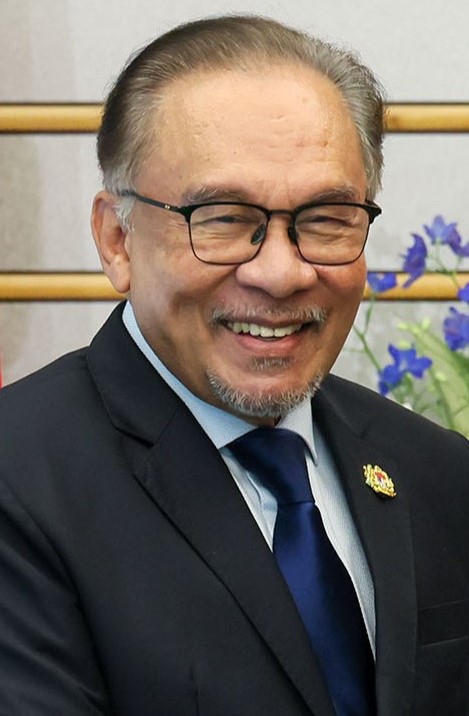
Malaysian Defence Minister Datuk Seri Mohamed Khaled Nordin has emphasised that the partnership transcends simple procurement arrangements. Seoul's willingness to share technological expertise and assist in developing Malaysia's indigenous defence industry capabilities forms the cornerstone of this engagement. South Korea's proven track record in aerospace innovation, sophisticated surveillance systems, and cyber defence technologies makes it an attractive partner for a nation seeking to modernise its armed forces while simultaneously strengthening local industrial capacity. This dual approach aligns with Malaysia's broader objective of reducing dependence on foreign defence suppliers whilst cultivating a competitive domestic defence manufacturing sector.
South Korea's own defence sector has experienced explosive growth through sustained investment in domestically developed technologies. The Defence Acquisition Program Administration (DAPA), the government agency responsible for managing defence manufacturing, acquisitions, and research initiatives, has prioritised building homegrown capabilities. Rather than relying solely on indigenous development, DAPA pursues a hybrid strategy incorporating international collaborative research and development partnerships that allow the country to acquire technologies in areas where gaps exist. This pragmatic approach has yielded substantial dividends, as evidenced by successful joint ventures such as the KF-21 multirole fighter jet programme with Indonesia, which entered mass production in March of this year.
Korea Aerospace Industries (KAI), a major South Korean aerospace and defence manufacturer, sees significant expansion opportunities emerging from Malaysia's commitment to modernise its air force. The Royal Malaysian Air Force is scheduled to receive its initial shipment of four FA-50M light multirole fighter jets in October, marking a critical juncture for deepening bilateral aerospace collaboration. Beyond the immediate aircraft delivery, KAI envisions establishing maintenance, repair, and overhaul (MRO) facilities that would enable gradual knowledge transfer to Malaysian personnel. This arrangement transforms what might otherwise be a simple logistics function into a comprehensive technology-sharing mechanism where Malaysian engineers and technicians progressively acquire the technical expertise, manufacturing techniques, and operational knowledge necessary to sustain advanced fighter aircraft independently.
The envisioned maintenance framework extends well beyond conventional aircraft servicing. KAI officials have indicated openness to expanding collaboration into civilian aviation platforms, aerospace software development, artificial intelligence applications, and unmanned aerial vehicle systems. Training and education programmes would accompany these technical partnerships, ensuring Malaysian defence personnel and engineers can operate and support next-generation systems effectively. This multifaceted approach recognises that sustainable defence capability requires not merely acquiring hardware but developing the human capital and institutional knowledge necessary to operate, maintain, and eventually innovate within these technological domains.
South Korea's Defence Innovation 4.0 initiative demonstrates how aggressively the country is pursuing artificial intelligence integration across military applications. Multiple research projects under this umbrella programme are exploring AI applications ranging from autonomous systems to predictive maintenance, robotic platforms, advanced unmanned vehicles, and stealth fighter development. KAI's development of the KAILOT, an AI-powered autonomous unmanned aerial vehicle system, exemplifies this technological direction. The system operates in coordination with manned fighter aircraft, enabling one pilot to command multiple AI-controlled drones simultaneously. These unmanned platforms execute assigned missions including electronic warfare, intelligence and reconnaissance, and strike operations, substantially multiplying a single pilot's operational effectiveness whilst reducing pilot workload and fatigue during extended missions.
The sophistication of such coordinated manned-unmanned operations demonstrates the advanced state of South Korean military technology development. Real-time cooperation between human pilots and autonomous systems requires substantial computational capability, artificial intelligence algorithms, and secure communications networks—all areas where South Korea has invested heavily. For Malaysia, access to such technology through partnership arrangements offers a shortcut to capabilities that would require decades and enormous expenditure to develop independently. The knowledge transfer accompanying these technological systems can accelerate Malaysia's own research and development programmes in autonomous systems and artificial intelligence.
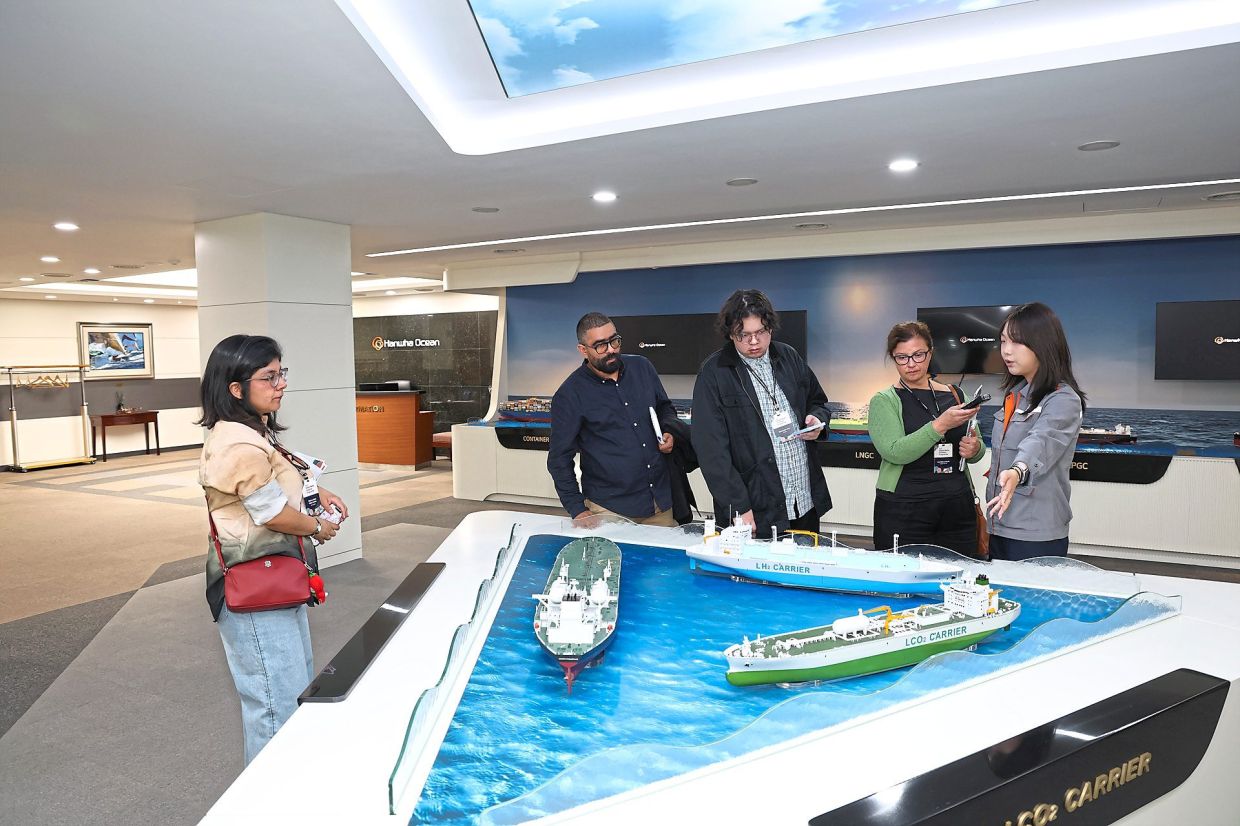
Beyond fighter aircraft, South Korea is integrating advanced technologies across its entire defence industrial base. Hanwha Ocean, a major shipbuilder and defence contractor, has constructed a virtual reality training facility at its Geoje shipyard to revolutionise workforce development. The VR simulator centre trains personnel in critical manufacturing operations including spray painting, blasting, and grinding through immersive, eight-week programmes. These customisable training scenarios allow instructors to adjust variables such as equipment specifications, work surface dimensions, seasonal factors affecting paint drying, and paint viscosity, with simulated air hose pressure providing authentic sensory feedback. By conducting initial training in virtual environments rather than on production equipment, Hanwha Ocean substantially reduces worker exposure to toxic fumes, dust, and hazardous conditions whilst improving training consistency and effectiveness.
The shipbuilder's adoption of advanced manufacturing technologies extends to its production facilities themselves. Hanwha Ocean's smart shipyard employs real-time production data collection and digital monitoring systems that coordinate manufacturing workflows and quality assurance. Approximately 90 percent of welding operations utilise in-house developed robots capable of completing welds up to four times faster than manual methods. Individual operators can simultaneously oversee as many as ten robotic welding units, fundamentally transforming labour productivity and construction quality. Such technological sophistication in defence manufacturing represents another domain where Malaysia could benefit substantially from collaborative arrangements and knowledge transfer agreements with South Korean partners.
The KS-III Dosan Ahn Changho submarine programme showcases South Korean innovation in naval defence systems. These submarines combine diesel-electric propulsion with lithium-ion battery technology, enabling submerged operations extending beyond three weeks—a substantial enhancement over conventional diesel-electric vessels. Such technological advances in submarine design, propulsion systems, and battery technology reflect decades of sustained investment and research. For Malaysia, which operates a smaller naval fleet and maintains modest submarine capabilities, access to emerging maritime technologies through partnership mechanisms could significantly enhance regional naval security without proportionally expanding defence budgets.
The Malaysia-South Korea defence partnership arrives at a moment when Southeast Asian nations face intensifying pressure to modernise military capabilities amid regional strategic competition. This collaboration model—emphasising technology transfer, joint development, and capability building rather than simple equipment sales—provides a replicable framework for other Southeast Asian nations seeking to strengthen defence industries. Malaysia's engagement with Seoul demonstrates that achieving defence self-sufficiency requires international partnerships structured around mutual benefit, knowledge exchange, and long-term industrial development rather than perpetual reliance on foreign suppliers.
For Malaysian defence planners, the partnership offers access to cutting-edge technologies across multiple domains whilst building indigenous industrial capacity. South Korea gains market access and enhanced regional influence through demonstrating technological leadership and commitment to regional stability. As both nations deepen this collaboration through maintenance programmes, joint research initiatives, and technology transfer arrangements, the relationship could serve as a model for defence partnerships across Southeast Asia, fostering regional capabilities whilst maintaining security partnerships with developed nations.