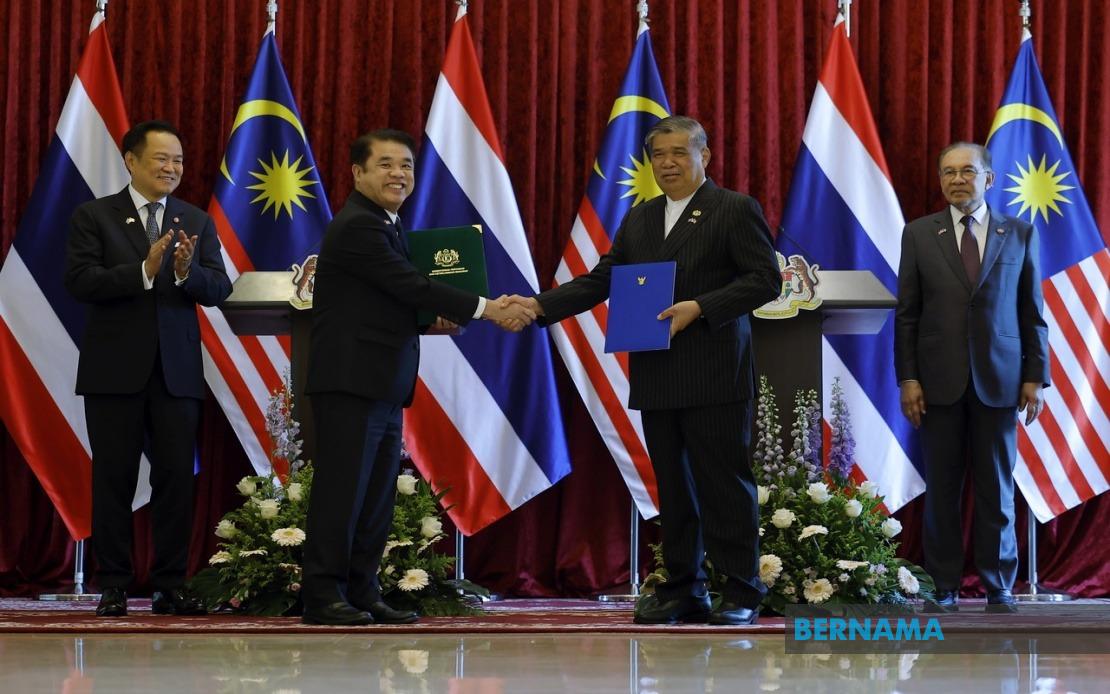
During Thailand's Prime Minister Anutin Charnvirakul's maiden official visit to Malaysia, the two nations have moved decisively to settle contested issues in their fisheries trade and accelerate implementation of an agricultural partnership framework. The breakthrough came at talks in Putrajaya on July 9, where Malaysian Prime Minister Datuk Seri Anwar Ibrahim and Anutin oversaw the exchange of a Memorandum of Understanding on agricultural cooperation between the respective agriculture ministers. The agreement's rapid timeline—compressed from the Thai government's initial proposal of eighteen months to just seven days—signals both countries' determination to deepen economic ties and address food security challenges that affect the broader Southeast Asian region.
The fisheries dispute, which had simmered for months, centered on Malaysia's stricter import requirements for Thai seafood products. Beginning June 1, Malaysia implemented new import controls requiring Certificates of Analysis for barramundi shipments and temporarily suspending imports of five specific shrimp species. These measures, designed to ensure product safety and compliance with Malaysian standards, had created friction in bilateral trade relations. However, through focused ministerial discussions between Agriculture and Food Security Minister Datuk Seri Mohamad Sabu and Thai counterpart Suriya Juangroongruangkit, negotiators identified workable solutions that balance Malaysia's regulatory concerns with Thailand's commercial interests in the Malaysian market.
Anwar's statement at the joint press conference emphasized the political significance of this resolution. His public acknowledgment that Malaysia had prevailed in securing a one-week implementation timeline rather than accepting Thailand's eighteen-month proposal underscores Malaysia's negotiating position on food security matters. For Malaysian consumers and businesses, the accelerated framework means faster resolution of future agricultural trade disputes through more structured institutional channels, reducing the likelihood that technical disagreements will escalate into prolonged trade frictions.
The MoU itself provides a substantially broader foundation for agricultural cooperation than existing arrangements. Beyond addressing immediate market-access grievances, the agreement establishes comprehensive collaboration across crop production, livestock management, fisheries development, and trade facilitation. Critically, the framework incorporates research and development initiatives, capacity-building programs, biosecurity protocols, and sanitary and phytosanitary measures—elements essential for maintaining food safety standards while enabling smoother cross-border agricultural commerce. This institutional architecture creates what Malaysian officials describe as a more transparent and continuous mechanism for coordinating agricultural policies, allowing authorities on both sides to address emerging issues proactively rather than reactively.
For Malaysia's agri-food sector, the significance of the Thai relationship cannot be overstated. Agricultural and agri-food trade between the nations reached RM20.33 billion in the twelve months through December 2025, reflecting Thailand's position as both a critical source of food imports and an important market for Malaysian agricultural products. Malaysia's primary agricultural exports to Thailand—coffee, cocoa, tea, spices, and processed food items—represent the value-added end of the supply chain, where Malaysian businesses have cultivated competitive advantages. Conversely, Malaysia's reliance on Thai meat and meat-based products makes trade stability with Bangkok essential for domestic food security and price stability.
The timing of this agricultural accord carries additional regional relevance. Southeast Asia faces mounting food security pressures driven by climate volatility, growing populations, and shifting consumption patterns. Thailand, as the region's largest rice exporter and a significant producer of seafood and tropical fruits, occupies a pivotal role in regional food systems. Malaysia's ability to secure reliable, predictable access to Thai agricultural supplies while offering Thai producers secure markets for their goods contributes to broader regional stability. The MoU's emphasis on collaborative research and capacity building suggests that both governments recognize that food security challenges transcend national borders and require coordinated responses.
The bilateral context extends beyond agriculture. Anwar and Anutin had conducted preliminary discussions the previous week focusing on trade expansion, investment flows, and regional security matters. These broader talks provided the political foundation for resolving the technical fisheries disagreement. That senior political leadership invested time in agricultural issues—rather than relegating such matters to technical agencies—signals the importance both governments attach to food security as a strategic national interest. For Malaysian policymakers, this approach reflects a growing recognition that agricultural trade cannot be compartmentalized from wider strategic partnerships.
The establishment of structured coordination mechanisms through the MoU addresses a persistent challenge in Malaysia-Thailand relations: the tendency for technical disagreements to fester without clear escalation or resolution pathways. By creating formal channels for regular ministerial engagement, joint working groups, and standardized procedures for addressing disputes, the framework reduces transaction costs associated with bilateral agricultural commerce. Malaysian exporters and importers will benefit from greater certainty about regulatory requirements and faster resolution when issues arise, potentially reducing compliance costs and market access delays.
Looking forward, the one-week implementation timeline creates accountability on both governments to operationalize the agreement's provisions promptly. For Malaysia's Agriculture and Food Security Ministry, this means preparing detailed operational guidelines, ensuring relevant state-level authorities understand their responsibilities, and establishing communication protocols with Thai counterparts. The compressed timeline also reflects confidence that technical obstacles have been substantially resolved, with remaining work primarily administrative in nature. This suggests the negotiating process involved genuine problem-solving rather than theatrical posturing, boding well for the agreement's effectiveness once implemented.
The fisheries resolution particularly merits attention for Malaysian industry observers. The agreement to address "pending cases of market access" indicates that both the barramundi certification requirements and shrimp import restrictions may be revised through the MoU's implementation process. Any modifications will require balancing Malaysia's food safety and biosecurity standards against the commercial needs of Malaysian importers and Thai exporters. The fact that these adjustments emerged from high-level political discussions rather than unilateral Malaysian action suggests a genuine negotiated settlement rather than capitulation by either party.
Morely broadly, this agreement exemplifies how trade relationships in Southeast Asia are evolving beyond simple tariff negotiations toward comprehensive frameworks addressing quality standards, regulatory harmonization, and joint institutional capacity. The inclusion of research and development cooperation, for instance, creates possibilities for joint innovation in agricultural productivity—potentially benefiting both nations' farmers through improved crop varieties, sustainable farming techniques, and market-oriented production planning. Such collaboration becomes particularly valuable as climate change pressures regional agriculture and creates incentives for region-wide adaptation strategies.
For Malaysian consumers, the MoU's successful implementation could translate into greater food price stability and supply security, particularly for imports like meat products where Thailand dominates regional supply chains. By establishing predictable, rule-based trade relationships rather than ad-hoc arrangements subject to political shifts, the agreement creates conditions for steady agricultural commerce that benefits households through reliable availability and competitive pricing. Additionally, the emphasis on sanitary and phytosanitary measures ensures that trade expansion does not compromise food safety standards—a critical consideration for public health.
The agreement ultimately reflects both pragmatism and strategic vision. Malaysia and Thailand, as neighboring economies with complementary agricultural resources and consumption patterns, have strong incentives to cooperate. By resolving immediate disputes through structured negotiation and institutionalizing future cooperation through a comprehensive MoU, both governments have positioned themselves to capture mutual benefits from agricultural trade while managing inevitable disagreements through established procedures. For the broader ASEAN region, the success of this bilateral framework may provide a model for how other member states can deepen agricultural cooperation and address food security challenges collaboratively.

