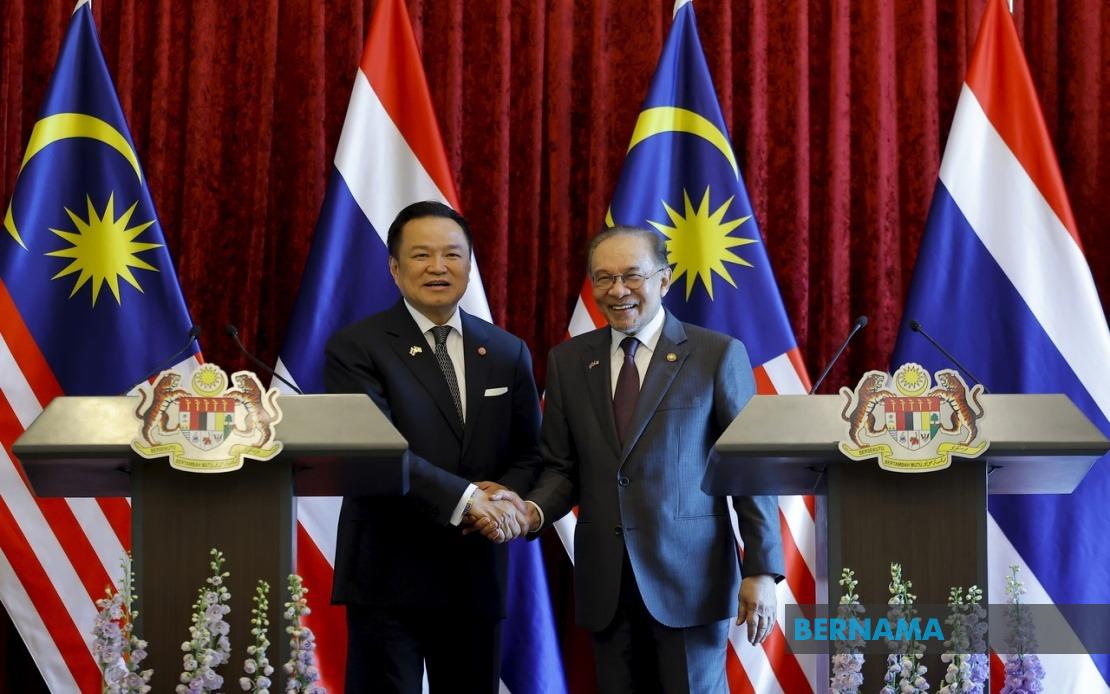
Malaysia and Thailand have pledged to accelerate development of cross-border infrastructure and establish special economic zones along their shared frontier, aiming to boost bilateral trade to USD30 billion by 2027. The commitment emerged from a bilateral meeting between Prime Minister Datuk Seri Anwar Ibrahim and Thai Prime Minister Anutin Charnvirakul in Putrajaya on July 9, underscoring both governments' determination to deepen economic integration and resolve longstanding connectivity challenges that have historically constrained commerce between the two nations.
During their joint press conference, Anwar characterised the discussions as substantive and productive, highlighting the breadth of issues examined and the collaborative spirit evident throughout. He emphasised that Malaysia and Thailand share deep ties rooted in cultural heritage, historical proximity, and existing economic partnerships, yet both sides recognise significant untapped potential across multiple sectors. The Prime Minister suggested that current levels of bilateral engagement fall short of what the neighbouring countries could realistically achieve, particularly given geographical adjacency and complementary economic structures.
The agenda encompasses far more than conventional trade facilitation. Both governments have resolved to streamline immigration procedures and customs operations at border crossing points, recognising that bureaucratic inefficiencies have long deterred cross-border investment and smaller traders. By reducing processing times and harmonising documentation standards, officials aim to make it easier for Malaysian and Thai businesses to access each other's markets. This effort extends to harmonising product standards and regulatory frameworks where feasible, though each nation will maintain appropriate safeguards.
Special border economic zones represent a centrepiece of the bilateral strategy. These designated areas would operate under modified regulatory frameworks, offering incentives such as tax concessions and streamlined licensing procedures to attract joint ventures and regional manufacturing clusters. The model reflects successful experiences elsewhere in Southeast Asia, where targeted zones have catalysed employment and infrastructure investment. For Malaysia, such zones could strengthen the position of border states like Kedah and Perlis, which historically have experienced slower economic development relative to more industrialised regions.
The trade target of USD30 billion carries considerable significance. Current bilateral commerce falls substantially below this figure, indicating the scale of ambition embedded in the 2027 goal. Achievement would require annual growth rates substantially exceeding historical trends, necessitating not merely improved market access but genuine structural transformation in how businesses on both sides engage. This implies a shift beyond simple commodity exchange toward more sophisticated supply-chain integration and value-added manufacturing.
Anwar's decision to undertake a visit to Bukit Kayu Hitam and Sadao represents a deliberate symbolic choice, extending the bilateral engagement beyond capital-city diplomacy into the communities most directly affected by border policies. This geographical dimension underscores that economic cooperation gains legitimacy and practical grounding when local stakeholders see tangible benefits. Border communities in Malaysia and Thailand often experience economic marginalisation despite geographical advantages, and successful implementation of these projects could materially improve living standards and business opportunities for residents.
Charnvirakul's participation signals Thai commitment at the highest political level. Thailand's Prime Minister presence at the border locations demonstrates that Bangkok considers this initiative a priority, not merely routine bilateral business. For Malaysia, this elevation of status validates the importance placed on the relationship and suggests Thailand is prepared to allocate resources and political capital to overcoming implementation obstacles. Historical experience with cross-border infrastructure projects shows that such high-level political backing often proves essential when addressing entrenched bureaucratic practices or competing domestic priorities.
The timing of these announcements intersects with broader regional dynamics. Southeast Asia faces intensifying economic competition as global supply chains undergo reconfiguration, and countries increasingly seek to position themselves as attractive manufacturing and logistics hubs. Malaysia-Thailand cooperation on border zones potentially creates a competitive advantage, particularly for businesses seeking to serve broader ASEAN markets. Enhanced connectivity between two significant regional economies could generate positive spillover effects throughout the region, improving transport corridors and reducing logistics costs that ultimately benefit all participating nations.
Implementation will present substantial challenges requiring sustained political attention. Cross-border projects typically encounter difficulties ranging from security concerns to environmental considerations to disputes over resource allocation and benefit-sharing. Experience with similar initiatives suggests that establishing clear governance structures, transparent dispute resolution mechanisms, and equitable distribution of costs and benefits proves essential. The ambitious 2027 timeline implies that both governments have already begun detailed planning, though the specific mechanisms for achieving various targets remain to be fully articulated.
For Malaysian businesses, particularly those in manufacturing, agriculture, and services, successful execution of this agenda promises expanded market opportunities. Thai consumers and businesses represent substantial purchasing power, and reduced trade barriers would facilitate Malaysian companies in capturing market share. Conversely, Thai exporters could benefit from improved access to Malaysian consumers and utilisation of Malaysia as a potential logistics hub for serving broader regional markets. This mutually beneficial dimension helps explain the bilateral enthusiasm.
The emphasis on resolving outstanding issues suggests that bilateral relations harbour some unresolved matters that both sides deemed appropriate to address through this high-level engagement. While Anwar did not specify precisely which issues received attention, possibilities include long-standing maritime boundary questions, transboundary water management, or trade disputes requiring high-level political resolution. The willingness to address such matters alongside commercial initiatives indicates a comprehensive approach to managing the bilateral relationship.
Successful realisation of these commitments would position Malaysia and Thailand as exemplars of functional regional integration, demonstrating that neighbouring developing economies can transcend historical friction to unlock mutual prosperity. The USD30 billion target, though ambitious, appears grounded in realistic assessment of demand, complementary capabilities, and infrastructure investment requirements. For Southeast Asia more broadly, a thriving Malaysia-Thailand economic partnership could establish a model for how regional nations might collectively address shared development challenges while enhancing competitive positioning in global markets.

