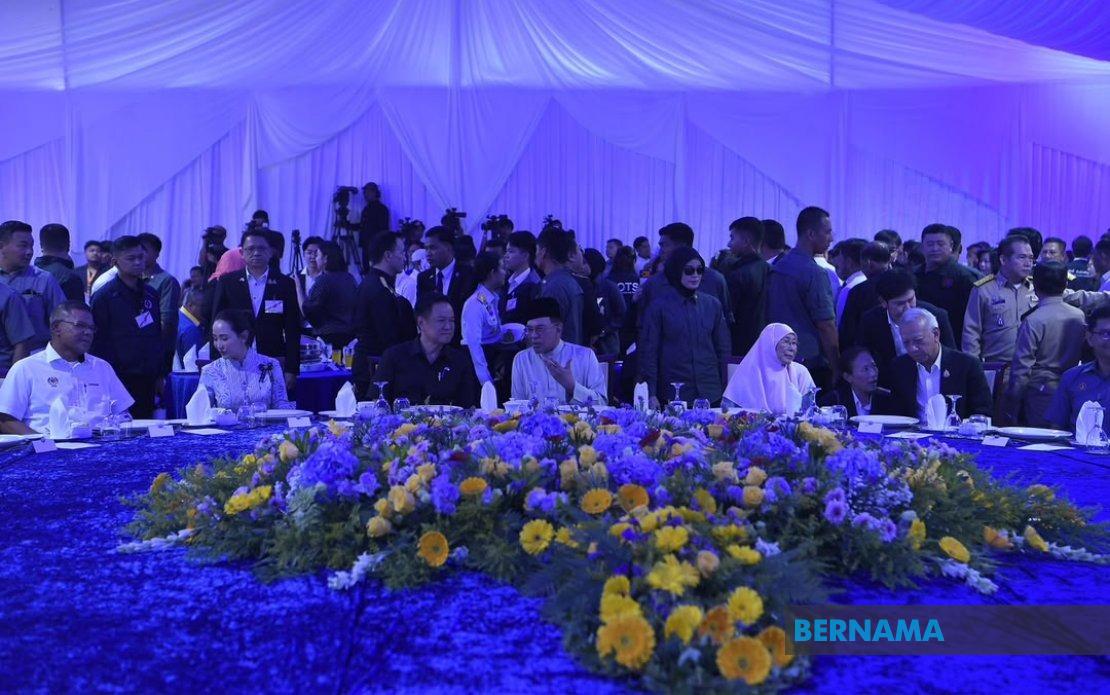
Prime Minister Datuk Seri Anwar Ibrahim joined Thai Prime Minister Anutin Charnvirakul on July 10 to formally inaugurate a new road corridor connecting the Bukit Kayu Hitam Immigration, Customs, Quarantine and Security (ICQS) Complex directly to Thailand's Sadao Customs, Immigration and Quarantine (CIQ) Complex. The opening represents a watershed moment in Malaysia-Thailand border infrastructure development, signalling both nations' determination to modernise their shared frontier and facilitate seamless cross-border movement. The road officially commenced operations at 6 am Malaysia time on July 11, simultaneously triggering the permanent closure of the existing Bukit Kayu Hitam-Danok crossing from midnight the same day.
The initiative underscores a shared strategic vision between Kuala Lumpur and Bangkok to deepen diplomatic partnerships while addressing the practical demands of a region increasingly integrated through trade and travel. According to the Home Ministry (KDN), the new infrastructure embodies both countries' commitment to strengthening bilateral relations and advancing cross-border cooperation at a time when regional connectivity remains central to ASEAN's development agenda. The project reflects years of collaborative planning and execution between Malaysian and Thai authorities, demonstrating that complex infrastructure ventures can succeed when political commitment aligns with technical expertise and mutual benefit.
The modern border facility promises tangible improvements to the movement of people across the northern frontier. By consolidating immigration and customs operations into a single, purpose-built complex, the new road eliminates the logistical fragmentation that characterised the previous Danok arrangement. Travellers, whether daily commuters, traders, or tourists, will encounter a more streamlined processing environment designed with contemporary security standards and digital systems in mind. This modernisation carries particular significance for the tens of thousands of Malaysians and Thais who regularly cross the frontier for work, family visits, and commerce.
From an economic perspective, the corridor addresses longstanding frustrations within the trading community. Enhanced logistics efficiency along this critical juncture promises to reduce transit times and administrative friction that have historically constrained bilateral commerce. The ASEAN North-South Economic Corridor, which this border crossing serves, stands to benefit from improved capacity and faster throughput. Small and medium enterprises operating on both sides of the frontier may find that reduced border crossing delays translate into competitive advantages, particularly for time-sensitive goods and perishable products. The KDN statement explicitly recognised trade facilitation, logistics optimisation, and supply chain efficiency as key outcomes the infrastructure aims to deliver.
The strategic location of Bukit Kayu Hitam-Sadao positions this corridor as a vital node in broader Southeast Asian connectivity networks. The crossing provides critical linkage between Malaysia's Peninsular regions and Thailand's eastern seaboard, connecting ultimately to Laos, Cambodia, and Vietnam through the ASEAN highway system. Investment in this particular border point therefore carries implications extending well beyond bilateral Malaysia-Thailand relations, potentially stimulating cross-ASEAN trade patterns and tourism flows. Regional investors and logisticians will view the upgraded facility as a reliability signal, suggesting that the northern corridor represents a dependable alternative to more congested southern routes.
Border security considerations featured prominently in the Home Ministry's justification for the new infrastructure. The integrated control systems embedded in the Bukit Kayu Hitam ICQS and Sadao CIQ complexes enable sophisticated information sharing and coordinated screening protocols between Malaysian and Thai authorities. Modern border management, the ministry emphasised, requires technological sophistication and institutional integration that the legacy Danok arrangement could not provide. By consolidating entry points and implementing real-time intelligence sharing platforms, both nations strengthen their collective ability to detect and intercept threats whilst maintaining the operational fluidity necessary for legitimate commerce and travel.
The timing of this inauguration aligns with Malaysia's broader MADANI agenda, which prioritises modernisation of national institutions and infrastructure as vehicles for delivering citizen prosperity and security. The Home Ministry's statement explicitly linked the border project to MADANI principles, framing it as an example of how targeted infrastructure investment serves dual purposes of national security enhancement and economic opportunity creation. This framing resonates with Malaysia's policy direction under the current government, which emphasises pragmatic, results-oriented governance backed by substantial capital allocation.
The closure of the Danok crossing represents a significant symbolic transition, marking the definitive end of an era in Malaysia-Thailand border operations. Infrastructure transitions of this magnitude inevitably create temporary disruption, yet the coordinated launch timing and advance notification reflect careful planning by both nations to minimise inconvenience to regular users. The Danok facility, which served the border for decades, accumulated insufficient capacity and technological sophistication to meet 21st-century demands. Its replacement by the modern Bukit Kayu Hitam-Sadao corridor thus represents natural evolution rather than sudden rupture.
Regional observers view this project as emblematic of Southeast Asian states' capacity to execute major cross-border infrastructure initiatives when political will converges with technical competence and mutual strategic interest. At a time when ASEAN faces questions about institutional effectiveness and member-state cooperation depth, the successful delivery of complex projects like the Bukit Kayu Hitam-Sadao corridor provides concrete evidence that the bloc remains capable of transformative regional integration. The infrastructure demonstrates that bilateral initiatives between ASEAN members can advance the association's broader connectivity agenda whilst delivering measurable benefits to businesses, travellers, and border communities.
Looking forward, both Malaysian and Thai governments indicated commitment to leveraging this modernised crossing as foundation for expanded cross-border cooperation. The successful completion of this high-impact project establishes precedent and institutional experience that both nations can apply to future infrastructure challenges. Trade negotiators, immigration authorities, and security officials will accumulate practical knowledge about coordinating operations across this sophisticated facility, building institutional muscle memory valuable for addressing unforeseen challenges and pursuing additional collaborative initiatives.
The new road corridor also carries symbolic weight in Malaysia-Thailand relations more broadly. Public acknowledgment of the project by both Prime Ministers at official inauguration ceremonies underscores these nations' desire to position their relationship as forward-looking and mutually beneficial. At a moment when ASEAN grapples with internal tensions and external pressures, Malaysia and Thailand signal through this infrastructure investment that bilateral relationships grounded in pragmatic cooperation and shared prosperity remain viable and desirable. The Bukit Kayu Hitam-Sadao road thus transcends its immediate functional purpose, becoming a statement about both nations' vision for their place within a coherent Southeast Asian regional order.

