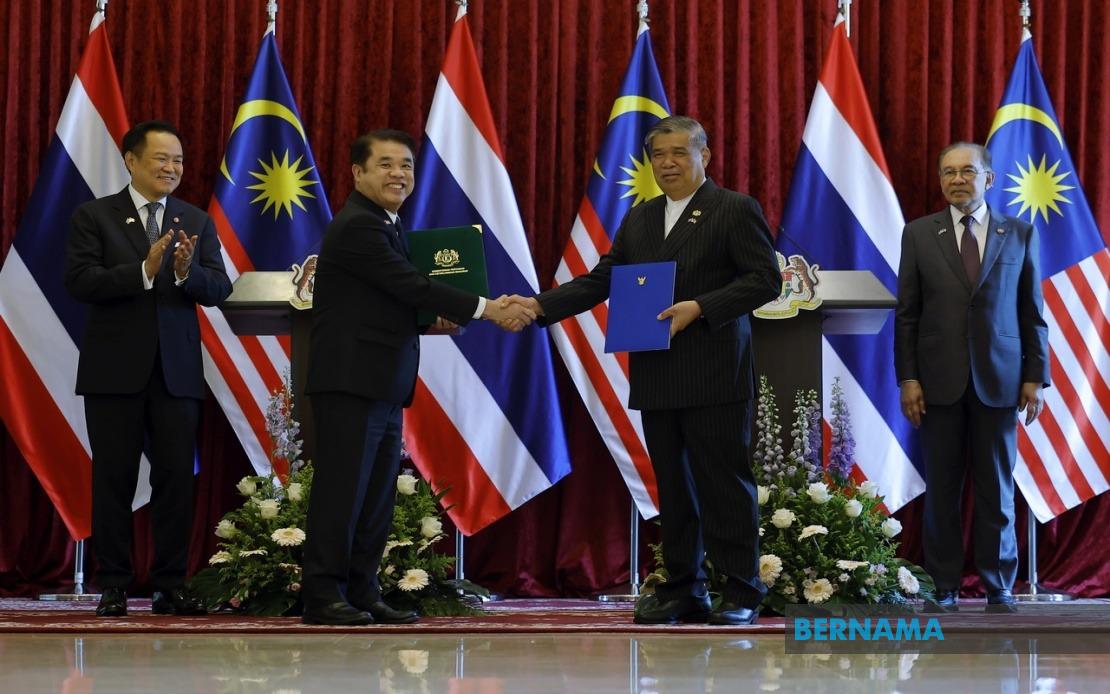
Thai Prime Minister Anutin Charnvirakul's official visit to Malaysia this week culminated in a landmark agricultural cooperation agreement between the two Southeast Asian neighbours, marking a significant development in their economic relationship. During bilateral talks held at the Malaysian Prime Minister's Office in Putrajaya, both governments endorsed a wide-ranging memorandum of understanding designed to address mutual challenges in food security while creating new avenues for agricultural advancement across the region.
The agreement represents a substantial shift in how Kuala Lumpur and Bangkok are approaching their shared agricultural interests. Rather than operating in isolation, the two countries have committed to a coordinated framework encompassing crop production, livestock management, fisheries development, agricultural research, and human resource capacity-building. This integrated approach reflects growing recognition that food security in Southeast Asia requires not merely the removal of trade barriers but active collaboration on productivity improvements and knowledge-sharing across the agricultural value chain.
Perhaps most significantly for farmers and exporters on both sides of the border, Malaysia and Thailand have finally resolved protracted disputes over market access for two critical commodities: shrimp and barramundi. These aquaculture products represent substantial revenue sources for coastal communities throughout the region, particularly in Thailand's southern provinces and Malaysia's eastern states. The outstanding issues had created frustration among producers who watched tariff and regulatory barriers consume profit margins that might otherwise have reached farming families.
Government spokesperson Ratchada Thanadirek detailed the technical scope of the memorandum, emphasizing that agriculture ministers from both nations have been tasked with accelerating the implementation of newly agreed measures. This delegation of responsibility to sectoral experts suggests the framework extends beyond symbolic gestures to include concrete action items with defined timelines. The ministers are particularly focused on addressing the specific concerns raised by farming communities, acknowledging that trade agreements mean little if they fail to translate into improved livelihoods for those working the land.
The agricultural accord sits within a broader economic agenda that the two prime ministers have outlined for their countries' relationship. Malaysian Prime Minister Datuk Seri Anwar Ibrahim and Anutin have jointly reaffirmed their commitment to achieving US$30 billion in annual bilateral trade, a target that would require significant growth from current levels and reflects confidence in both economies' capacity to deepen commercial integration. This figure serves as the overarching goal that frames the agricultural agreement as one element within a much larger strategic partnership.
Beyond agriculture alone, the two governments have signalled intentions to broaden cooperation across multiple economic sectors. Enhanced collaboration in trade and investment flows, expanded tourism initiatives, upgraded infrastructure connectivity, and improved security arrangements together paint a picture of comprehensive bilateral engagement. The emphasis on infrastructure is particularly noteworthy for Malaysia and the region, as improved cross-border facilities directly enhance commerce and people-to-people movement, generating multiplier effects throughout local economies near the Thailand-Malaysia frontier.
A prominent symbol of this infrastructure commitment emerges in the planned joint visit by both prime ministers to Bukit Kayu Hitam in Kedah on July 10, when they will officially open a new road connecting the Immigration, Customs, Quarantine and Security Complex in Bukit Kayu Hitam with its counterpart, the Customs, Immigration and Quarantine Complex in Sadao, Thailand. This infrastructure investment removes a physical bottleneck that has long constrained the smooth flow of goods and passengers, particularly affecting agricultural exports that require rapid movement to prevent spoilage.
The timing of these agreements coincides with Anutin's first bilateral visit to Malaysia since his reappointment to office in March 2026, suggesting that leadership transitions in both countries have created momentum for relationship-building. His two-day official visit carries symbolic weight beyond the immediate agreements signed, serving notice that both governments view the partnership as sufficiently important to warrant high-level engagement shortly after political transitions.
Looking ahead, both governments have tasked their respective agencies with expedited implementation of the signed agreements and completion of remaining memoranda of understanding that remain under negotiation. This urgency appears linked to a significant milestone: the pair has set sights on concluding their work well before 2027, when Malaysia and Thailand will commemorate the 70th anniversary of their diplomatic relations. That timeline provides both nations with a concrete deadline by which to demonstrate tangible progress, preventing the agreements from languishing in bureaucratic limbo.
For Malaysian policymakers and business communities, these agreements offer multiple strategic advantages. Enhanced technology transfer in agricultural production could boost productivity among Malaysian farmers, particularly in rice cultivation and vegetable production where yields have plateaued. Coordinated approaches to food security insulate both nations against price volatility in international commodities markets and build resilience against supply chain disruptions. Additionally, the prospect of improved market access for Malaysian aquaculture products addresses a long-standing frustration among producers in states like Terengganu and Sabah.
The broader regional implications merit consideration as well. A stronger Malaysia-Thailand agricultural partnership could serve as a model for ASEAN nations seeking to balance free trade with safeguards for domestic farming communities. As regionalism deepens, bilateral agreements often create templates that other member states adopt or adapt, meaning that how Kuala Lumpur and Bangkok resolve agricultural trade tensions carries weight beyond their bilateral relationship.
Implementation will ultimately determine whether these agreements deliver the promised benefits. History demonstrates that signed memoranda occasionally gather dust on ministry shelves, their intended purposes unrealized through inadequate follow-up or shifting political priorities. The assignment of specific responsibilities to agriculture ministers, coupled with explicit timelines and defined objectives, suggests both governments are serious about execution. Nevertheless, Malaysian stakeholders should monitor progress closely, particularly regarding the shrimp and barramundi market access improvements, to ensure that commitments translate into practical relief for farmers and exporters.

