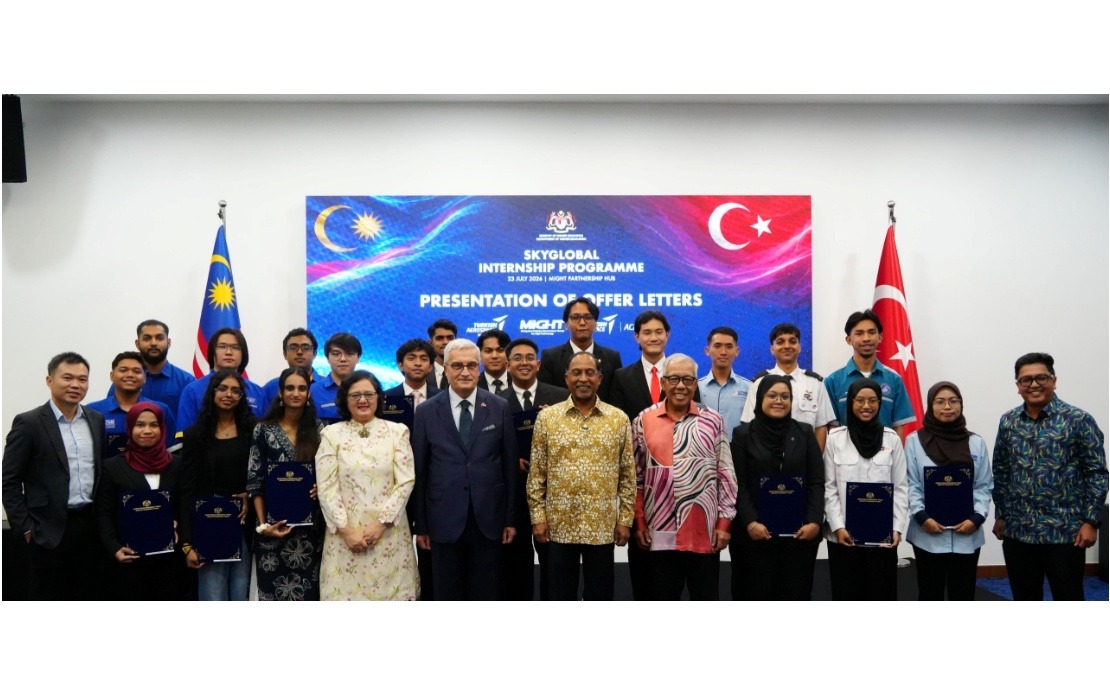
Malaysia is strengthening its position as a regional aerospace powerhouse through a deepening partnership with Türkiye's leading defence and aviation firm. Twenty Malaysian students have been selected to participate in the SKY Global Internship Programme 2026, undertaking hands-on training at Turkish Aerospace (TUSAŞ) headquarters in Ankara. The initiative represents a significant expansion of a four-year-old collaborative framework involving TUSAŞ, the Malaysian Industry-Government Group for High Technology (MIGHT), and the Consortium of Malaysian Universities (CMU), and underscores how bilateral engagement can drive sectoral capability.
Since the programme's launch, a total of 56 Malaysian students have gained practical exposure through the initiative, with this year's cohort drawn from nine domestic universities. The participants will engage directly with advanced aerospace disciplines including avionics systems, electronic design, programming architectures, aircraft structural engineering, and systems installation protocols. This hands-on exposure to world-class manufacturing and engineering environments is critical for developing a workforce capable of supporting Malaysia's ambitions to capture greater value within the global aerospace supply chain.
Higher Education Minister Datuk Seri Dr Zambry Abd Kadir characterised the programme as extending beyond mere technical skill acquisition. Speaking at a ceremony in Cyberjaya where students received their offer letters, he highlighted how such initiatives strengthen institutional bonds and people-to-people connections between nations. The collaboration creates channels for knowledge transfer, research cooperation, and technology advancement that reflect the strategic alignment between Kuala Lumpur and Ankara on regional development priorities. For Malaysia, particularly, such frameworks offer pathways to access technical expertise and manufacturing benchmarks that elevate domestic industry standards.
The aerospace sector occupies a central place in Malaysia's industrialisation strategy. MIGHT's joint chairman for industry affairs, Tan Sri Dr Ir Ahmad Tajuddin Ali, stressed that cultivating world-class aerospace talent is fundamental to sustaining the country's competitive positioning within Asia-Pacific. The region's aerospace ecosystem is intensifying, with competition from Singapore, Thailand, and Indonesia driving investment in local capability. Malaysia's strategy of coupling university training with direct exposure at sophisticated manufacturing facilities addresses a persistent gap: ensuring graduates transition smoothly into roles requiring both theoretical knowledge and practical proficiency.
Three programme alumni currently work at TUSAŞ under an extended two-year placement scheme, validating the pathway's effectiveness. Their retention by the Turkish firm signals that Malaysian engineering graduates meet rigorous international standards and can perform effectively within multinational technical environments. This outcome carries significance beyond individual career trajectories. It demonstrates to Malaysian employers and policymakers that structured international exposure produces measurable returns, encouraging greater investment in cross-border training initiatives.
TUSAŞ Malaysia's chief executive officer Mohd Shahiman Sulaiman underscored the commercial rationale underpinning the partnership. The company collaborates with ten Malaysian universities, creating a sustainable pipeline of talent while simultaneously identifying innovation-ready personnel for potential future engagement. From an industry perspective, such programmes function as extended recruitment mechanisms and R&D talent scouts. Malaysian graduates bring fresh technical perspectives, exposure to alternative engineering methodologies, and cultural diversity that enriches innovation-driven environments.
The programme structure reflects careful design to maximise mutual benefit. Rather than functioning as purely charitable upskilling, it operates as a talent discovery and relationship-building mechanism. TUSAŞ gains insight into Malaysian engineering capability while cultivating future professional networks. Malaysian students acquire certifications, experience, and contacts within a global aerospace leader. Universities strengthen placements outcomes and industry linkages. This alignment of incentives explains the programme's expansion and longevity within a competitive landscape of competing training initiatives.
Beyond individual participant outcomes, the initiative catalyses broader institutional collaboration. The programme widens professional networks between Malaysian universities and Türkiye's aerospace sector, creating foundations for research partnerships, joint technology development, and knowledge-sharing arrangements. Such connections are vital for Malaysia's higher education institutions, which increasingly seek international research partnerships to elevate academic standing and attract competitive funding. Aerospace research collaboration with Turkish counterparts positions Malaysian universities within global innovation networks while addressing sectoral labour shortages.
The selection of Ankara as the training location carries strategic significance. TUSAŞ headquarters houses advanced manufacturing, systems integration, and design facilities representing operational excellence. Exposing Malaysian students to such environments generates appreciation for technical rigour and quality standards that domestic industry must progressively adopt. This standardisation effect—where international exposure elevates expectations and practices domestically—compounds over time as successive cohorts return home carrying refined technical and professional practices.
Malaysia's aerospace ambitions depend on developing indigenous capability across the value chain. Currently, much Malaysian aerospace activity concentrates on assembly, machining, and component manufacturing for international original equipment manufacturers. Advancing into systems integration, design, and higher-value-added activities requires engineers with sophisticated technical grounding and exposure to cutting-edge methodologies. Programmes like SKY Global address this capability gap by systematically exposing emerging talent to advanced practices and international working contexts.
The collaboration also reflects broader geopolitical currents. Malaysia and Türkiye maintain expanding bilateral relations across defence, trade, and technology sectors. Educational and professional exchanges strengthen these bonds while generating tangible economic benefits through talent development and sectoral advancement. For Southeast Asia, such South-South cooperation—whereby developing nations share expertise and resources—offers alternatives to traditional North-based training dependencies while building intra-regional knowledge networks.
Looking forward, the sustainability of such initiatives depends on continued institutional commitment and measurable outcomes. The programme's longevity into its fourth year and planned expansion suggests strong backing from both Malaysian government and industry stakeholders. However, scaling impact requires mechanisms to leverage returning participants' expertise within domestic industry, ensuring that trained talent translates into elevated sectoral performance rather than brain drain. This necessitates complementary domestic policies supporting aerospace manufacturing investment and competitive remuneration within Malaysia.
The SKY Global initiative exemplifies how targeted international collaboration drives sectoral capability. By systematically exposing Malaysian students to world-class aerospace engineering environments, the programme builds human capital essential for regional competitiveness. As Malaysia positions itself as an aerospace hub, such talent pipeline investments become increasingly critical, differentiating the country's capacity to attract higher-value manufacturing and design activities within the global industry.

