Malaysia and Uzbekistan are positioning themselves to become increasingly interdependent in agricultural development and food security, building on high-level diplomatic momentum and complementary sectoral strengths. The strategic initiative represents a broader recognition across Central Asia and Southeast Asia that agricultural productivity, supply chain resilience, and technological innovation are becoming as strategically vital as energy or defence considerations in an era of global food supply uncertainty.
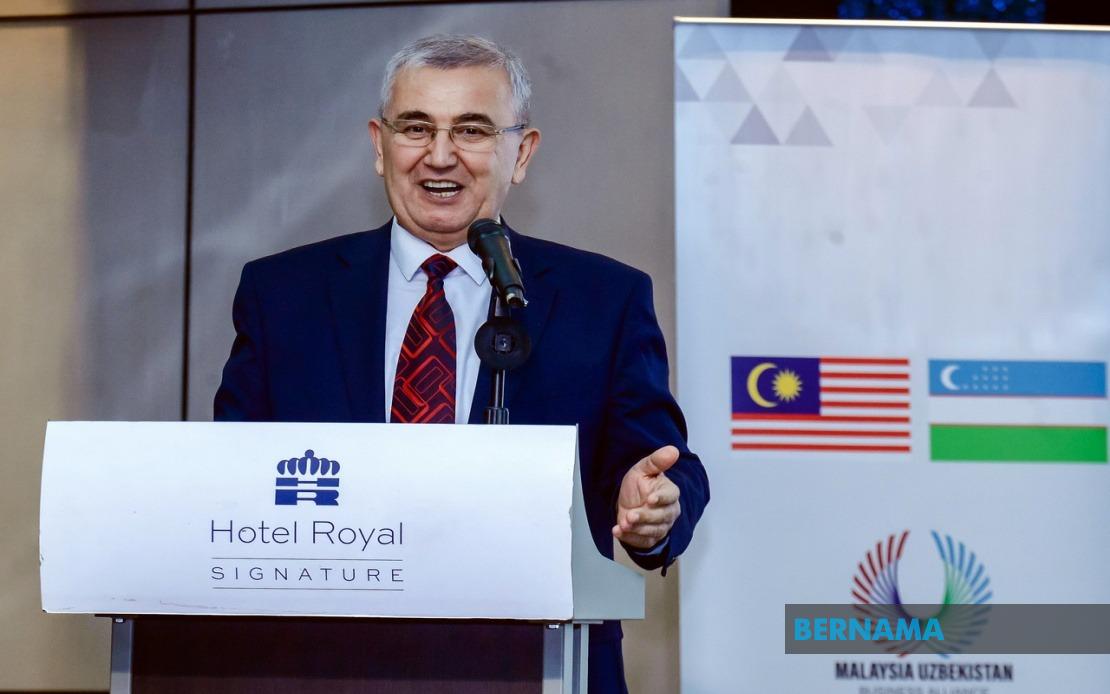
Uzbekistan's Ambassador to Malaysia, Dr Karomidin Gadoyev, underscored that agriculture has commanded consistent attention from the highest political levels of both nations. The sector's prominence reflects deepening ties beyond ceremonial gestures—it has featured substantively in bilateral discussions during Prime Minister Datuk Seri Anwar Ibrahim's May 2024 visit to Tashkent and President Shavkat Mirziyoyev's February 2024 Malaysian tour. The recent official visit by Agriculture and Food Security Minister Datuk Seri Mohamad Sabu to Uzbekistan signalled a meaningful escalation, moving partnership discussions from diplomatic frameworks into concrete ministerial engagement and sector-specific planning.
The complementarity of the two nations' agricultural capabilities creates natural synergies for deeper integration. Malaysia brings established expertise in paddy cultivation, aquaculture operations, fisheries management, precision farming methodologies, and agricultural research infrastructure anchored by institutions like MARDI. Uzbekistan contributes sophisticated knowledge in energy-efficient irrigation systems suited to arid and semi-arid climates, horticultural production at scale, and agri-food processing technologies. This sectoral pairing allows each country to leapfrog developmental stages by adopting proven practices rather than building from foundational knowledge.
The technology dimension represents perhaps the most transformative element of the emerging partnership. Both countries recognise that artificial intelligence, digital agricultural systems, and automation technologies will determine competitive advantage in food production over the coming decades. Uzbekistan's explicit commitment to integrating Malaysian experience in smart farming and digital agriculture suggests the Central Asian nation views technological adoption as essential for modernising its production base. This openness creates commercial opportunities for Malaysian agricultural technology firms and research institutions seeking to establish regional influence beyond Southeast Asia.
Agricultural drone deployment exemplifies the practical momentum already building between the nations. Malaysian company Miracule has established Uzbekistan's first agricultural drone showroom, with plans to expand usage across Uzbek agricultural fields and establish domestic assembly operations for advanced drone systems. This development trajectory—from demonstration to localised manufacturing—mirrors successful regional technology transfer models and suggests both governments view automation as integral to productivity gains rather than supplementary.
Aquaculture and fisheries represent critical growth vectors, particularly given Uzbekistan's demographic and geographical constraints. With a population approaching 40 million and a landlocked location twice over, Uzbekistan faces significant structural barriers to seafood self-sufficiency. Malaysian expertise in biofloc technology—which reduces feed costs by up to 30 percent whilst boosting output and lowering production expenses—directly addresses this vulnerability. Malaysian firms have already begun evaluating investment opportunities in Uzbek shrimp farming and fisheries ventures, indicating that the partnership discussion has progressed beyond government dialogue into private sector feasibility assessment.
Current bilateral agri-food trade valued at more than RM338 million in 2025 reflects substantial but, by most analytical measures, underutilised commercial potential. Palm oil and derivative products dominate Malaysia's export composition to Uzbekistan, revealing both the strength of Malaysian commodity advantages and the relative narrowness of current trade architecture. Ambassador Gadoyev's assessment that trade could realistically double or even triple over five to ten years rests on plausible assumptions about regional demand growth, improved market access, and value-chain deepening rather than speculative projection.
The strategic proposal to position Uzbekistan as a processing hub for Malaysian crude palm oil destined for Central Asian distribution networks addresses a genuine logistical inefficiency. Currently, palm oil products destined for landlocked Central Asian markets typically transit through multiple intermediaries, accumulating transport costs and time delays. Direct processing partnerships would capture value-addition margins for Uzbekistan whilst providing Malaysia stable export demand. Reciprocally, Uzbek premium fresh and dried fruits alongside processed food products would access Southeast Asian consumer markets and supply chains through Malaysian trading infrastructure and retail networks.
Food security frameworks undergirding the partnership reflect contemporary geopolitical realities. Global supply chain disruptions, climate volatility, and resource competition have elevated agricultural self-sufficiency and supply diversification to strategic state priorities across Asia. Malaysia's commitment to supporting Uzbekistan's agricultural modernisation reflects both commercial interest and recognition that regional food security interdependence creates stability benefits extending beyond bilateral relations. An Uzbekistan with resilient, technology-enhanced agricultural production serves Malaysian and broader Southeast Asian food security interests by reducing regional dependency on single-source suppliers.
Uzbekistan's participation in MAHA 2026—the Malaysia Agriculture, Horticulture and Agrotourism Exhibition—signals institutionalisation of the partnership through regular commercial and technical exchange forums. Trade exhibitions serve simultaneously as commercial platforms, technology showcases, and diplomatic expressions of commitment. Uzbek participation will introduce Central Asian agricultural products, production methods, and investment opportunities to Malaysian business communities whilst creating visibility for Malaysian agricultural technologies and services across Uzbek government and private sectors.
The partnership architecture extends beyond bilateral commerce into regional positioning. Malaysia's established agricultural research institutions, technology ecosystems, and ASEAN integration provide Uzbekistan a Southeast Asian gateway for accessing broader regional agricultural innovation networks. Conversely, Uzbekistan offers Malaysian firms and researchers exposure to Central Asian markets, production methodologies adapted to climate conditions dissimilar to equatorial Southeast Asia, and integration pathways into continental Eurasian trade corridors. This mutual strategic utility suggests the partnership possesses resilience across political and economic cycles rather than representing ephemeral diplomatic coordination.
Implementing the partnership's ambitious trajectory will require sustained attention to capacity building, regulatory harmonisation, and investment facilitation. Agricultural technology transfer typically proceeds more slowly than headline announcements suggest, particularly when involving smallholder farmer adoption and institutional restructuring. Malaysian technical institutions and companies will need to tailor advisory services and products to Uzbek agro-climatic conditions and farming scales. Similarly, Uzbek authorities must ensure regulatory frameworks facilitate Malaysian investment whilst protecting domestic agricultural interests—a balance requiring sophisticated policy design.
Looking forward, the Malaysia-Uzbekistan agricultural partnership exemplifies how strategic complementarity, governmental commitment, and private sector commercial interest can synthesise into substantive regional integration. As global food security concerns intensify and Asian nations compete for agricultural productivity gains, bilateral partnerships combining technological expertise with production scale and natural resources will likely proliferate across the continent. The trajectory Malaysia and Uzbekistan are establishing may serve as a template for similar agricultural cooperation initiatives throughout Asia-Pacific and Central Asia regions seeking to strengthen food system resilience through cross-regional knowledge and capital flows.

