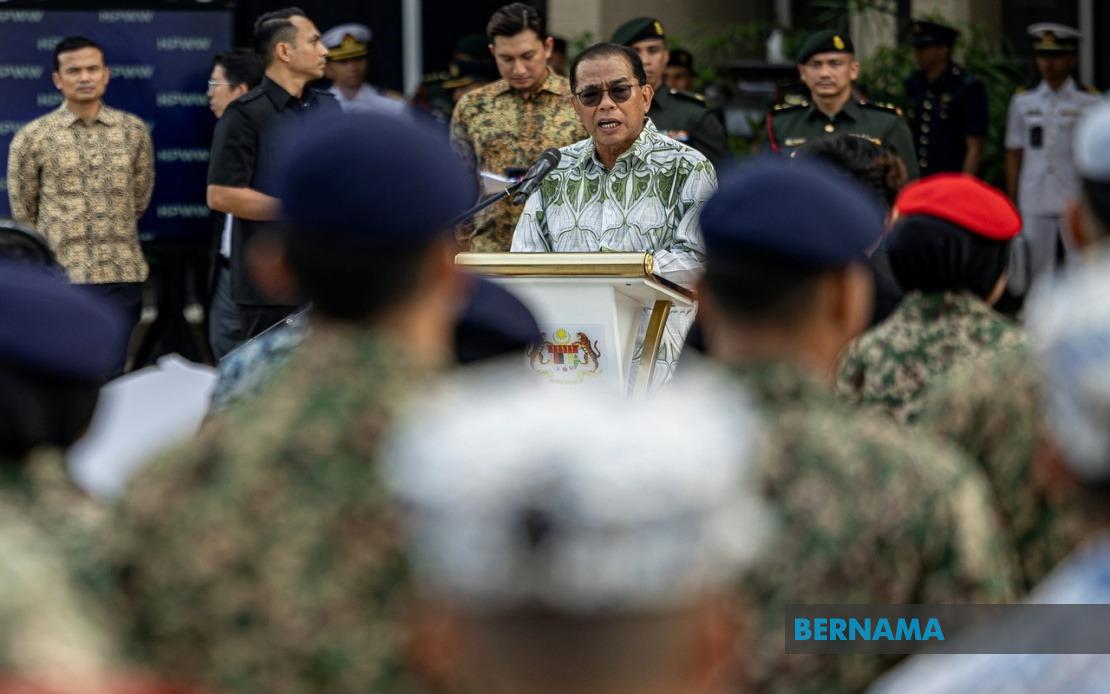
The Malaysian government is in a holding pattern as it waits for Kongsberg Defence & Aerospace AS (KDA) to respond to claims filed following the abrupt termination of a major defence procurement involving Naval Strike Missile systems. Defence Minister Datuk Seri Mohamed Khaled Nordin indicated that once the Norwegian supplier provides its formal response, the government will reassess the matter and determine what additional steps may be warranted. He made these comments during a press briefing at the Ministry of Defence headquarters in Kuala Lumpur following the launch of the National Month and Fly the Jalur Gemilang campaign.
The procurement saga centres on a contract originally inked in April 2018 between the Royal Malaysian Navy and Kongsberg Defence & Aerospace for a value of €124 million, equivalent to approximately RM571.9 million. The agreement was designed to furnish anti-ship missile systems for six newly constructed Littoral Combat Ships, a critical component of Malaysia's naval modernisation programme. The contract represented a significant investment in enhancing the RMN's maritime operational capabilities in an increasingly contested regional environment.
The entire arrangement collapsed when the Norwegian government unexpectedly revoked the export licence for the NSM anti-ship missiles and their associated launcher systems. Oslo justified the decision by citing national security considerations, effectively preventing the transfer of the technology to Malaysia. This development sent shockwaves through Malaysia's defence establishment, as it left the six LCS vessels without their intended primary weapons systems and created substantial contractual and financial complications for Kuala Lumpur.
Defence Ministry officials have been engaged in active discussions with the Norwegian supplier to address the fallout from this cancellation. The ministry has formally submitted a claim to KDA, though the specific nature and quantum of the claim—whether it encompasses lost procurement deposits, contract termination penalties, or compensation for project delays—has not been disclosed. Mohamed Khaled's statement suggests that the government is pursuing formal channels to recover costs or seek remedies for the breach or frustration of the original agreement.
The situation underscores the vulnerabilities Malaysia faces when relying on foreign defence suppliers, particularly those subject to their own government's export control regimes. Norway's decision reflects broader geopolitical tensions and the weaponisation of supply chains, a phenomenon that has become increasingly evident as Western nations implement stricter arms export policies towards non-aligned or strategically important partners in the Indo-Pacific region. For Malaysia, which maintains a careful balance in its international relations, such unilateral cancellations pose real challenges to long-term defence planning.
The Littoral Combat Ships themselves represent Malaysia's commitment to enhancing its ability to project power and maintain security in the contested waters of the South China Sea and the Strait of Malacca. Each vessel requires appropriate weaponry to fulfil its intended role in maritime surveillance, coastal defence, and anti-piracy operations. The absence of capable anti-ship missiles fundamentally compromises the operational effectiveness of these platforms, leaving them vulnerable to surface threats and diminishing their deterrent value.
Beyond the immediate contractual dispute, this episode highlights the critical importance of defence industrial cooperation and self-reliance in weapons development. Malaysia's experience with the NSM cancellation may accelerate discussions within the defence ministry regarding alternative suppliers or the pursuit of domestic capabilities for missile systems. Several regional partners, including Indonesia and Thailand, have faced similar challenges when attempting to source advanced weaponry from Western suppliers constrained by political or security considerations.
The claim submitted by Malaysia to Kongsberg Defence & Aerospace represents the government's attempt to hold the supplier accountable, even though the Norwegian company itself is not responsible for its government's policy decision. However, contractual provisions may place certain obligations on KDA to manage or mitigate the consequences of such governmental action. The response from the Norwegian supplier will determine whether this matter can be resolved through direct negotiation or whether it may escalate to arbitration or legal proceedings.
Meanwhile, the Ministry of Defence is simultaneously working to resolve the broader systemic issues associated with the LCS missile supply programme. Mohamed Khaled indicated that the ministry would provide updates to the media once there is clarity on revised delivery schedules or alternative solutions. This suggests that contingency planning is underway, possibly involving discussions with other potential suppliers or alternative weapons systems that might be compatible with or adapted for the LCS platform.
The financial implications of this procurement failure are substantial, extending beyond the initial contract value. Delays in equipping the LCS fleet impose opportunity costs on the Navy, as these vessels cannot be fully operationalised and deployed for their intended missions. Additionally, the reputational impact on Malaysia as a reliable defence customer may influence future supplier confidence and negotiating positions in other defence procurement discussions.
For Malaysia and other Southeast Asian nations, this situation serves as a cautionary tale about the complexities of international defence procurement. While Western suppliers often offer technologically superior products and political alignments, they may also introduce unpredictability driven by their own government's shifting priorities or security assessments. Regional defence planners must weigh these considerations against alternative suppliers from other quarters, including neighbouring states or non-Western powers, even as they work to maintain strategic flexibility.
The government's measured approach in awaiting Kongsberg's response reflects diplomatic prudence, avoiding escalatory rhetoric while maintaining formal channels for resolution. However, the underlying frustration with the cancellation is palpable, and the claims process signals Malaysia's determination to pursue accountability and redress. How the Norwegian supplier responds in the coming weeks will likely set the trajectory for this dispute and shape Malaysia's future approach to similar defence partnerships.

