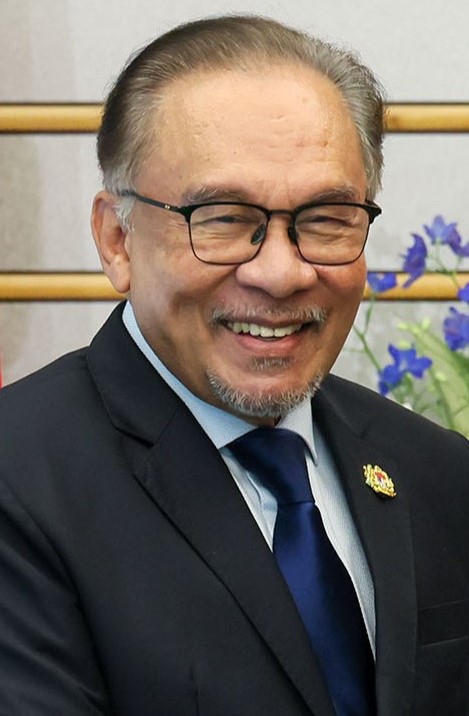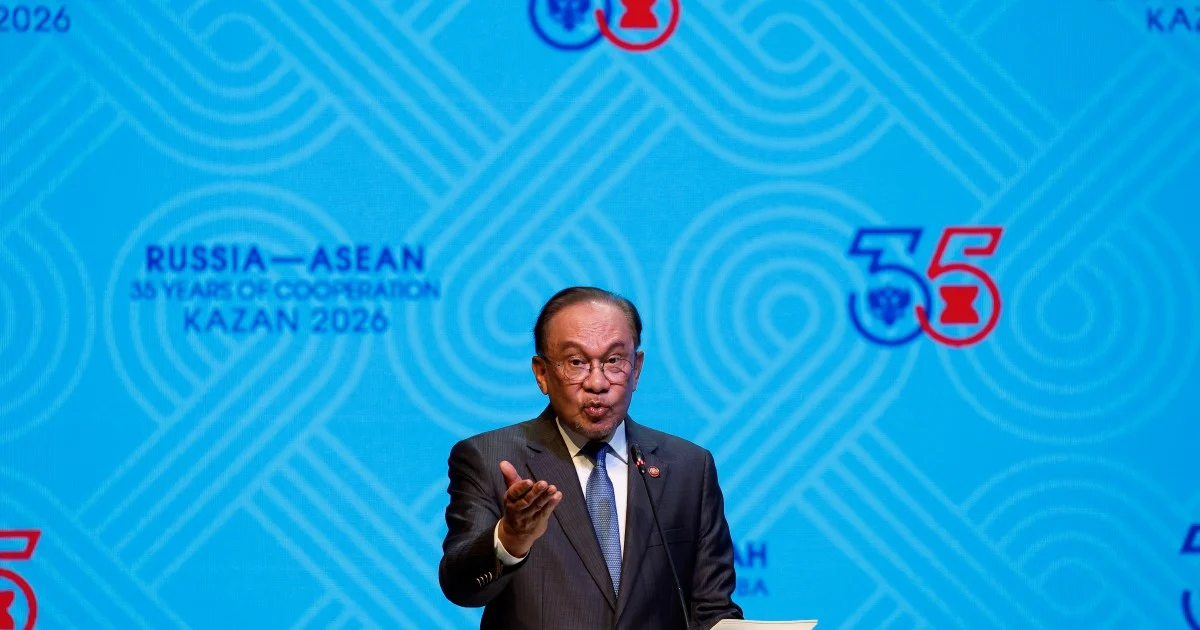
Prime Minister Datuk Seri Anwar Ibrahim has welcomed the completion of the Asean-Russia Strategic Programme on Trade and Investment Cooperation 2026-2035, viewing the agreement as a pivotal moment for expanding the region's economic partnership with Moscow. Speaking in Kazan during what appears to be a bilateral engagement, Anwar characterised the finalisation of the strategic roadmap as providing fresh momentum for the ten-nation bloc to deepen commercial and investment linkages with Russia, a country that represents both significant opportunities and complex geopolitical considerations for Southeast Asia.
The completion of this decade-long framework represents the culmination of negotiations aimed at structuring Asean's approach to economic cooperation with Russia during a period of international uncertainty. Rather than viewing the agreement merely as a symbolic gesture, Anwar positioned it as a concrete mechanism through which member states can expand trade volumes, facilitate technology transfer, and unlock investment flows in sectors ranging from energy to agriculture to manufacturing. For Malaysia specifically, such a framework offers potential avenues for companies to access Russian markets and establish joint ventures with Russian counterparts, particularly in industries where Southeast Asian expertise complements Russian resources and technical capabilities.
However, Anwar's emphasis on the necessity of an enabling environment reveals a more sophisticated understanding of regional trade dynamics. His caveat suggests that signing documents and establishing frameworks represent only the first step; translating ambitious goals into measurable commercial outcomes requires complementary measures that extend beyond the agreement itself. These enabling conditions encompass regulatory harmonisation, institutional coordination between national governments, transparent dispute-resolution mechanisms, and the removal of barriers that might otherwise impede the flow of goods, capital, and services between Asean nations and Russia.
The timing of this endorsement carries significance within the broader context of Southeast Asian geopolitical balancing. The region has historically maintained equidistant relationships with major powers, and Malaysia's leadership in amplifying support for Asean-Russia cooperation signals the bloc's intent to maintain diverse partnerships despite great-power competition. Rather than choosing sides in contemporary great-power rivalries, Malaysia and other Asean members appear committed to leveraging multiple economic relationships to enhance regional prosperity and strategic autonomy. This approach aligns with established ASEAN doctrine emphasising centrality and non-alignment, principles that have underpinned the grouping's diplomatic success for decades.
From a Malaysian perspective, the strategic programme offers particular relevance given the country's aspirations as a regional economic hub. Enhanced Asean-Russia trade flows could position Malaysia as a logical intermediary for businesses seeking to navigate entre into either market. Port facilities in Klang and Tanjung Pelepas, coupled with Malaysia's established financial and logistical infrastructure, could capture value from increased commercial exchange between the region and Russia. Similarly, Malaysian firms operating across manufacturing, petrochemicals, and services sectors could identify partnership opportunities with Russian enterprises, provided the bilateral environment remains conducive to such collaborations.
The emphasis on investment cooperation within the framework is particularly noteworthy for developing economies within Asean. Capital flows from Russia, whether through direct investment or collaborative projects, can supplement the region's development financing needs. This becomes increasingly important as Southeast Asian nations pursue infrastructure modernisation, industrial upgrading, and energy transition simultaneously. Russian expertise in hydrocarbon extraction and nuclear energy, alongside its advanced manufacturing capabilities, offers complementary resources that Asean countries can leverage to accelerate economic transformation while maintaining their own development trajectories and energy security requirements.
Anwar's conditional optimism—welcoming the framework while insisting that enabling conditions remain essential—also reflects the practical challenges inherent in international economic cooperation. Even well-designed trade agreements can founder if the underlying policy environment remains restrictive, sanctions regimes complicate transactions, or institutional coordination breaks down. The Prime Minister's recognition of these challenges suggests Malaysia remains attuned to both the opportunities and complexities of deepening ties with Russia during a period marked by Western sanctions and geopolitical fragmentation. By emphasising the need for an enabling environment, Anwar implicitly signals that Asean's approach to the partnership will remain pragmatic and conditions-dependent rather than ideologically driven.
For Southeast Asian businesses, particularly those in Malaysia, the finalised framework provides clearer parameters within which to operate. The multi-year programme offers stability and predictability, allowing companies to plan investments and partnerships with greater confidence than might otherwise exist in an ad-hoc trading relationship. However, the PM's caveat about implementation also serves as a reminder that corporate entities must remain vigilant regarding regulatory changes, geopolitical developments, and bilateral relations between individual Asean members and Russia that could either facilitate or constrain commercial activities.
Moving forward, the success of the Asean-Russia Strategic Programme will likely depend on how effectively member states translate its provisions into national legislation, establish bilateral working groups, and remove procedural barriers that might otherwise slow business transactions. Malaysia, as a relatively advanced ASEAN economy with established diplomatic and commercial relationships across multiple regions, may well emerge as a leader in implementing the framework's provisions. The country's position as a global financial centre and transportation hub positions it advantageously to facilitate broader Asean-Russia economic integration while deriving benefits from intermediary roles and expanded market access. Ultimately, Anwar's endorsement signals Malaysian commitment to the partnership while maintaining the pragmatic approach that has characterised the nation's foreign economic policy.