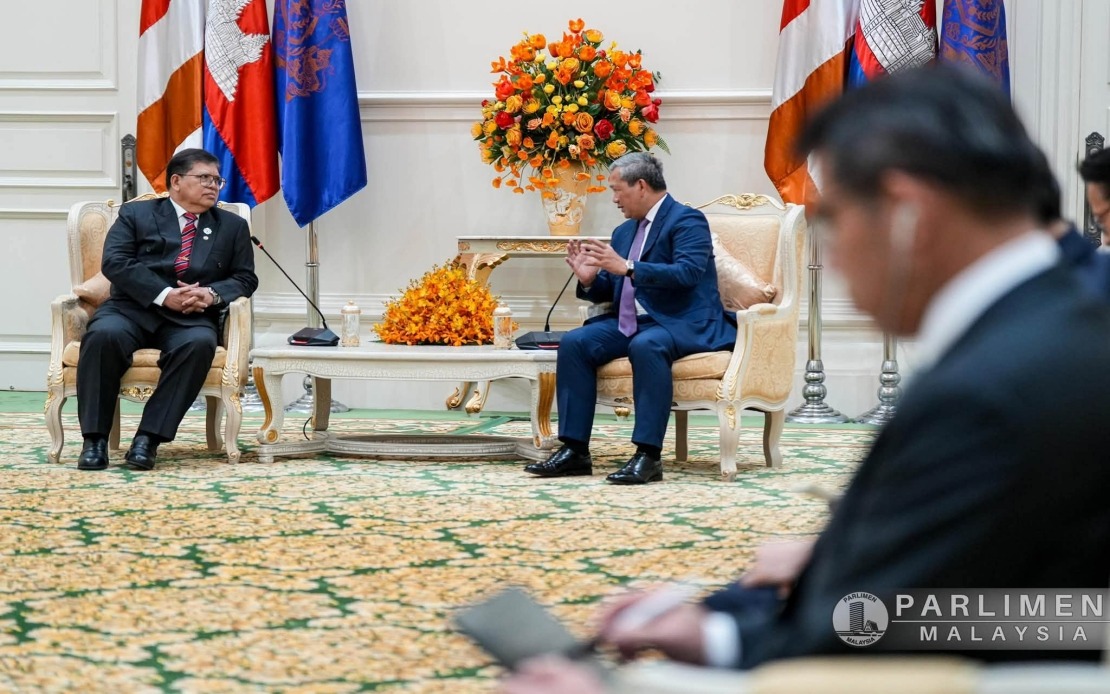
Malaysia is throwing its diplomatic weight behind resolving the ongoing Cambodia-Thailand border tensions through sustained dialogue and negotiation, according to Dewan Rakyat Speaker Tan Sri Johari Abdul. In remarks made during his visit to Cambodia this week, Johari underscored that the pursuit of peaceful settlements through bilateral engagement remains the most constructive path forward for both nations and the broader Southeast Asian community. The comments reflect Malaysia's measured approach to regional friction points and its commitment to the ASEAN framework as the preferred mechanism for resolving interstate differences.
Johari's statements emerge from substantive discussions held with Cambodian Prime Minister Hun Manet at the Second Inter-Parliamentary Speakers' Conference in Phnom Penh, where the Malaysian delegation took the opportunity to engage directly with Cambodia's political leadership. The border question featured prominently in their bilateral conversation, signalling the importance that Kuala Lumpur places on this matter and its willingness to understand Cambodia's perspective on the security and humanitarian concerns affecting communities in disputed areas. By participating actively in these high-level exchanges, Malaysia demonstrates its role as a stabilising force within the regional bloc.
The emphasis on dialogue reflects a broader Malaysian conviction that ASEAN's foundational principles—trust-building, consensus-seeking, and constructive management of disagreements—must remain at the forefront when member states face contentious issues. Johari articulated the concern that allowing bilateral disputes to fester could undermine the collective cohesion that underpins ASEAN's relevance and effectiveness on the regional and global stage. For Malaysia, which has navigated its own maritime and territorial complexities, this stance reflects hard-won understanding that institutional frameworks and diplomatic channels provide more durable solutions than confrontation.
Malaysia's position as a relatively neutral party without direct involvement in the Cambodia-Thailand dispute places it in a valuable position to encourage restraint and engagement. Kuala Lumpur has indicated its readiness to support efforts bringing all stakeholders back to the negotiating table, with preservation of regional peace and stability identified as the overarching objective. This constructive intermediary role aligns with Malaysia's historical activism within ASEAN in facilitating dialogue between disputing members and working to prevent regional tensions from escalating into broader security challenges.
Beyond the immediate border issue, Johari's visit highlighted the multifaceted dimensions of Malaysia-Cambodia relations that extend far beyond political dispute resolution. The two nations discussed avenues for deepening parliamentary cooperation, exploring economic integration opportunities, and fostering human capital development through joint initiatives. This broader engagement strategy reflects recognition that comprehensive bilateral relationships built on multiple pillars of cooperation tend to be more resilient and mutually beneficial than those narrowly focused on managing conflicts.
Youth exchange programmes emerged as a particular area of emphasis during discussions, with both sides recognising that building generational bridges through cultural, educational, and professional exchanges creates lasting foundations for peaceful coexistence. The Malaysian leadership proposed expanding opportunities for young people from both countries to interact across economic, social, and inter-parliamentary domains, viewing such grassroots connections as essential complements to official diplomacy. These initiatives carry particular significance in a region where demographic dividends present both opportunities and challenges for sustainable development.
Technical and vocational education represents another promising avenue for deepening Malaysia-Cambodia cooperation that carries practical economic benefits alongside relationship-building value. Discussions centred on skills training collaboration, institutional exchanges between educational institutions, and industry partnerships that could position both nations to better compete in regional markets. For Cambodia, access to Malaysian expertise in TVET aligns with national development priorities, whilst Malaysian enterprises gain expanded access to a growing market and skilled workforce. Such pragmatic cooperation tends to generate concrete results that reinforce positive bilateral momentum.
Johari's recognition of Cambodia's efforts to facilitate Malaysian business operations and investments underscores the economic interdependence binding the two nations together. By acknowledging Cambodian government support for Malaysian companies seeking to establish themselves in the kingdom, the Malaysian parliament speaker strengthens an important dimension of bilateral ties. Economic relationships create mutual interests in stability and prosperity, generating powerful incentives for both governments to manage disputes through peaceful means rather than confrontation.
The broader context of Malaysia's diplomatic positioning within ASEAN reveals a consistent commitment to preserving the regional community's cohesion in an era of great power competition and international tensions. By advocating forcefully for dialogue and diplomacy as the default approach to Cambodia-Thailand disputes, Malaysia reinforces principles that serve its own strategic interests and those of all ASEAN members. As the bloc faces mounting external pressures and internal economic challenges, the ability to resolve internal differences peacefully remains essential to maintaining the credibility and effectiveness of regional institutions.
For Malaysian stakeholders observing these developments, the message carries reassuring implications about regional stability and Malaysia's role in promoting it. The country's participation in high-level inter-parliamentary forums positions it to exercise subtle influence towards constructive outcomes whilst maintaining the appearance of neutrality that enhances its diplomatic effectiveness. As Cambodia and Thailand navigate their border complexities, Malaysia's steady advocacy for dialogue serves as a reminder that ASEAN members possess the tools and commitment necessary to manage differences without allowing them to spiral into broader regional destabilisation.

