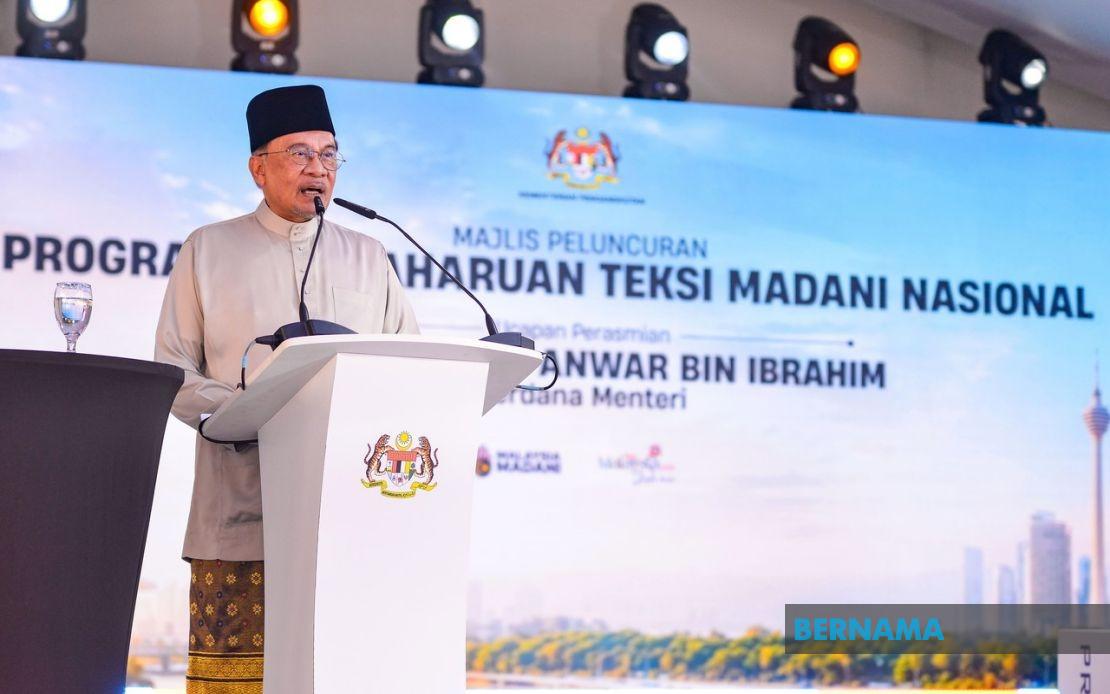
Prime Minister Datuk Seri Anwar Ibrahim unveiled an additional RM10 million injection into the Vehicle Replacement Matching Grant Programme on July 3, reinforcing the government's commitment to rejuvenating Malaysia's aging taxi fleet. The supplementary funding arrives on the heels of strong uptake for the initial RM10 million allocation announced in Budget 2026, signalling growing enthusiasm among taxi operators to modernise their vehicles. Speaking at the launch of the National MADANI Taxi Reform Programme at Dataran Merdeka, Anwar, who concurrently holds the Finance Ministry portfolio, emphasised the critical importance of supporting the country's taxi sector.
The government's expanded financial commitment reflects mounting recognition that Malaysia's taxi industry requires substantial intervention to remain competitive and viable in an increasingly challenging transportation landscape. Many taxi vehicles operating on Malaysian roads today have accumulated considerable mileage and age, resulting in higher maintenance costs, reduced reliability, and diminished passenger appeal. The dual allocation totalling RM20 million represents a tangible policy response to these systemic pressures, though industry observers note that the scale of need may extend considerably beyond this initial outlay given the size of Malaysia's taxi workforce.
A crucial component of the modernisation strategy involves collaboration with Malaysia's national automotive manufacturer. The government has secured a landmark agreement with Proton and the Transport Ministry to establish a dedicated financing mechanism that would enable taxi drivers to acquire the Proton S70. This partnership aims to make vehicle ownership more accessible to drivers while simultaneously supporting domestic automotive manufacturing capacity and employment. The Proton S70, a mid-range sedan, represents an attractive option for the taxi sector given its balance of affordability, fuel efficiency, and passenger comfort characteristics.
The financing arrangement represents an innovative approach to vehicle replacement, moving beyond simple grants to create pathways for drivers to transition into modern, locally-produced vehicles. By embedding financing options into the reform framework, the government seeks to overcome the capital constraints that typically prevent individual taxi operators from upgrading their fleets. Such schemes require careful structuring to ensure monthly repayment obligations remain manageable for drivers whose income can fluctuate seasonally and cyclically.
The timing of this announcement carries particular significance for Malaysia's transport ecosystem. The taxi sector has faced mounting pressure from ride-hailing platforms and changing urban mobility patterns, particularly in major cities like Kuala Lumpur, Selangor, and Penang. A modernised fleet featuring newer vehicles equipped with contemporary amenities and improved safety features could enhance the competitiveness of traditional taxi services and help retain passenger loyalty. Additionally, newer vehicles typically produce lower emissions, contributing to air quality improvements in urban centres where taxi fleets represent a substantial proportion of vehicle traffic.
Transport Minister Anthony Loke and Minister in the Prime Minister's Department (Federal Territories) Hannah Yeoh were present alongside Chief Secretary to the Government Tan Sri Shamsul Azri Abu Bakar at the launch ceremony, underscoring the whole-of-government coordination required to execute such initiatives effectively. This multi-agency approach suggests that vehicle replacement constitutes merely one component of a broader taxi reform agenda encompassing regulatory improvements, service standards enhancement, and driver welfare considerations.
For taxi drivers themselves, the programme opens pathways to asset ownership that might otherwise remain inaccessible. Many individual taxi operators work under considerable financial constraints, with vehicle acquisition representing the single largest capital expenditure they will undertake. Government-backed matching grants combined with preferential financing terms through established manufacturers significantly reduce the financial barriers to fleet modernisation. However, the success of such initiatives ultimately depends on drivers' confidence in long-term viability of the taxi business model, particularly given evolving competition from alternative transport modes.
The National MADANI Taxi Reform Programme reflects broader policy emphasis within the current administration on supporting traditional sectors while ensuring their adaptation to contemporary circumstances. The MADANI framework, centred on prosperity, sustainability, and equity principles, positions taxi modernisation as integral to maintaining inclusive urban mobility infrastructure. Ensuring that traditional taxi services remain viable protects livelihoods for thousands of drivers and their families while preserving transportation options for segments of the population that may not utilise digital ride-hailing platforms.
Regional context matters significantly for Malaysian taxi reform initiatives. Several Southeast Asian neighbours, including Singapore and Thailand, have implemented comprehensive taxi modernisation programmes with varying degrees of success. Singapore's experience with mandatory vehicle replacement cycles and stringent safety standards provides instructive lessons, while Thailand's more gradual approach offers contrasting insights. Malaysia's strategy appears to emphasise incentivisation rather than mandates, relying on financial inducements to encourage voluntary participation rather than regulatory coercion.
The RM20 million combined allocation, while meaningful, requires careful deployment to maximise impact. Industry analysts suggest that optimal utilisation involves complementary measures including driver training on vehicle maintenance, insurance arrangements, and fuel efficiency practices. Without comprehensive support ecosystems, vehicle replacement alone may prove insufficient to ensure sustainable improvement in service quality or driver incomes. The government's coordination with Proton also raises questions about whether exclusive partnership with a single manufacturer might inadvertently limit driver choice or create dependencies on domestic supply chains.
Longer-term success of the taxi reform initiative depends substantially on whether improved vehicle quality translates into enhanced service standards, better driver earnings, and improved passenger experiences. The current announcement establishes financial mechanisms, but transforming these resources into measurable improvements in the taxi sector's competitiveness and sustainability will require sustained attention, adaptive management, and responsiveness to challenges that emerge during implementation. Industry stakeholders, including taxi associations and driver representatives, will likely play crucial roles in shaping programme delivery and identifying barriers to uptake among target populations.

