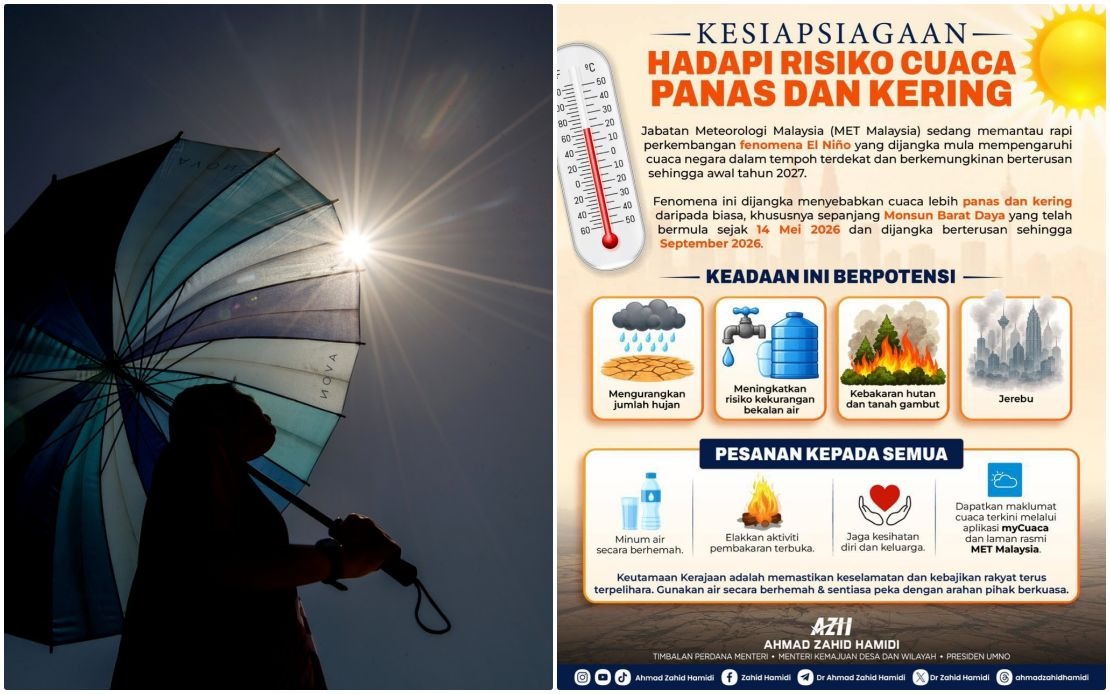
The El Niño weather pattern is set to reshape Malaysia's climate trajectory over the coming months and into 2027, bringing sustained heat and dryness that could test the nation's water resources and environmental resilience. Deputy Prime Minister Datuk Seri Dr Ahmad Zahid Hamidi issued the advisory on behalf of the Central Disaster Management Committee, signalling that government agencies are actively monitoring the brewing climatic shift and preparing contingency responses across multiple sectors.
The phenomenon will coincide with the Southwest Monsoon season, which commenced on May 14 and extends through September, creating a particularly challenging window for rainfall distribution across the country. By overlaying El Niño's suppressive effects on precipitation with the Southwest Monsoon's naturally drier characteristics, meteorologists project that several regions could experience significantly below-average rainfall accumulation. This convergence of atmospheric patterns represents a rare intersection of climate drivers that intensifies moisture stress on the peninsula and East Malaysia alike.
Rainfall deficits carry cascading consequences that extend far beyond dry soil and yellowed vegetation. Water treatment facilities may struggle to maintain supply levels during peak demand periods, particularly affecting urban centres where consumption peaks during hot afternoons. Agricultural regions dependent on seasonal rainfall face potential crop stress and yield reductions, rippling through food security and farm household incomes. The Malaysian Meteorological Department's director-general, Dr Mohd Hisham Mohd Anip, underscored these interconnected risks in his technical assessment, emphasising the need for proactive resource management across water, agriculture, and emergency services.
Forest and peatland fire risk escalates dramatically when ambient temperatures spike and soil moisture plummets simultaneously. Peatlands, which blanket substantial areas of Sarawak and Sabah, become tinderboxes under such conditions, capable of releasing massive smoke plumes that degrade air quality across Southeast Asia. Uncontrolled burning of agricultural or cleared land during dry phases historically triggers transboundary haze episodes that disrupt air traffic, trigger respiratory health crises, and impose economic costs on neighbouring nations. The government's emphasis on preventing open burning reflects hard-learned lessons from previous El Niño episodes when regional air pollution reached hazardous levels.
Ahmad Zahid's public statement functions as both warning and call to collective action, positioning water conservation and fire prevention as shared citizen responsibilities rather than purely governmental obligations. The advisory explicitly targets vulnerable populations—the elderly, children, and those with pre-existing respiratory or cardiovascular conditions—who face elevated health risks during sustained heat stress. Heat-related illnesses, dehydration, and exacerbation of chronic diseases typically spike when daily temperatures remain consistently above historical norms for extended periods.
The government has directed the public toward the myCuaca mobile application and MetMalaysia's official channels as authoritative sources for weather updates and alerts. This emphasis on real-time information access reflects a modernised disaster management approach that leverages digital platforms to disseminate warnings more rapidly and widely than traditional media alone. Citizens downloading and regularly consulting these resources gain early awareness of dangerous heat waves, sudden rainfall events, or air quality deteriorations that might prompt protective action.
El Niño's persistence through early 2027 presents a multi-year planning challenge for utilities, agricultural departments, and disaster management agencies. Water authorities may need to implement staged rationing protocols or accelerate infrastructure investments in desalination or water recycling facilities. Agricultural extension services should disseminate drought-resistant crop varieties and irrigation efficiency techniques to farming communities. Forestry divisions must strengthen early-warning systems and pre-position fire suppression equipment in high-risk zones.
The phenomenon carries particular significance for Southeast Asia's interconnected climate system. El Niño events suppress rainfall across the region's monsoon zones, affecting Indonesia, Thailand, and Vietnam alongside Malaysia. Cross-border environmental impacts, including transboundary haze and reduced hydropower generation in countries dependent on rainfall-fed reservoirs, underscore why regional cooperation on climate adaptation remains essential. Malaysia's proactive stance in warning its population may set a template for coordinated response across ASEAN nations facing identical atmospheric drivers.
At the household level, the advisory translates into practical behavioural changes: installing water storage tanks, weatherproofing homes against heat penetration through shading and ventilation, maintaining emergency supplies of potable water, and reducing garden irrigation to essential plantings. Business continuity for commercial operations may require installation of backup water supplies or temporary cooling systems to maintain productivity during peak heat hours. Swimming pools and recreational facilities should implement water conservation measures rather than draining altogether, preserving these community assets while reducing overall demand.
The government's commitment to continuous monitoring and responsive action demonstrates that climate adaptation in Malaysia operates as an iterative process informed by meteorological data and ground-level observations. Should forecasts indicate intensification beyond current projections, authorities retain flexibility to escalate conservation requirements or activate emergency protocols. Conversely, if rainfall proves more abundant than anticipated, existing measures can be relaxed, allowing normal economic and social activities to resume without artificial constraints.
The El Niño alert ultimately reflects Malaysia's maturation as a climate-conscious nation that acknowledges environmental risks, mobilises institutional capacity, and engages citizen cooperation in building resilience. While the months ahead will test water supplies, vegetation stress, and air quality, the combination of advanced warning, clear governmental guidance, and citizen preparedness substantially mitigates potential harms. The emphasis on personal and family health protection, responsible resource use, and adherence to environmental regulations weaves climate adaptation into the fabric of daily Malaysian life.