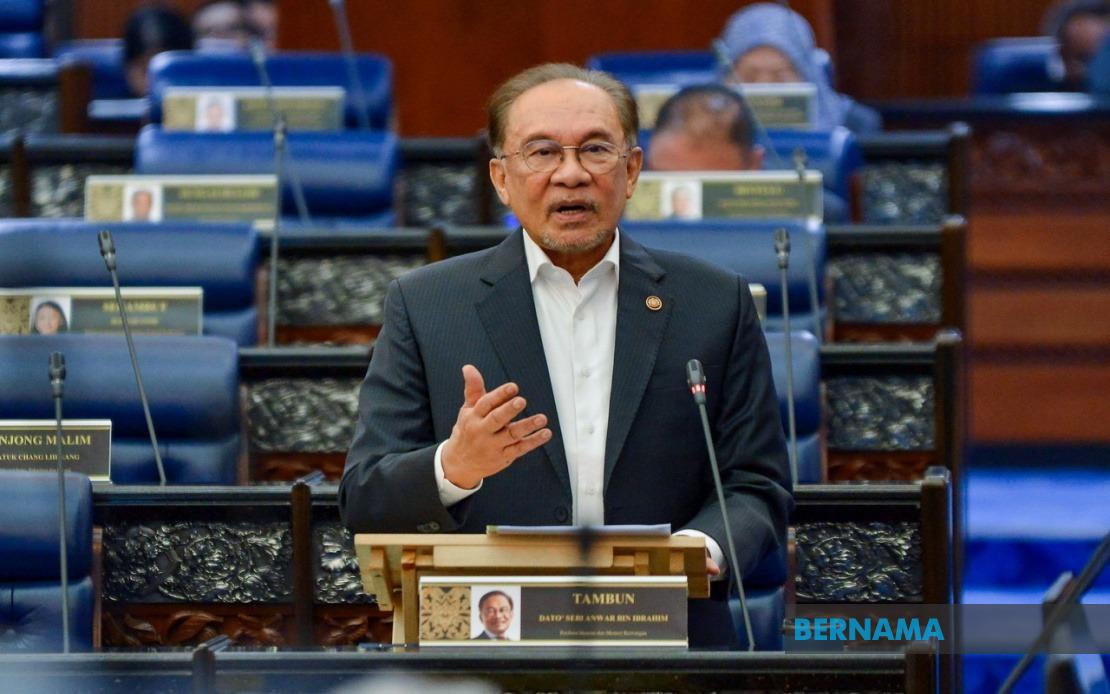
Prime Minister Datuk Seri Anwar Ibrahim has reinforced Malaysia's commitment to dialogue and international maritime law as the primary mechanisms for addressing boundary disagreements with neighbouring states. Speaking in Parliament on July 14, Anwar stressed that Malaysia will persist in pursuing negotiated settlements anchored in the 1982 United Nations Convention on the Law of the Sea (UNCLOS), which furnishes the essential legal architecture for maritime claims and dispute resolution across the region.
The Prime Minister acknowledged the International Maritime Organization's legitimate role in overseeing maritime affairs, yet emphasised that even this specialised United Nations body operates within the constraints established by UNCLOS 1982. This observation reflects the principle that any multilateral maritime governance framework must ultimately defer to the foundational international convention that governs ocean-based affairs. However, Anwar candidly recognised that UNCLOS itself contains interpretative ambiguities that various nations construe differently, meaning the convention provides necessary but not always sufficient guidance when disagreements arise over maritime boundaries and maritime zones.
Regarding the South China Sea—a region of significant strategic importance for Malaysian shipping and commerce—Anwar disclosed that member states of the Association of Southeast Asian Nations have collectively determined to ground their negotiations with China in UNCLOS principles. Concurrently, ASEAN and China continue working toward a binding Code of Conduct that would establish operational norms and conflict-prevention protocols for the contested waters. The Prime Minister noted, however, that Manila's participation in these discussions has presented additional complications, partly because the Philippines' separate territorial claim to Sabah remains unresolved and complicates the broader regional framework.
Anwar's parliamentary statement illustrated Malaysia's pragmatic approach by highlighting the nation's bilateral experiences with Thailand and Vietnam. In both cases, Malaysia has established Joint Development Authorities—institutional arrangements that permit neighbouring countries to collaborate economically on disputed maritime zones without either side surrendering its legal sovereignty claims. This model allows concurrent resource extraction, scientific research, and commercial activity to proceed even whilst underlying boundary disputes remain technically unresolved. Such mechanisms reflect an understanding that perpetual legal stalemates need not preclude mutual benefit and cooperation.
The Vietnamese example particularly demonstrates Malaysia's flexibility in maritime diplomacy. Rather than insisting on formal boundary demarcation as a prerequisite for any form of cooperation, Malaysia and Vietnam crafted an arrangement whereby both nations jointly develop resources within the contested area, with each side maintaining its original claim intact and explicitly "without prejudice" to future negotiations. This creative solution has allowed economic activity to flourish whilst preserving each nation's legal position—a model that might offer lessons for other regional boundary disputes.
As Anwar detailed, Malaysia confronts maritime boundary questions with an extensive roster of neighbours: Brunei, Thailand, Indonesia, Singapore, the Philippines, and China. The sheer number of maritime interfaces across Malaysian territory—encompassing both Peninsular Malaysia and the territories of Sabah and Sarawak on the island of Borneo—underscores the complexity of the nation's maritime legal landscape. Rather than resort to unilateral assertions of control or military posturing, Malaysia has consistently opted for the slower but ultimately more sustainable path of diplomatic engagement and bilateral discussion.
Progress with Brunei has advanced considerably, with only minor areas—some involving Sarawak's jurisdiction—remaining contentious. These negotiations have proceeded without public acrimony or escalatory rhetoric, suggesting that patient diplomacy can yield incremental advances even on traditionally intractable issues. Discussions with Indonesia, meanwhile, have concentrated on maritime zones adjacent to Sabah and are conducted in close coordination with the Sabah state government, reflecting Malaysia's sensitivity to regional sensibilities and federalist governance arrangements.
Anwar's comments were delivered in response to a parliamentary question from Datuk Seri Hasni Mohammad concerning whether Malaysia should seek technical guidance from the International Maritime Organization regarding security and management of the strategically vital Straits of Malacca. The straits represent one of the world's most critical shipping corridors, through which vast quantities of global trade flows annually. The Prime Minister's response indicated that whilst the IMO's expertise has value, Malaysia prefers to maintain its disputes within bilateral and multilateral frameworks rather than internationalise them through a specialised UN agency.
The Prime Minister's emphasis on negotiation as Malaysia's default diplomatic posture reflects a sophisticated understanding of regional power dynamics and the risks of escalation in one of the world's most economically significant maritime zones. By anchoring Malaysia's position in UNCLOS and demonstrating a track record of successful cooperative arrangements with neighbours, Anwar signalled to both domestic audiences and regional partners that Malaysia will not abandon its maritime claims whilst simultaneously remaining open to pragmatic coexistence arrangements that generate mutual advantages.
This dual commitment—to both legal principle and practical cooperation—appears designed to reassure Malaysian stakeholders that their maritime rights are being vigorously defended through appropriate international legal channels, whilst simultaneously conveying to neighbours and the international community that Malaysia remains a predictable and constructive actor invested in regional stability. As the South China Sea disputes continue to generate international attention and concern, Malaysia's articulated preference for negotiation and UNCLOS-based frameworks positions the nation as a voice for law-based solutions rather than confrontation, though such diplomacy will undoubtedly face ongoing tests as geopolitical tensions in the region persist.

