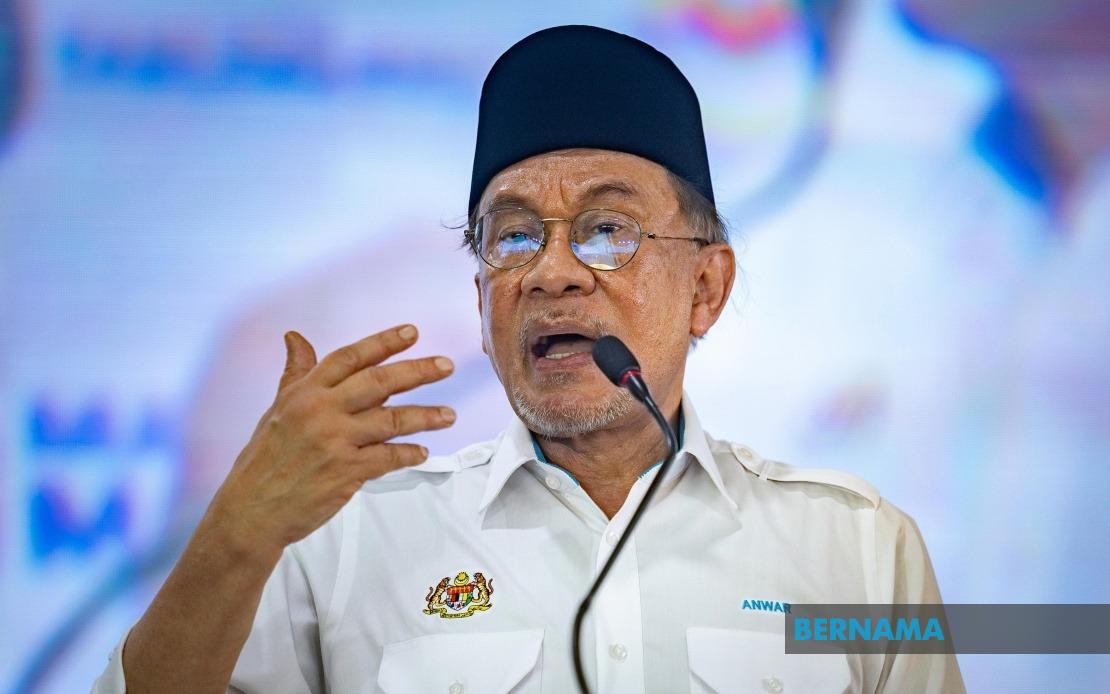
Prime Minister Datuk Seri Anwar Ibrahim has pledged the MADANI Government's sustained dedication to strengthening religious schools and pondok institutions throughout Malaysia, signalling a strategic approach to preserving Islamic education while modernising its curriculum. Speaking at the 2026 Perak Pondok and Religious Schools Gathering in Ipoh on July 19, Anwar underscored the government's recognition that these traditional institutions require contemporary enhancements to remain relevant in an increasingly digital world.
The Prime Minister acknowledged the historical significance of pondok schools in Malaysia's educational landscape, noting that these establishments once served as vital centres for knowledge dissemination before falling into relative decline during periods of rapid societal transformation. He recognised that the challenge facing these institutions stemmed not from inadequacy in preserving Islamic scholarship, but rather from their limited capacity to integrate knowledge from other academic disciplines and technological fields. This candid assessment reflects a broader government understanding that religious education need not exist in isolation from secular subjects to maintain its integrity and appeal.
Central to Anwar's remarks was his appreciation for the educators, institutional leaders, and venerated religious teachers—particularly tok guru—who have maintained the rigor of Islamic scholarship and classical texts while simultaneously demonstrating openness to exploring emerging fields. This dual commitment represents a delicate balance that the government seeks to encourage across the sector. By highlighting these progressive examples, Anwar positioned the MADANI administration as a facilitator of evolution rather than enforcement of outdated paradigms.
The initiative to modernise religious and pondok schools reflects broader government goals of ensuring all Malaysian students, regardless of their educational pathway, develop competencies essential for participation in the twenty-first century economy. The integration of subjects such as computer technology and artificial intelligence into traditionally text-focused curricula addresses a genuine skills gap that has left some pondok school graduates at a disadvantage when transitioning to higher education or employment. This approach acknowledges that technological literacy is no longer a luxury but a necessity across all educational streams.
Anwar specifically commended the Malaysia Digital Economy Corporation and the Implementation Coordination Unit within the Prime Minister's Department for their collaborative efforts in supporting these schools' modernisation endeavours. These partnerships demonstrate a coordinated whole-of-government approach to the challenge, suggesting that progress requires sustained cooperation across multiple agencies rather than isolated institutional efforts. The involvement of the Prime Minister's office signals the political priority assigned to this agenda at the highest levels.
The gathering also included Perak Menteri Besar Datuk Seri Saarani Mohamad, Minister in the Prime Minister's Department (Religious Affairs) Dr Zulkifli Hasan, and Chief Secretary to the Government Tan Sri Shamsul Azri Abu Bakar, indicating institutional buy-in from both state and federal levels. This representation underscores that upgrading religious education is positioned as a shared responsibility transcending typical bureaucratic silos. The presence of the Religious Affairs Minister particularly emphasises that the initiative enjoys legitimacy within government structures typically tasked with managing religious matters.
Anwar's assurance to a named religious scholar from Kelantan, Sheikh Wazir Che Awang Al-Makki, that enhancement efforts would continue contingent on sustained economic health, introduces a pragmatic caveat to the commitment. The conditional framing—dependent on governmental health and economic stability—suggests that while the commitment is genuine, its pace and scope remain subject to Malaysia's fiscal trajectory. This realism may reflect challenges in securing consistent funding for improvements across hundreds of institutions nationwide.
For Malaysian religious educators and institutional leaders, the Prime Minister's statements provide official recognition that their work remains valued by the federal administration and that avenues for institutional development exist. However, the rhetoric must be evaluated against concrete resource allocation and timeline commitments. The emphasis on modernisation also carries implicit expectations that pondok schools will themselves drive reform, potentially placing additional burdens on institutions already stretched financially and operationally.
The broader significance for Southeast Asia lies in Malaysia's apparent determination to prevent the marginalisation of Islamic education within national development frameworks. By positioning religious schools as participants in economic modernisation rather than cultural preservation museums, the government articulates a vision in which religious and secular learning streams support rather than contradict national progress. This messaging carries implications for how other Muslim-majority nations in the region conceptualise the relationship between traditional Islamic institutions and contemporary economic demands.
For parents considering educational pathways for their children, the government's stated commitment to pondok school modernisation may enhance the attractiveness of these institutions, provided that implementation matches rhetorical pledges. The incorporation of technology training within religious curricula could position pondok graduates more competitively in labour markets while maintaining their grounding in Islamic scholarship. Whether sufficient funding materialises and implementation proves effective across the diverse landscape of pondok schools—from well-resourced urban institutions to modest rural establishments—will ultimately determine whether this policy direction translates into tangible improvement.

