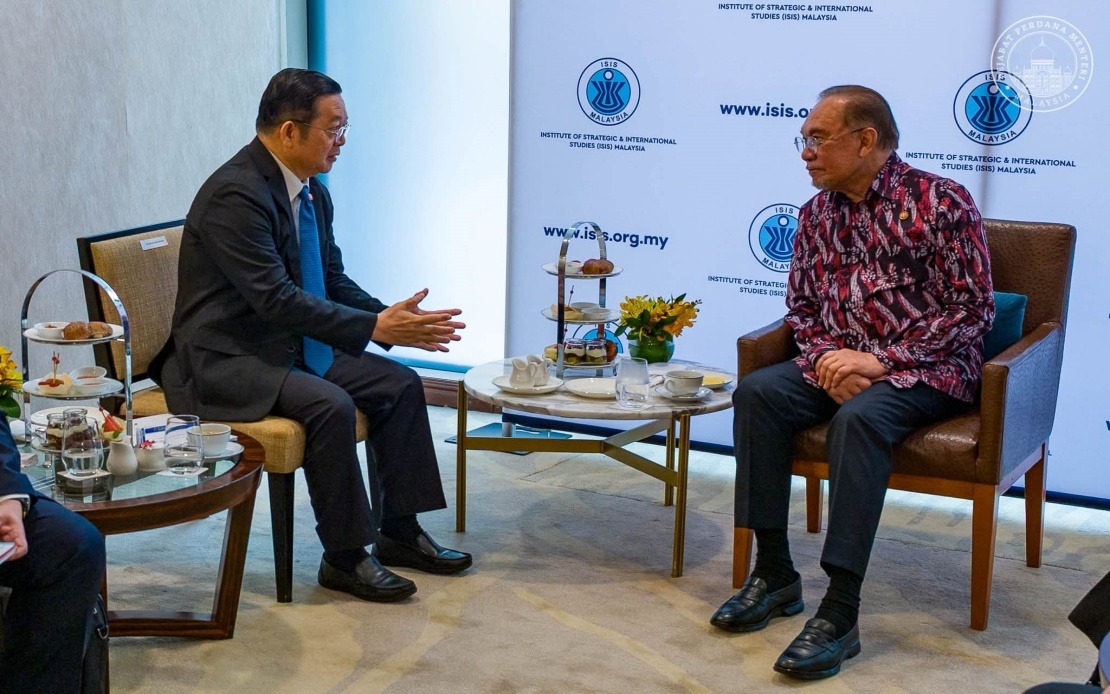
Prime Minister Datuk Seri Anwar Ibrahim has reaffirmed Malaysia's commitment to advancing ASEAN's collective strength and cohesion, pledging that the nation will maintain its constructive engagement in regional affairs as the bloc navigates an increasingly uncertain geopolitical environment. The declaration came during a meeting with ASEAN Secretary-General Dr Kao Kim Hourn, held following Anwar's keynote address at the 39th Asia-Pacific Roundtable in Kuala Lumpur, an influential gathering of policymakers and thought leaders examining regional stability.
The Prime Minister, who concurrently holds the Finance portfolio, used the engagement to underscore Malaysia's vision for ASEAN as a resilient, inclusive organisation capable of realising the development aspirations of its 650 million residents. The dialogue highlighted the necessity for ASEAN to function as a unified entity even as member states grapple with divergent strategic interests and competing great power influences reshaping the regional architecture.
Among the substantive issues examined during the courtesy call were developments unfolding in Myanmar, a matter of particular concern given the military takeover and ongoing humanitarian crisis affecting the nation since 2021. Myanmar's instability has ramifications extending across Southeast Asia, influencing refugee flows, transnational organised crime, and regional security equilibrium, making it a persistent focal point for ASEAN engagement and diplomatic efforts to restore democratic governance.
Situations in the South China Sea equally occupied significant discussion space, reflecting the waterway's centrality to regional prosperity and security. Through which approximately one-third of global maritime trade transits, the contested waters remain a flashpoint between ASEAN claimants and external powers, necessitating careful diplomatic navigation to prevent escalation whilst safeguarding freedom of navigation rights that underpin the region's economic vitality.
The dialogue also encompassed artificial intelligence advancement, an increasingly pivotal technology shaping economic competitiveness and governance capacity across Southeast Asia. As nations race to harness AI's potential for productivity gains and service delivery improvements, ASEAN coordination becomes essential to ensure equitable development, manage risks associated with automation and job displacement, and establish regional standards preventing a fragmented regulatory landscape that could disadvantage smaller economies.
Timor-Leste's recent accession to full ASEAN membership featured prominently in discussions, representing a significant milestone for regional integration. The Southeast Asian bloc's expansion to eleven members necessitates thoughtful management of the post-accession phase, including institutional adaptation, resource allocation, and ensuring the newest member's integration does not dilute ASEAN's decision-making effectiveness or burden its capacity-building mechanisms.
The implementation trajectory of the ASEAN Community Vision 2045 agenda also warranted examination, as the bloc's long-term blueprint for economic integration, political-security cooperation, and sociocultural exchange requires sustained momentum across member administrations despite competing domestic priorities. This comprehensive framework seeks to position ASEAN as a resilient, people-oriented community that effectively addresses transnational challenges ranging from climate change to pandemics.
The conversation extended to West Asia's conflicts and their cascading implications for Southeast Asia's security environment, economic stability, and humanitarian obligations. Regional disruptions potentially threaten energy security, elevate terrorism and extremism recruitment risks, and complicate investment climate calculations for multinational enterprises operating across ASEAN territories, necessitating collective strategic thinking about mitigation measures.
Anwar emphasised that ASEAN must vigilantly uphold its foundational principles of unity, centrality in regional affairs, and intensive multilateral cooperation to sustain peace, stability and prosperity across Southeast Asia. The principle of ASEAN centrality—positioning the bloc as the driving force shaping regional architecture rather than becoming a passive arena where external powers compete—remains essential for smaller nations seeking to preserve strategic autonomy amid great power competition between Washington and Beijing.
The Prime Minister's engagement reflects Malaysia's recognition that regional challenges increasingly transcend national boundaries, demanding coordinated responses that only unified ASEAN action can effectively deliver. As the bloc confronts intensifying geopolitical pressures, deepening economic interdependencies, and emerging transnational threats, Malaysia's willingness to shoulder responsibility for strengthening institutional coherence and diplomatic problem-solving capabilities contributes significantly to preserving Southeast Asia's strategic independence and prosperity trajectory during a particularly turbulent period in international relations.

