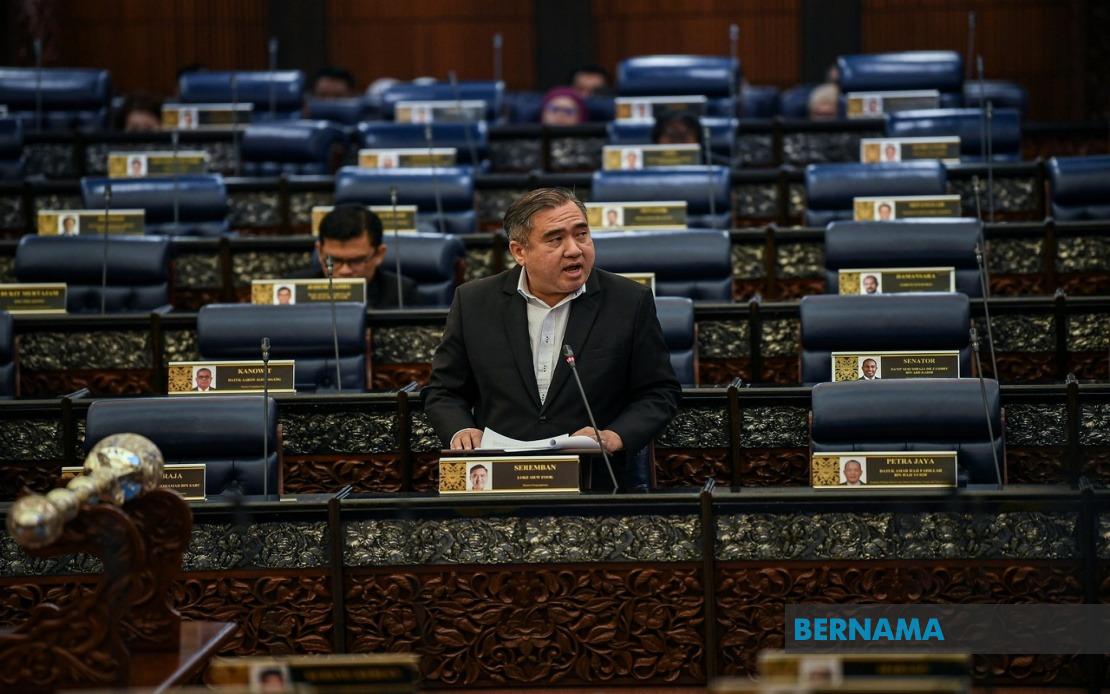
Transport Minister Anthony Loke has tabled the Road Transport (Amendment) Bill 2025 in Parliament, introducing landmark legislation designed to combat street racing and unauthorised speed testing on Malaysian public roads. The proposed amendments represent a significant escalation in the government's approach to curbing a behaviour that has long plagued urban and suburban highways, transforming illegal racing from a secondary charge bundled with dangerous driving into a distinct and serious criminal offence. By establishing a standalone provision under Section 42A of the Road Transport Act 1987, lawmakers aim to equip enforcement agencies with more direct and efficient tools to prosecute offenders without waiting for accidents or injuries to materialise.
Under the new framework, first-time offenders caught engaging in street racing or speed trials face financial penalties ranging from RM2,000 to RM10,000, combined with potential imprisonment of up to two years upon conviction. For those with prior convictions, the consequences escalate substantially—repeat offenders face fines between RM5,000 and RM20,000 with imprisonment terms reaching five years. This tiered penalty structure reflects legislative intent to deter habitual offenders more forcefully while providing proportional punishment that acknowledges the greater danger posed by those who persist in the behaviour after initial sanctions.
Loke explained during the second reading that existing dangerous driving provisions have created enforcement complications for authorities. Without a specific racing offence, law enforcement has historically required evidence of accidents, injuries, or property damage to prosecute cases effectively. The novel aspect of this amendment lies in its preventative dimension—authorities can now intervene at the moment illegal racing or speed testing occurs on public roads, even when no accident transpires. This shift addresses a critical gap in road safety infrastructure, allowing proactive enforcement rather than reactive responses to dangerous conduct.
The practical implications are substantial for enforcement operations across Malaysia's urban corridors. Motorcycle enthusiasts engaging in spontaneous speed competitions on highways, or automotive clubs conducting unauthorised performance testing on thoroughfares, now face explicit criminality. Loke illustrated the scenario of motorcyclists racing against one another on public roads or motorists testing vehicle acceleration on city streets—activities that technically violated traffic laws previously but lacked a specific charge to facilitate prosecution. This clarification empowers traffic police and highway patrol units to take decisive action immediately upon observing such conduct.
Beyond racing itself, the amendment introduces Section 110B to protect enforcement personnel and strengthen their operational capacity. Individuals who obstruct, interfere with, assault, threaten or pursue enforcement officers' vehicles face penalties of RM10,000 to RM50,000 in fines, one to five years imprisonment, or both. Critically, the provision also criminalises the sharing of intelligence about enforcement operations designed to help suspected offenders escape detection—a common tactic used within racing communities to coordinate evasion. Designating this conduct as an arrestable offence underscores the seriousness with which the authorities now treat interference with road safety enforcement.
The Bill encompasses broader reforms to compounding mechanisms and penalty structures across road transport violations. Current minimum fines for selected offences, set at RM300, would increase to RM500, although this adjustment applies flexibly rather than as an automatic application. Enforcement officers will retain discretion to calibrate compound amounts based on violation severity, settlement timeframes and established procedures. By raising the maximum compound ceiling for eligible offences, the legislation provides authorities with enhanced negotiating leverage to encourage compliance without necessarily proceeding to prosecution—a pragmatic approach that balances deterrence with administrative efficiency.
For the Malaysian public, these amendments arrive against a backdrop of persistent road safety concerns. Street racing incidents have periodically dominated news headlines, often triggering collateral damage affecting innocent road users. The transformation of illegal racing into a standalone offence acknowledges that such conduct represents a distinct category of public danger requiring dedicated legislative attention. Rather than treating racing as an incidental element of broader dangerous driving charges, Parliament now recognises it as behaviour meriting its own criminalisation framework.
The regional context adds further significance to Malaysia's legislative action. Southeast Asian nations grapple collectively with rising motorcycle ownership, youthful demographics, and cultural challenges around vehicle customisation and performance culture. Malaysian legislation establishing explicit racing offences may influence neighbouring jurisdictions considering similar provisions. The five-year maximum imprisonment represents a notably stringent penalty by regional standards, signalling serious governmental intent to reshape social attitudes toward street racing conduct.
Implementation timelines reveal the government's measured approach. While the racing offence provisions appear ready for prompt enactment, the revised compound penalty structures take effect only on January 1, 2029. This delay likely accommodates administrative preparation, allowing traffic enforcement agencies time to update procedural guidelines, train personnel on new discretionary frameworks, and integrate modifications into digital enforcement systems. Staggered implementation reduces operational disruption whilst ensuring systematic adoption across the various agencies administering road transport law.
The Bill's protective provisions for enforcement officers address a secondary but important concern—the increasingly hostile environment officers face when conducting highway operations. Racing communities have historically organised rapid-response networks that alert participants to enforcement activities, compromising operation effectiveness. By explicitly criminalising such coordination and threatening enforcement personnel, the legislation aims to reduce such obstruction. Designating these infractions as arrestable empowers officers to detain individuals engaged in such activity without requiring supervisory authorisation, expediting law enforcement response.
Stakeholders in Malaysia's automotive and motorcycle sectors face adjusted expectations under the new regime. Performance driving enthusiasts will require legitimated venues—dedicated race tracks or closed courses—to pursue speed interests legally. Vehicle modification communities must ensure compliance with road-worthiness standards if vehicles will operate on public thoroughfares. The distinction between modified vehicles capable of public road operation and purpose-built racing machines becomes legally consequential under the amended framework.
For ordinary drivers and riders, the amendments signal strengthened road safety enforcement focused on dangerous conduct patterns. While distracted driving, speeding, and other violations remain persistently problematic, legislative resources now explicitly address street racing's specific menace. The prevention-oriented approach—allowing enforcement before accidents occur—theoretically reduces the probability that innocent parties become collision victims in racing-related incidents.
The government's position reflects contemporary global trends emphasising specific criminalisation of street racing rather than bundling it with general dangerous driving offences. Multiple jurisdictions have adopted similar standalone provisions, recognising that dedicated legislation facilitates enforcement, prosecution, and public education around the specific dangers racing presents. Malaysia's adoption of this international best practice indicates alignment with evidence-based policy approaches to road safety enhancement.

