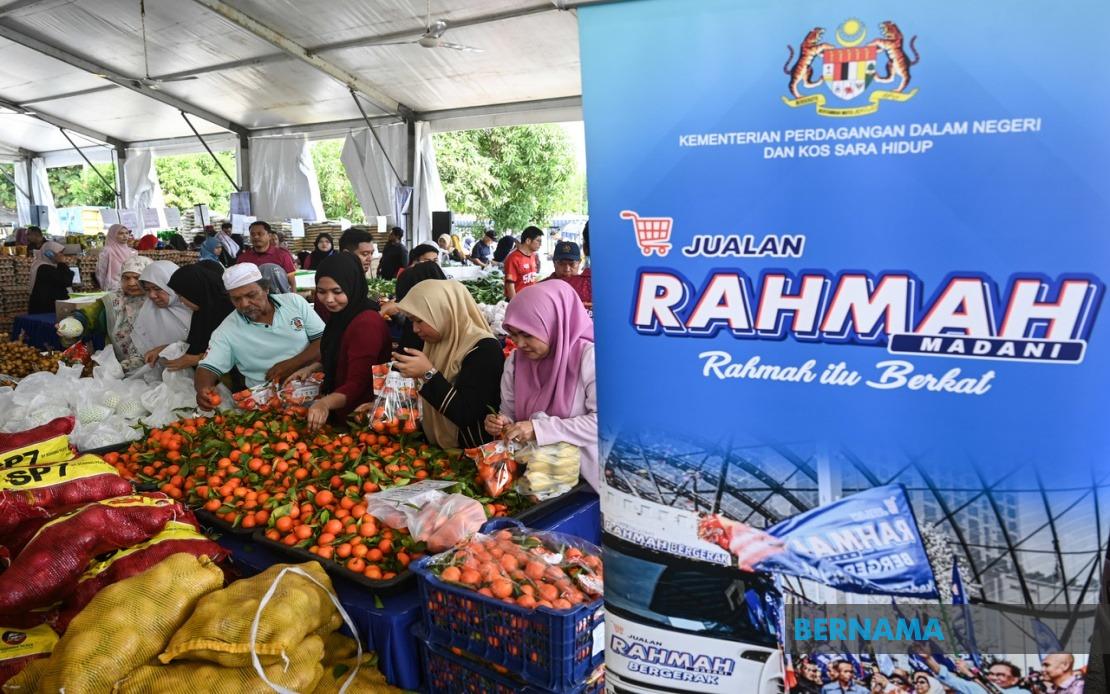
Prime Minister Datuk Seri Anwar Ibrahim has unveiled plans for a nationwide online shopping initiative timed to Malaysia Day 2026, positioning it as a tangible demonstration of government commitment to ease financial pressures on households across the nation. The Ihsan Rahmah 9.9 online sale will debut on September 9, marking a significant shift in how the government distributes affordable goods to citizens, as this marks the first time the programme moves entirely into the digital space. The announcement came during Anwar's address at the TikTok Shop Summit Malaysia in Kuala Lumpur, underscoring the government's intention to leverage modern e-commerce platforms to reach broader segments of the population.
The initiative represents a strategic alignment between Malaysia Day commemorations and the government's broader agenda to address household affordability challenges, a persistent concern among middle and lower-income families. By coupling the sale with the national celebration, authorities signal that strengthening the purchasing power of everyday Malaysians forms a core part of nation-building efforts. The Prime Minister explicitly framed the initiative as comprehensive support targeting all 34.5 million citizens, reflecting ambitions to ensure no demographic segment feels excluded from government assistance measures. This inclusive messaging carries particular weight in an environment where cost-of-living anxieties frequently dominate public discourse and shape electoral sentiment.
Multiple government agencies have committed to backing the online sale, with direct involvement from the Communications Ministry under Datuk Seri Fahmi Fadzil, the Entrepreneur and Cooperative Development Ministry led by Steven Sim Chee Keong, and the Domestic Trade and Cost of Living Ministry overseen by Datuk Armizan Mohd Ali. This institutional coordination reflects recognition that affordability challenges cut across multiple policy domains, requiring harmonised responses across commerce, trade regulation, and consumer protection frameworks. The breadth of ministerial participation also signals that government views this initiative not merely as a charitable programme but as a strategic economic intervention with implications spanning entrepreneurship development, digital commerce adoption, and price stability objectives.
The Ihsan Rahmah programme itself, administered by the Ministry of Domestic Trade and Cost of Living, has established a track record of delivering price reductions ranging from 10 to 30 percent below standard retail costs across essential commodities. These discounts apply to everyday items that form the bedrock of household budgets—groceries, toiletries, and other necessities that consistently rank among Malaysians' top spending categories. By extending this proven model into the online realm, the government hopes to eliminate geographic barriers that previously prevented citizens in remote areas from accessing such offers, while simultaneously capitalising on the surging adoption of mobile commerce and digital payment systems across the country.
Anwar's framing of the initiative emphasises that robust economic growth figures must translate into concrete improvements in living standards for ordinary people. Rather than treating GDP expansion as an end in itself, the Prime Minister articulated a vision where macroeconomic success serves as a foundation for targeted interventions addressing quality-of-life dimensions that statisticians often overlook. His comments implied criticism of approaches that separate economic performance metrics from household welfare outcomes, positioning the government's affordability agenda as evidence of results-focused governance. This rhetorical strategy attempts to convert growth achievements into political capital by demonstrating tangible benefits reaching the electorate.
The government's emphasis on promoting widespread awareness of the 9.9 sale reflects strategic acknowledgment that even well-intentioned programmes falter without adequate publicity and user adoption. Anwar explicitly urged coalition partners and participating agencies to champion the initiative through communication channels reaching diverse demographics, including rural communities and elderly populations who may face steeper digital literacy barriers. This recognition of a potential publicity gap suggests planners understand that transitioning an established physical retail programme into the digital sphere introduces transition costs and consumer education requirements that previous iterations did not necessitate. Success will partly hinge on effective messaging across mainstream media, social platforms, and community networks.
The timing of the announcement during the TikTok Shop Summit carries symbolic weight within Malaysia's evolving digital commerce landscape. By unveiling government affordability initiatives at a platform focused on mobile-first shopping and youth engagement, authorities signal openness to technology-driven solutions and recognition that younger consumers increasingly conduct retail transactions through social commerce channels rather than traditional brick-and-mortar establishments. This positioning may gradually shift perceptions of government welfare programmes away from stigmatised, means-tested distributions toward aspirational, tech-savvy interventions accessible to broad sections of the population. The association with TikTok Shop also implies leveraging influencer networks and viral marketing dynamics to amplify programme visibility.
For Malaysian consumers, the September 9 launch offers concrete opportunities to reduce household expenditure on essentials during a year when inflationary pressures persist across food, energy, and transportation categories. The 10 to 30 percent discount range, though variable across product categories, could translate into meaningful monthly savings for households spending significant portions of income on basic commodities. Across a nation where average household expenditure reports consistently highlight food and beverages as the largest non-housing expense category, even modest percentage reductions compound into aggregate savings worth hundreds of ringgit annually. The online format additionally offers convenience advantages over previous physical sale arrangements, enabling shopping at flexible times without geographic constraints.
Southeast Asian governments face intensifying political pressure to demonstrate tangible improvements in purchasing power as inflationary cycles persist and wage growth lags price increases. Malaysia's approach of combining e-commerce infrastructure modernisation with targeted affordability programmes provides a replicable model that other regional economies might study. The integration of digital platforms, government pricing regulations, and consumer demand creates a framework potentially more scalable than traditional price-control mechanisms. However, questions remain regarding the sustainability of such programmes should commodity input costs escalate, and whether online shopping accessibility truly reaches all demographic segments government claims to target.
The broader context surrounding this announcement includes ongoing government efforts to position Malaysia as a regional fintech and digital commerce hub. By implementing affordability initiatives through modern platforms rather than legacy bureaucratic channels, policymakers signal commitment to harnessing technological capabilities for social welfare objectives. This approach potentially accelerates digital payment adoption, expands e-commerce user bases, and generates valuable transaction data informing future policy calibration. Whether the 9.9 sale succeeds may partly determine government confidence in scaling similar technology-enabled welfare interventions.

