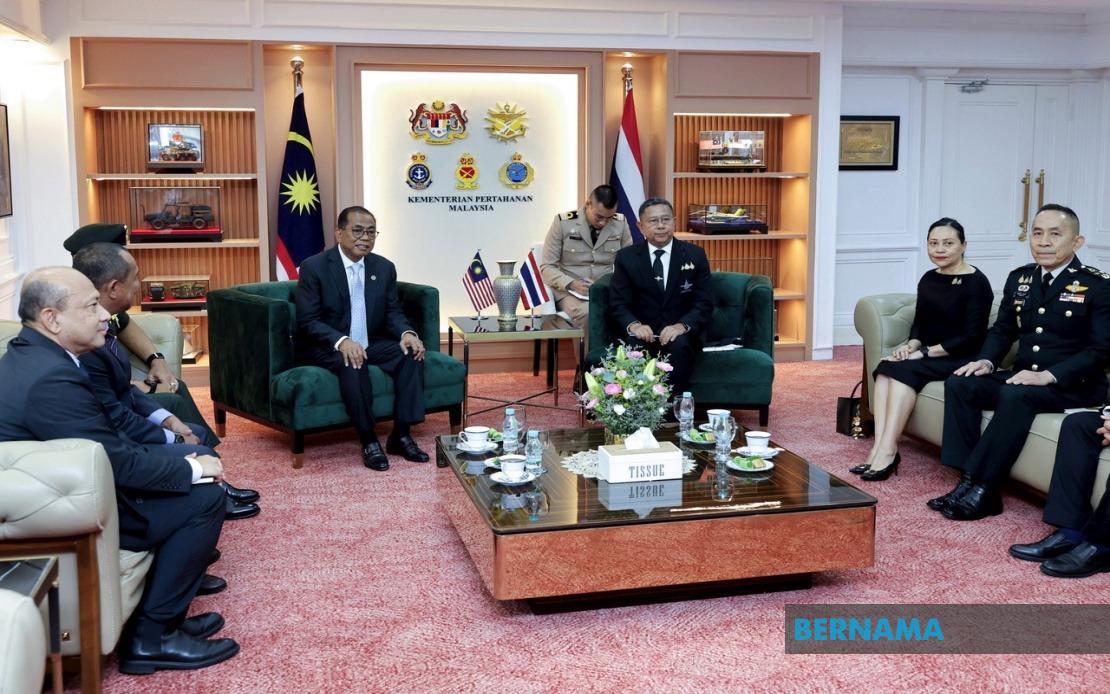
Malaysia has signalled its intention to deepen cooperation with Thailand on one of the region's most persistent security challenges—the ongoing conflict in southern Thailand—with Defence Minister Datuk Seri Mohamed Khaled Nordin expressing confidence that the appointment of Thanut Suvarnananda as chief of the Peace Dialogue Panel will inject fresh momentum into bilateral peace initiatives.
The announcement came during a visit by Thai Defence Minister Lieutenant General Adul Boonthumjaroen to Kuala Lumpur, underscoring the strategic importance both nations attach to resolving the decades-long insurgency that has claimed thousands of lives and displaced communities across Thailand's southernmost provinces. Mohamed Khaled characterised the leadership transition as an opportunity to reinvigorate dialogue mechanisms and translate goodwill into tangible progress on the ground.
Malaysia's role as a neutral facilitator has been instrumental in brokering discussions between the Thai government and various insurgent groups, with Datuk Rabin Basir serving as the country's official representative in the peace dialogue process. However, Mohamed Khaled was careful to delineate Malaysia's limited remit, emphasising that while Kuala Lumpur provides crucial mediation services, the ultimate responsibility for military operations and internal security rests squarely with Bangkok. This distinction is crucial for regional observers seeking to understand the precise parameters of Malaysian involvement and the boundaries that prevent any perception of overreach or interference in Thailand's sovereign affairs.
Beyond the southern peace initiative, the bilateral defence engagement has expanded significantly. Mohamed Khaled revealed that Malaysia and Thailand have agreed to tackle a parallel but equally pressing concern: the smuggling networks and criminal organisations that exploit the porous Malaysia-Thailand border. The two nations plan to leverage the Malaysia-Thailand General Border Committee, a long-standing institutional mechanism, to coordinate comprehensive counter-smuggling operations and intercept the cross-border transit of destabilising elements that could threaten security in either country.
The upcoming 57th meeting of the General Border Committee, which Malaysia will host this year, will serve as a forum to address multifaceted border challenges ranging from traditional security threats to socio-economic development initiatives designed to reduce vulnerabilities in frontier communities. The agenda reflects an understanding that sustainable peace requires not only military vigilance but also economic opportunity and improved living standards in border regions where poverty and marginalisation have historically fuelled recruitment into extremist organisations.
At the broader Southeast Asian level, Mohamed Khaled indicated that Malaysia continues to champion the ASEAN Way—a principle emphasising diplomatic dialogue and non-interference—as the appropriate framework for resolving regional disputes. He specifically referenced Thailand's boundary disagreement with Cambodia, suggesting that this unresolved tension could benefit from patient, multilateral engagement rather than confrontational posturing. With the Philippines assuming the ASEAN chair in 2026, Malaysia has already signalled its expectation that Manila will play a constructive role in mediating such disputes and preventing regional tensions from escalating.
The coordination between Malaysia and Thailand extends to major regional defence forums as well. Mohamed Khaled noted that the two nations have aligned their strategic positions ahead of the upcoming ASEAN Defence Ministers' Meeting and the expanded ADMM-Plus dialogue, which brings together ASEAN defence establishments with major powers including the United States, China, Russia, and others. This synchronisation of diplomatic messaging reflects the reality that Southeast Asian nations must maintain unified positions on core security principles to maximise their collective influence in great-power dynamics that increasingly shape the region's geopolitical landscape.
Addressing the deeper architecture of bilateral defence cooperation, Mohamed Khaled announced plans to sign a Memorandum of Understanding with Thailand this year aimed at bolstering regional security and fostering collaborative development of domestic defence industries. This initiative carries implications beyond the immediate military realm, signalling an intention to build indigenous defence capabilities while reducing reliance on external suppliers and creating economic opportunities through technology transfer and joint manufacturing ventures. For Malaysia, such cooperation could strengthen its position as a regional security player while generating defence-sector employment and technological advancement.
The timing of this enhanced engagement is particularly significant given the evolving regional security environment. Rising tensions in the South China Sea, the residual threat posed by extremist organisations, and ongoing transnational criminal networks create an imperative for Southeast Asian nations to strengthen internal bonds and demonstrate unity. Malaysia's reaffirmed commitment to supporting Thailand's peace efforts, therefore, should be understood not as a bilateral favour but as an investment in regional stability that ultimately serves Malaysian interests by preventing the destabilisation of a key neighbour and maintaining the rules-based order that underpins ASEAN cohesion.
For Malaysian readers, the implications are multifaceted. Success in Thailand's southern conflict could reduce refugee flows into Malaysia, decrease cross-border criminal activity affecting Malaysian communities, and strengthen Malaysia's profile as a constructive regional problem-solver. Conversely, failure to advance the peace process risks perpetuating instability that inevitably spills across borders. The appointment of Thanut Suvarnananda thus represents more than a Thai internal reorganisation; it signals a potential inflection point in efforts to resolve a conflict that has eluded comprehensive settlement for decades, with consequences that extend far beyond Thailand's borders.

