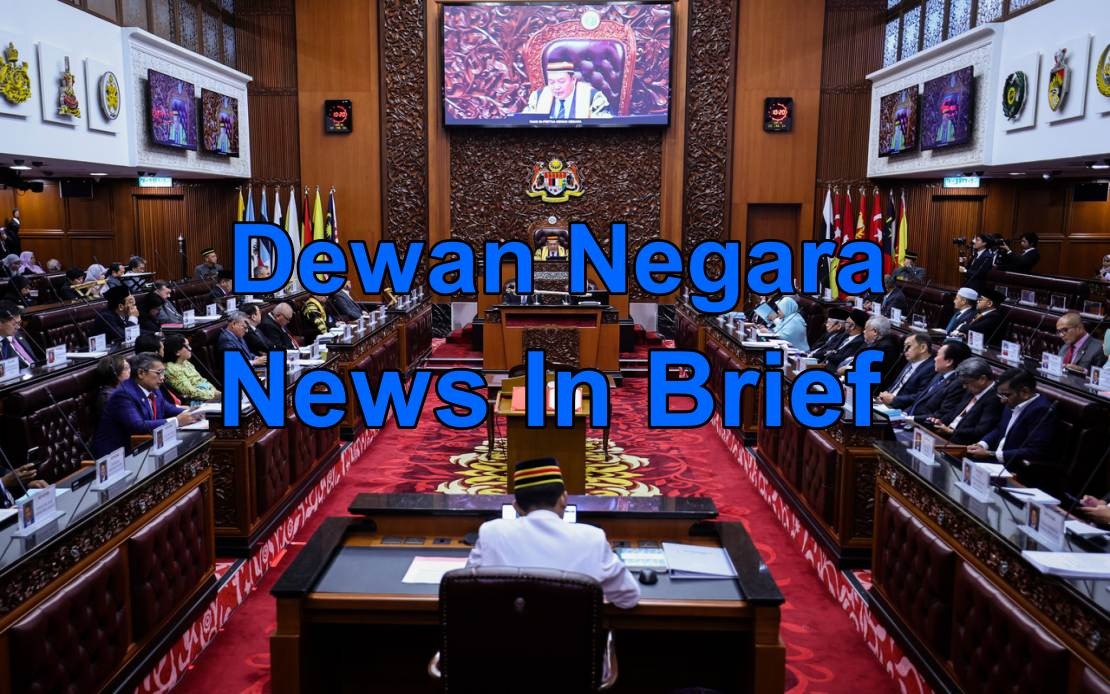
Malaysia's government is taking multifaceted steps to address climate challenges, economic opportunity and cultural preservation, according to statements made in the Dewan Negara during recent parliamentary sessions. The initiatives span environmental management, labour market development and national heritage conservation, reflecting a coordinated approach to pressing national concerns across sectors that directly affect millions of Malaysians.
The most immediate climate intervention centres on cloud seeding operations deployed across the country to counteract the prolonged El Nino phenomenon expected to persist through 2027. Deputy Natural Resources and Environmental Sustainability Minister Syed Ibrahim Syed Noh disclosed that 35 cloud seeding operations have been executed at carefully selected locations nationwide between February and June. These missions operate as a defensive measure, designed to artificially stimulate rainfall potential and replenish water reserves held in the nation's critical dam infrastructure. The operations represent a technical response to conditions that would otherwise leave water supplies depleted and communities vulnerable to shortages during extended dry periods.
The coordination required for such operations reflects the complexity of environmental management at national scale. Cloud seeding activities proceed only under optimal atmospheric conditions and involve collaboration between the National Disaster Management Agency and the Royal Malaysian Air Force, ensuring that resources are deployed strategically. Beyond direct water resource augmentation, the programme aims to mitigate multiple hazards that arise from hot and dry weather patterns—including haze episodes that degrade air quality across the region and harm public health. This multi-purpose approach recognises that drought conditions create cascading problems affecting water availability, air quality and overall environmental stability.
The El Nino challenge extends beyond immediate rainfall concerns and touches fundamental questions of food security and public health infrastructure that will preoccupy policymakers through 2027. Senator Michael Mujah Lihan's parliamentary question highlighted these broader implications, prompting the government to acknowledge the need for comprehensive mitigation and adaptation planning. The cloud seeding programme represents one tactical element within a larger framework of responses that must address interconnected vulnerabilities across the economy and society.
On the labour market front, Malaysia's Progressive Wage Policy is delivering measurable gains for workers at the lower end of the income spectrum, a cohort particularly vulnerable to stagnation and cost-of-living pressures. Economy Minister Akmal Nasrullah Mohd Nasir reported that entry-level workers have experienced a 15.79 per cent increase in median monthly wages, climbing from RM1,900 to RM2,200. This progression surpasses the initial target of lifting 50,000 workers' compensation, with 51,363 employees having benefited. The policy has attracted participation from 4,025 employers, indicating significant buy-in from the private sector. For non-entry-level workers, the improvements are less dramatic but still substantial—a 10.86 per cent median wage increase from RM2,199.15 to RM2,438 monthly, translating to an additional RM238.86 in monthly income.
The government has committed RM300 million in funding for the 2025-2027 period to sustain and potentially expand the Progressive Wage Policy. This financial commitment underscores confidence that wage standardisation mechanisms can drive inclusive growth without destabilising business operations. Notably, authorities are conducting a comprehensive impact assessment to determine whether the model can scale beyond current participants. For Malaysian workers and the broader economy, successful wage policy expansion could establish a precedent for managed interventions that lift lower-income earners without triggering widespread employer resistance or inflation.
Cultural heritage preservation entered parliamentary discussion when the Tourism, Arts and Culture Ministry signalled openness to recognising Malaysian Tamil music and songs as National Heritage under the National Heritage Act 2005. Deputy Minister Chiew Choon Man outlined the procedural pathway, noting that artistic and cultural works must first undergo rigorous research, documentation and evaluation to establish their heritage and historical significance. This approach ensures that heritage designations rest on scholarly foundations rather than political convenience, maintaining the integrity of the national heritage framework while allowing space for recognising contributions from Malaysia's diverse communities.
Senator K. Saraswathy's question prompted discussion of mechanisms to identify, document and archive local Tamil music and lyrics as treasures reflecting the nation's multicultural identity. The government's receptiveness signals willingness to incorporate underrepresented cultural traditions within formal national heritage structures. For Malaysia's Tamil-speaking communities, such recognition affirms the value of their artistic heritage within the broader national narrative. The process reflects broader efforts to ensure that cultural preservation initiatives remain inclusive and representative of the country's demographic and linguistic diversity.
The Sumbangan Asas Rahmah initiative also came under parliamentary scrutiny, with Finance Minister II Datuk Seri Amir Hamzah Azizan addressing concerns about the one per cent merchant discount rate imposed on participating traders. The MDR functions as the operational mechanism funding the assistance programme, deducted from each transaction and channelled to Yayasan MyKasih to cover system costs, technical support and programme administration. The government committed to reviewing the MDR periodically, particularly to assess whether it creates undue hardship for small traders and retailers operating on thin margins. This commitment to regular evaluation acknowledges that fixed-rate structures can become problematic if economic conditions shift or if unintended consequences emerge.
The MDR review commitment reflects sensitivity to the position of small merchants, who constitute a significant portion of Malaysia's retail sector and informal economy. Unlike large corporate retailers with sophisticated cost management systems, small traders have limited capacity to absorb additional percentage-based charges. The government's willingness to revisit the rate demonstrates recognition that sustainable policy requires periodic calibration to maintain political support and economic viability across different stakeholder categories. The fact that aid recipients bear no direct cost, with merchants absorbing the charge, creates potential pressure points that warrant ongoing attention.
These parliamentary updates reveal a government engaged across multiple policy domains, attempting to balance environmental risk management, workers' income security, cultural inclusion and equity concerns within targeted assistance programmes. Each initiative reflects specific challenges facing Malaysian society, from climate vulnerability to wage stagnation to the preservation of cultural identity. The parliamentary debate process itself serves as a transparency mechanism, allowing senators to probe government intentions and requiring ministers to articulate and defend policy rationales. For Malaysian citizens and foreign observers, these developments indicate that policymakers recognise the need for proactive intervention across traditional dividing lines separating environmental, economic and social policy.

