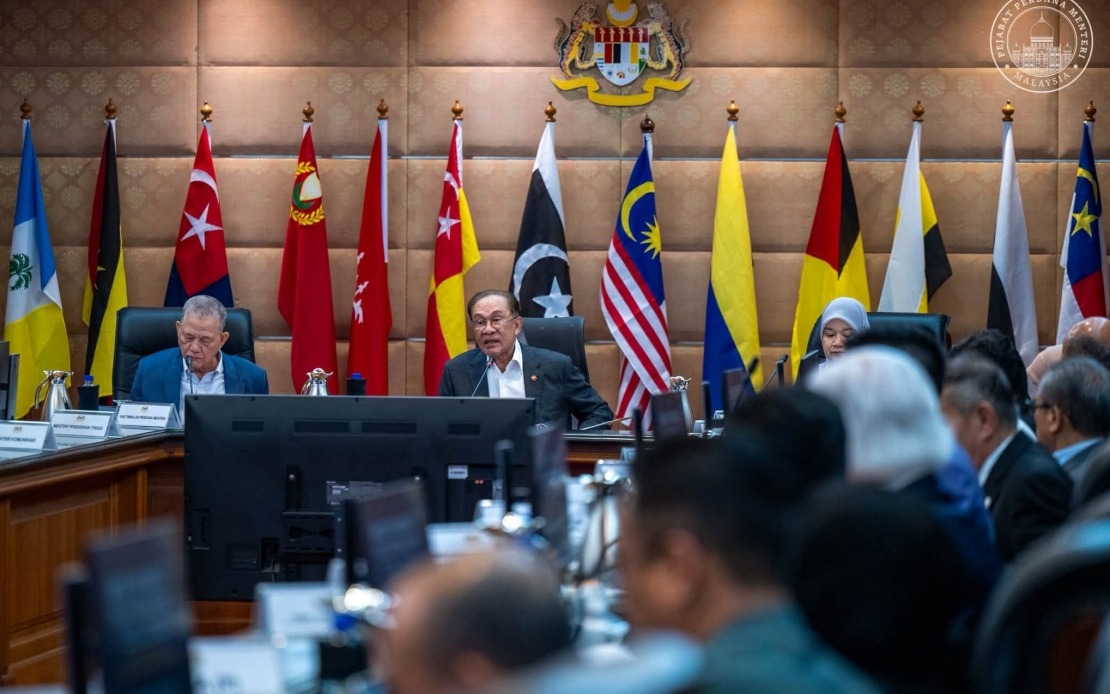
Prime Minister Datuk Seri Anwar Ibrahim has unveiled the formation of the National Education Council, a strategic body tasked with orchestrating far-reaching transformations across Malaysia's education landscape. Following the inaugural meeting of this council in 2026, Anwar outlined an ambitious agenda aimed at ensuring the nation's education system remains responsive to contemporary challenges whilst maintaining the foundational principles of Malaysia MADANI. The establishment reflects growing recognition that Malaysia's competitive position in the region depends on structural overhaul of how knowledge is delivered and developed across both secondary and tertiary institutions.
The council's mandate extends across multiple fronts, with particular emphasis on curriculum enrichment and content modernisation. Rather than wholesale rejection of existing frameworks, the approach centres on targeted improvement that acknowledges the need for continuous evolution. This balancing act between preservation and progression has become increasingly important as nations across Southeast Asia compete for skilled workforces in knowledge-based industries. The council will examine educational practices at district level, ensuring that reforms translate into tangible improvements in classroom performance rather than remaining confined to policy documents in Putrajaya.
A significant component of the council's work involves strengthening English proficiency as a second language without diminishing the role of Bahasa Malaysia as the national language. This dual-language emphasis responds to practical economic realities—international business, scientific research, and technology sectors increasingly operate in English—whilst acknowledging the importance of linguistic and cultural cohesion. The approach mirrors strategies adopted by regional peers like Singapore and South Korea, which have successfully cultivated multilingual populations. For Malaysia, where English standards have reportedly declined in recent decades, this represents a recalibration aimed at equipping graduates with globally competitive communication skills.
Central to the council's vision is the development of Malaysia's science, technology, engineering, and mathematics (STEM) talent pipeline. This focus directly addresses documented skills shortages in sectors critical to Malaysia's economic transformation agenda. By identifying and nurturing STEM capabilities from secondary school onwards, policymakers hope to create a sustainable supply of qualified professionals capable of driving technological innovation and attracting foreign investment in high-value manufacturing and digital industries. The initiative acknowledges that secondary education must better align with labour market demands and employer expectations.
Under Malaysia MADANI—the government's overarching development framework—education reform assumes particular significance as a vehicle for achieving shared prosperity and social cohesion. The council's emphasis on strengthening Bumiputera education objectives reflects commitment to ensuring that economic benefits of improved educational outcomes extend across all communities. This inclusive approach seeks to address historical disparities in educational access and outcomes whilst building national consensus around reform priorities. Ethnic and socioeconomic dimensions of educational equity remain sensitive political terrain in Malaysia, making the explicit incorporation of Bumiputera advancement strategically important.
Anwar's statement emphasised the necessity for objective evaluation of the education system, drawing on diverse expertise and stakeholder perspectives. This consultative methodology suggests the council will operate as a forum bringing together practitioners, administrators, academics, and business leaders rather than imposing top-down directives. Such collaborative governance structures have proven more effective in building buy-in for controversial reforms, particularly in education where teachers, parents, and student populations all retain substantial influence over implementation success. The emphasis on multiple viewpoints also recognises that education reform requires legitimacy beyond bureaucratic endorsement.
A critical undercurrent in Anwar's message involves confronting institutional complacency. The prime minister explicitly warned against allowing satisfaction with existing systems to forestall necessary improvements, positioning reform as both urgent and non-negotiable. This framing establishes political momentum for potentially contentious changes to curriculum, pedagogy, or resource allocation. In the Malaysian context, where education has historically served multiple functions—economic preparation, nation-building, religious and moral formation—any substantial reforms will inevitably generate debate about priorities and trade-offs.
The timing of the council's establishment and its first meeting in 2026 reflects longer-term planning horizons. Rather than pursuing quick fixes, this approach acknowledges that meaningful educational transformation requires sustained commitment across multiple budget cycles and electoral periods. Malaysia's previous education reform attempts have occasionally faltered due to political transitions or resource constraints, so establishing institutional mechanisms designed for continuity and long-term vision addresses historical vulnerabilities.
For Malaysia's business community, the council's emphasis on skills development and curriculum relevance carries significant implications. Employers have consistently reported misalignments between graduate qualifications and actual job requirements, particularly in technical and digital fields. A more responsive education system, shaped partly by council guidance, could reduce recruitment costs and accelerate productivity gains. This pragmatic dimension of education reform—connecting schooling to economic outcomes—represents a shift toward instrumentalism that complements but does not necessarily replace broader developmental goals.
The establishment of this council also signals Malaysia's determination to maintain educational competitiveness within Southeast Asia. Regional neighbours including Vietnam, Thailand, and the Philippines have undertaken substantial education reforms in recent years, and Malaysia faces implicit pressure to avoid falling further behind on metrics like student achievement, tertiary completion rates, and workforce readiness. The council represents institutional recognition that education quality constitutes a strategic national asset in an increasingly competitive regional environment where talent attraction and retention directly influence economic prospects.

