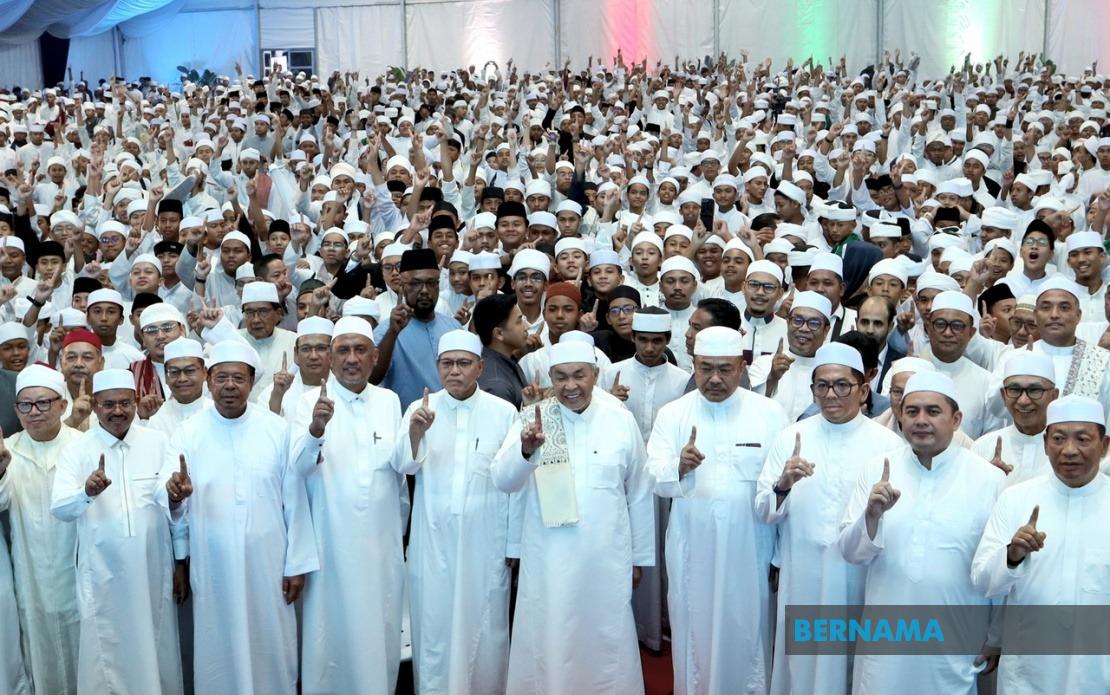
Malaysia's federal government has greenlit the establishment of a National Tahfiz Council, a development intended to overhaul how the country approaches Quranic memorisation education. Deputy Prime Minister Datuk Seri Dr Ahmad Zahid Hamidi announced the Cabinet's approval during the Pahang State Huffaz Gathering 2026 at Yayasan Pahang, where he highlighted the historic significance of creating a unified institutional framework for an educational tradition that has operated largely outside formal government structures.
The council represents a fundamental shift in how authorities view tahfiz—the Islamic practice of memorising the entire Quran—positioning it no longer as peripheral religious activity but as a legitimate educational pathway deserving equal standing within Malaysia's broader schooling ecosystem. Prime Minister Datuk Seri Anwar Ibrahim tasked Ahmad Zahid with chairing the council, placing the initiative under the purview of one of the government's most senior officials and signalling substantial political investment in the agenda. The move comes at a time when Southeast Asian nations are increasingly recognising Islamic education as a legitimate component of state-sponsored learning, even as secular education dominates official frameworks.
A core objective underpinning the National Tahfiz Council's formation centres on standardising educational quality and recognition across disparate institutions. Currently, tahfiz students often complete memorisation within private madrasahs or pesantren with little formal qualification acknowledged by mainstream employers or universities. The council intends to rectify this fragmentation by establishing consistent standards, creating measurable academic benchmarks, and designing transparent pathways through which huffaz—those who have memorised the Quran—can transition into conventional higher education or professional careers. This addresses a longstanding bottleneck where students invested years in tahfiz programmes only to find their credentials carried minimal weight in the job market.
Ahmad Zahid articulated an ambitious vision wherein tahfiz education evolves into a comprehensive knowledge ecosystem rather than a terminal educational endpoint. His stated goal involves enabling huffaz to progress seamlessly from madrasahs into universities, transitioning from purely memorisation-focused curricula into programmes emphasising contemporary skills, professional qualifications, and engagement with modern economies. This reframing suggests recognition that globalised labour markets increasingly demand hybrid competencies combining religious knowledge with practical, marketable abilities. The framework implicitly acknowledges that families selecting tahfiz education for their children need assurance of viable economic futures, not merely spiritual cultivation.
Pahang State has emerged as a demonstrable model for structured tahfiz development within Malaysia. The state's initiatives, inspired by Sultan Al-Sultan Abdullah Ri'ayatuddin Al-Mustafa Billah Shah, include Tadika Tahfiz Negeri Pahang, which introduces Quranic memorisation from early childhood and constructs a progressive educational trajectory extending through secondary schooling and into international academic spaces. This sequential approach—beginning with foundational Quranic exposure during formative years and advancing through increasingly sophisticated intellectual engagement—provides a template potentially replicable across other states. The gathering itself, drawing more than 5,000 huffaz from Pahang, underscored the substantial scale of tahfiz education already embedded within a single state, suggesting latent demand for professionalisation and integration into formal systems.
The government is simultaneously implementing improvements to the National Tahfiz Policy 2.0, an overarching framework designed to modernise the sector. Several flagship initiatives within this policy merit attention for their strategic comprehensiveness. TVET Tahfiz creates vocational pathways combining memorisation with technical skills, addressing the perceived dichotomy between religious and technical education. The Malaysian Tahfiz Certificate 2.0 establishes standardised credentials recognised across institutions, while the Graded Hafazan Certification introduces transparent benchmarking mechanisms. The Huffaz Financing Scheme removes financial barriers preventing talented students from disadvantaged backgrounds from pursuing tahfiz education. Collectively, these measures suggest a government attempting to construct genuine parity between tahfiz education and conventional vocational or academic pathways.
Strategic collaborations with tertiary institutions and skills development bodies represent another dimension of institutionalisation. By embedding tahfiz education within universities and technical colleges, the National Tahfiz Council seeks to overcome traditional institutional separation between religious and secular learning spheres. This integration acknowledges that sustainable educational systems require infrastructure, research capacity, and academic credibility that independent madrasahs frequently lack. Universities bring accreditation mechanisms, degree-granting authority, and professional networks; incorporating tahfiz into their structures legitimises the field within conventional knowledge hierarchies.
The memorandum of understanding exchanged between Yayasan Pahang, the Community Development Department (KEMAS), and Majlis Amanah Rakyat (MARA) during the gathering formalised collaborations intended to expand skills development opportunities for huffaz. This tripartite arrangement demonstrates how government agencies are repositioning tahfiz as a development priority meriting coordination across multiple ministerial portfolios. KEMAS, traditionally focused on community welfare, and MARA, oriented toward indigenous economic empowerment, both bring distinct institutional resources and constituent networks. Their involvement signals that tahfiz development is being integrated into broader narratives around social mobility, economic opportunity, and community transformation rather than treated as a niche religious concern.
For Malaysian policymakers, the National Tahfiz Council initiative reflects pragmatic engagement with demographic realities and evolving social expectations. Hundreds of thousands of Malaysians pursue tahfiz education annually; formalising this sector rather than ignoring it represents rational governance. The effort also positions Malaysia as a leader within Muslim-majority Asia in reconciling religious education with contemporary professional standards—a model potentially influential in Indonesia, Brunei, and beyond. Success would demonstrate that Islamic pedagogical traditions can coexist productively with credential-based economies and secular institutions.
However, sustaining momentum requires coordinated effort across educational ministries, funding bodies, employers, and tahfiz institutions themselves. Bureaucratic implementation frequently lags policy ambition; ensuring that universities genuinely accommodate tahfiz graduates and employers recognise new credentials demands persistent advocacy. Questions also linger regarding curriculum content—whether tahfiz education will broaden beyond memorisation to encompass exegesis, Islamic jurisprudence, and contemporary Islamic thought. The council's success will ultimately hinge on whether it produces graduates who possess both religious knowledge and professional competitiveness, thereby validating tahfiz as investment in human capital rather than spiritual endeavour alone.
The establishment of the National Tahfiz Council marks a watershed moment in Malaysian educational governance, transforming how the state conceptualises and supports Islamic learning traditions. By formalising pathways, standardising credentials, and integrating tahfiz into mainstream institutions, the government is acknowledging an educational reality long invisible in official statistics. Whether this institutional recognition translates into tangible opportunities for huffaz remains to be seen, but the framework now exists for meaningful transformation.

