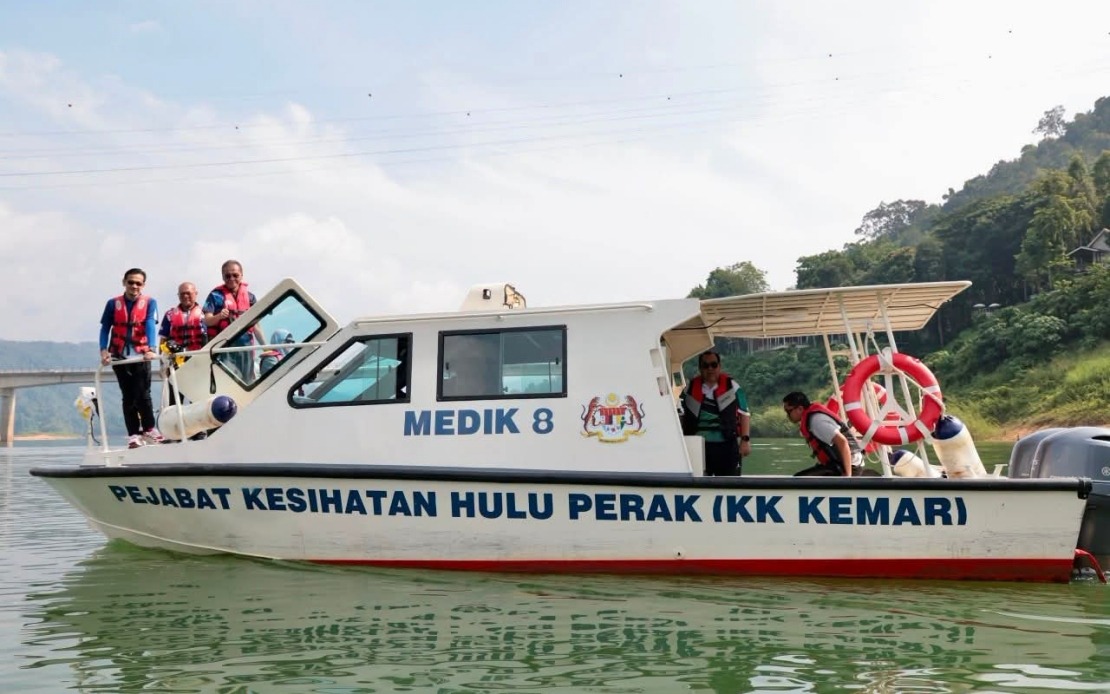
The Ministry of Health has taken a significant step towards bridging the healthcare equity gap in Malaysia's interior regions by commissioning Medic Boat 8, a specialized waterborne medical facility serving the Orang Asli population in Hulu Perak. Launched at the Belum Rainforest Resort jetty in Gerik as part of Health Minister Datuk Seri Dr Dzulkefly Ahmad's official visit to the district, the RM350,000 vessel represents a practical acknowledgment that geographical remoteness should not condemn vulnerable communities to inadequate medical care. The boat's arrival underscores a growing recognition that Malaysia's commitment to equitable healthcare requires infrastructure solutions tailored to unique environmental challenges.
The Kemar Resettlement Scheme in Gerik is home to more than 4,500 Orang Asli residents whose primary connection to the outside world remains the network of rivers cutting through the dense rainforest landscape. For these communities, waterways are not merely scenic features but essential lifelines, functioning as the sole viable transport corridor during seasonal changes and in regions where road infrastructure either does not exist or remains impractical to construct and maintain. The introduction of Medic Boat 8, a 12-passenger multipurpose vessel, directly addresses the transportation barriers that have historically delayed emergency medical interventions, potentially saving lives during critical health situations when every minute counts.
Dr Dzulkefly Ahmad emphasized that technological sophistication alone does not guarantee healthcare delivery success, highlighting instead the human dimension of medical service provision. His comments reflect the reality that possession of advanced equipment means little without the commitment and bravery of frontline healthcare personnel willing to navigate challenging river conditions. The existing fleet of six boats already operating in the region demonstrates that the MOH has been investing in river-based healthcare infrastructure, though the addition of Medic Boat 8 signals recognition that demand has outpaced available capacity. The expansion acknowledges both the size of the Orang Asli population requiring service and the limitations of previous resources.
Healthcare workers operating these vessels, including doctors, nurses, and experienced boat operators, have undertaken considerable personal risk to maintain medical continuity for interior communities. Operating on unpredictable waterways during monsoon seasons, navigating swift currents, and managing medical emergencies in transit requires specialized training and exceptional dedication. The Health Minister's public acknowledgment of these personnel recognizes their contributions and underscores that improving healthcare access in remote regions ultimately depends on attracting and retaining skilled workers willing to embrace operational challenges beyond those faced by urban colleagues.
The Malaysia MADANI framework articulated by Dr Dzulkefly Ahmad places healthcare accessibility at the core of national development philosophy. This positioning reflects a broader shift in Malaysian policy thinking that views healthcare equity not as a charitable endeavor but as a fundamental right demanding systemic solutions. The principle that geographic isolation should not determine healthcare quality represents a departure from historical patterns where interior communities often received minimal public health investment. By explicitly committing that terrain and remoteness will not obstruct quality care delivery, the MOH signals that healthcare equity requires active, sometimes expensive intervention rather than passive acceptance of inequality.
Orang Asli communities have historically experienced significant healthcare disparities stemming from access barriers, cultural-linguistic differences with majority-population health systems, and limited health literacy infrastructure. The Medic Boat 8 initiative, while addressing transportation logistics, represents only one dimension of comprehensive healthcare equity. Effective service delivery also requires culturally competent healthcare providers, community health education initiatives, and integration of traditional health knowledge with modern medical practice. The boat service therefore functions most effectively when combined with broader community health strengthening efforts that build local capacity and trust.
The resettlement scheme context adds complexity to healthcare provision considerations. Orang Asli communities have experienced complex histories of land dispossession, forced relocations, and integration challenges. While resettlement schemes aim to provide structured services and economic opportunities, they simultaneously disrupt traditional lifestyles and knowledge systems. Healthcare provision within resettlement contexts requires sensitivity to these dynamics and recognition that community health needs extend beyond emergency boat transport to encompass preventive care, reproductive health, mental health services addressing displacement trauma, and chronic disease management suited to changing living patterns.
Southeast Asian regional context reveals that inland and indigenous populations across the region face comparable healthcare access challenges. Thailand, Indonesia, and the Philippines all operate specialized healthcare delivery systems serving river communities and interior populations. Malaysia's approach through dedicated marine medical vessels aligns with regional best practices while reflecting country-specific geography and population distribution. Regional health cooperation mechanisms could potentially facilitate knowledge exchange regarding cost-effective riverine healthcare delivery, training protocols for challenging-environment medical personnel, and technology transfer for medical boat operations.
The RM350,000 investment in Medic Boat 8 represents modest allocation by national budget standards, yet carries disproportionate significance for beneficiary communities. This efficiency ratio demonstrates that targeted infrastructure investment in underserved regions can yield substantial healthcare impact without requiring massive budgetary commitments. Broader policy implications suggest that healthcare equity improvements may not necessitate dramatic spending increases but rather strategic deployment of resources addressing specific access barriers. However, sustainability questions remain regarding maintenance costs, fuel expenses, personnel rotation, and eventual vessel replacement, requiring committed long-term funding commitments beyond initial launch enthusiasm.
Operational integration of Medic Boat 8 with existing regional healthcare systems requires coordination among multiple MOH departments and potentially with state and local authorities. Effective scheduling, maintenance infrastructure, personnel deployment, and referral pathways to larger hospitals in urban centers all demand systematic planning. Success metrics should track not merely boat utilization rates but actual health outcomes—emergency response times, mortality rates for acute conditions, maternal and child health indicators, and chronic disease management effectiveness. Establishing baseline health data and implementing rigorous monitoring will demonstrate whether the investment achieves intended benefits and guide future healthcare infrastructure decisions for other remote populations.
The initiative's success will likely influence future MOH decisions regarding healthcare provision in other geographically isolated regions. Malaysia contains numerous Orang Asli settlements in Peninsular Malaysia's interior, plus indigenous populations in Sabah and Sarawak facing distinct access challenges. If Medic Boat 8 demonstrates effectiveness in improving outcomes and community satisfaction, expanded replication could follow. Conversely, implementation challenges could inform modifications ensuring subsequent initiatives prove more effective. The boat service therefore functions as both immediate healthcare solution and pilot program informing broader policy approaches to healthcare equity in Malaysia's diverse geography.

