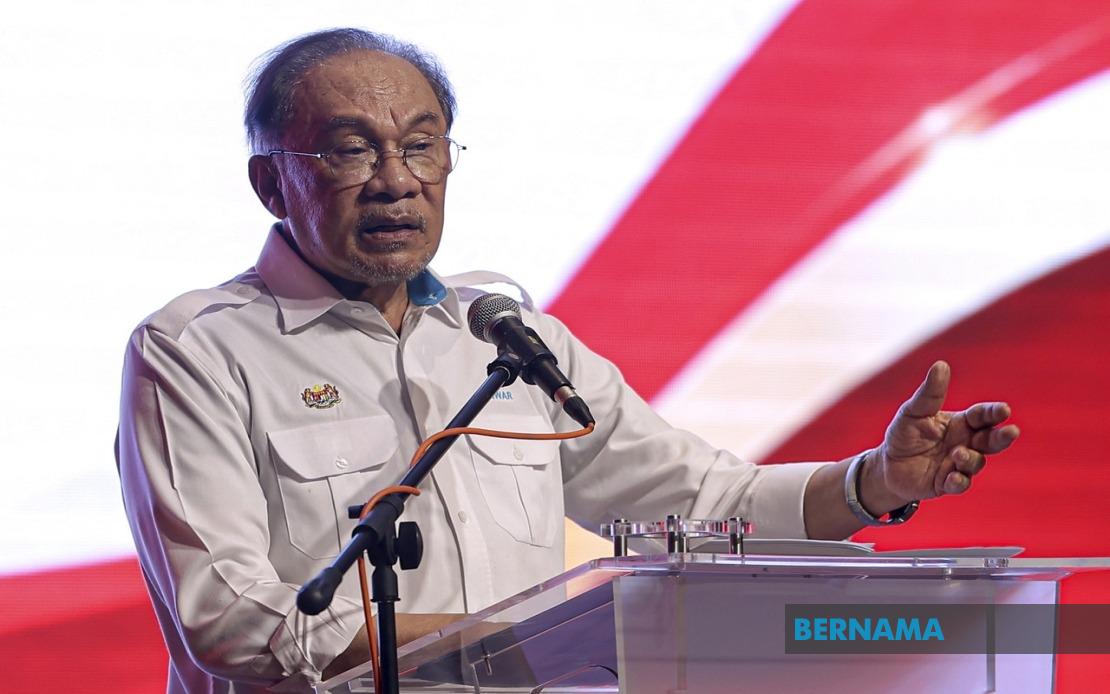
Malaysia is preparing to welcome back Formula One racing to the Sepang International Circuit in October, and the government is now exploring ways to make the prestigious event more accessible to ordinary Malaysians through a novel ticketing scheme. Prime Minister Datuk Seri Anwar Ibrahim announced during a community gathering in Port Dickson that officials are studying the introduction of lower-priced MADANI tickets for the Gulf Air Bahrain Grand Prix, scheduled for October 2-4, as part of the broader Malaysia MADANI framework that prioritises inclusivity and public welfare.
The initiative reflects a fundamental tension in hosting world-class sporting events: the desire to showcase national capability and attract international investment must be balanced against ensuring local communities benefit from and participate in such occasions. Anwar acknowledged this directly, noting that citizens had specifically requested affordable ticket options and that the government was taking those requests seriously. His characteristic frankness about the trade-offs involved—MADANI ticket holders would be seated further from the track rather than in premium positions—suggests a pragmatic approach to democratising access rather than compromising on event quality.
This marks a significant moment for Malaysian motorsport, as the nation reclaims its position on the F1 calendar after a nine-year absence. The Sepang International Circuit hosted the Malaysian Grand Prix continuously from 1999 until 2017, when escalating hosting costs and licensing fees made the arrangement economically unsustainable under the previous framework. The return to F1 thus represents both a symbolic restoration of national prestige and a test of whether Malaysia can manage such events more efficiently while extending their benefits to wider segments of society.
Anwar emphasised that Malaysia's selection as an F1 host venue was not inevitable, stressing that numerous countries compete aggressively for the honour. The nation's reputation as a stable, peaceful country with robust diplomatic relationships and sound economic fundamentals ultimately secured the designation. This framing underscores how international sporting events function as platforms for projecting soft power and affirming a country's standing in global affairs—considerations particularly relevant for Malaysia as it navigates regional geopolitical complexities.
The anticipated economic impact extends well beyond ticket sales and paddock activities. The Prime Minister outlined a multiplier effect across interconnected sectors: hotels anticipating full occupancy during race week, flag carriers Malaysia Airlines and AirAsia expecting surge bookings from international visitors and racing teams, tourism operators preparing for heightened demand, and local businesses positioning themselves to capture spending from the influx of high-value guests. These ripple effects can genuinely transform regional economies, though they require coordinated planning across public and private sectors to materialise effectively.
The Malaysia MADANI concept itself—a governance framework emphasising prosperity, inclusivity, transparency, and people-centricity—provides the philosophical underpinning for this approach. Rather than treating F1 as an elite spectacle reserved for the wealthy, the government is instrumentalising it as a platform for demonstrating that major international engagements can be structured to serve broader societal objectives. This positioning may appeal particularly to Malaysian voters who felt excluded from previous high-profile events or who question whether hosting costs represent justified public investment.
The practical mechanics of implementing tiered ticketing for a Formula One event present genuine operational challenges. FIA regulations, broadcaster requirements, and circuit design limitations all impose constraints on what seating configurations are feasible. The government's deliberation on MADANI tickets suggests these technical obstacles are being examined seriously rather than simply assuming affordability can be instantly layered onto an existing F1 infrastructure. How successfully organisers navigate these constraints will determine whether the scheme becomes a replicable model or a one-off gesture.
For Malaysian spectators, the return of F1 to Sepang carries profound appeal after years of absence. Motorsport enthusiasts have had to travel abroad to experience the sport at its highest level, while younger Malaysians have grown up without the opportunity to witness a world championship race in their home country. The accessibility initiative acknowledges this gap and proposes to remedy it, contingent on logistical and financial feasibility studies yielding positive results.
Regionally, Malaysia's approach to F1 accessibility may set a precedent that other Southeast Asian nations observe carefully. As the region increasingly hosts premier international events, questions about equitable access and inclusive benefit-sharing become more salient. Should the MADANI ticket scheme succeed, it could influence how neighbours think about structuring their own sporting or cultural megaevents, establishing expectations around public participation rather than treating such occasions as exclusive affairs for international elites and corporate sponsors.
The government's explicit engagement with public feedback—responding to citizens' requests for affordable options rather than dismissing them as unrealistic—reflects a broader shift in how Malaysian policymaking incorporates public input on major initiatives. Anwar's public acknowledgment that people had approached him requesting MADANI tickets demonstrates receptivity to grassroots sentiment, even if final implementation depends on technical feasibility and financial viability assessments still underway.
Anticipation surrounding the October race is building, but the MADANI ticket initiative's ultimate success will hinge on translating good intentions into concrete, affordable offerings that genuinely expand access without compromising the event's quality or financial sustainability. If the government delivers tangible options for ordinary Malaysians to experience F1 at reasonable prices, it will validate the Malaysia MADANI framework's inclusive promises in a highly visible arena.

