The Communications Ministry has unveiled an ambitious calendar of festivities for the 2026 National Day and Malaysia Day celebrations (HKHM 2026), signalling the government's intent to elevate patriotic observance through fresh programming and increased community engagement. The formal launch of the 2026 National Month Celebration and Jalur Gemilang Flag-Waving Campaign (MPBKKJG 2026) takes place tomorrow in Ipoh, with Prime Minister Datuk Seri Anwar Ibrahim presiding over the ceremony, marking the official commencement of what officials describe as a comprehensive patriotic initiative.
According to Datuk Aminurrahim Mohamed, Senior Undersecretary at the Communications Ministry and working secretary of the HKHM 2026 Main Committee, the celebrations will feature both renewed and entirely new programmes designed to deepen Malaysian citizens' connection to the nation's independence narrative. Among the returning initiatives is the Qur'an Hour programme, which has become a fixture in recent National Month observances. However, the ministry is keeping many programme details under wraps deliberately, with Aminurrahim describing the strategy as cultivating a "wow factor" that will sustain public anticipation and engagement throughout the celebration period.
Two headline initiatives have been formally announced: Kembara Bahasa HKHM 2026 and RIUH Merdeka, both components of what organisers term a Countdown Programme designed to build momentum toward the main events in August and September. The language-focused Kembara Bahasa component reflects the government's emphasis on cultural and linguistic identity, while RIUH Merdeka—with its emphasis on celebration and gathering—signals an intention to create spaces for communal patriotic expression. The deliberate staging of multiple programmes across the months preceding the actual national holidays represents a shift toward extended celebration cycles rather than concentrated single-day observances.
Among the refined elements being introduced this year is a heightened focus on encouraging ordinary Malaysians to participate in visible patriotic gestures. Aminurrahim has called on citizens to commence flying the Jalur Gemilang from their homes and vehicles immediately, and to incorporate patriotic music into their daily routines. This grassroots mobilisation approach signals recognition that national sentiment is most effectively sustained through widespread individual action rather than top-down ceremonial events alone. The emphasis on prayer for national peace and prosperity also reflects the administration's interest in framing patriotism within a moral and spiritual context.
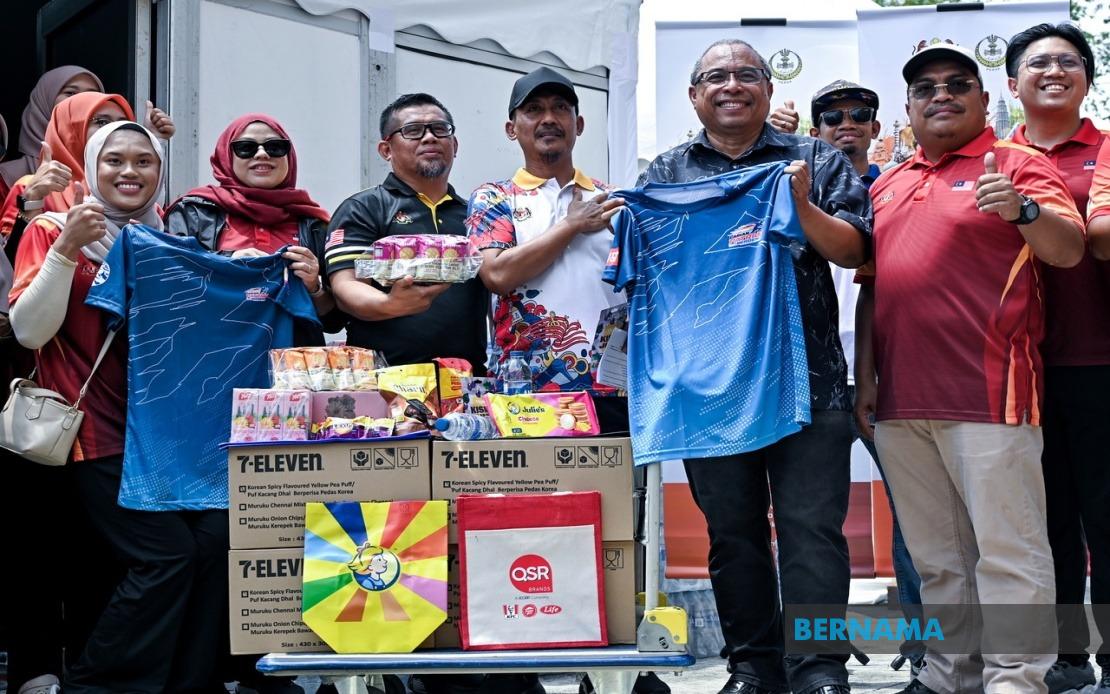
The corporate sector has responded enthusiastically to official appeals for backing, with 15 companies already committed as sponsors for the Ipoh launch alone. The roster includes courier operator J&T, convenience store chain 7-Eleven, specialty coffee brand ZUS Coffee, and QSR Brands, the listed entity behind numerous quick-service restaurant franchises in Malaysia. This diversity of sponsoring entities—spanning logistics, retail, and food services—demonstrates how celebration of national occasions has become embedded in commercial marketing strategies across disparate industries. Aminurrahim indicated that current sponsorship commitments have already matched or potentially exceeded the previous year's support, suggesting robust confidence among corporations in the commercial and reputational value of association with national celebrations.
Tomorrow's MPBKKJG 2026 launch ceremony commencing at 10 am will unfold across multiple formats designed to maximise reach and accessibility. The centrepiece is a patriotic performances programme before approximately 3,000 attendees gathered at Dewan Sri Perdana, the Sultan Azlan Shah Institute for Health Training facility in Tanjung Rambutan. The morning will feature the Patriot Merdeka Run, combining sporting activity with patriotic messaging—a format increasingly popular in Malaysian civic events. The formal unveiling of the HKHM 2026 theme song, to be performed by a prominent Malaysian male artist, will serve as the emotional culmination of the live proceedings.
Broadcasting arrangements underscore the government's intent to transcend geographical limitations in reaching Malaysians across the peninsula and beyond. Radio Televisyen Malaysia (RTM), the national terrestrial broadcaster, will provide traditional television coverage, while the Malaysian National News Agency (Bernama) will distribute content through wire services. Critically, multiple Facebook Live streams via Merdeka360, the Communications Ministry's official page, and the Information Department's channel will enable simultaneous real-time viewing by digitally-connected audiences, reflecting recognition that significant proportions of Malaysian society now consume major events through social media platforms rather than conventional broadcasting.
The decision to hold the Ipoh launch in Perak carries significance beyond mere logistical convenience. Perak, as one of Malaysia's most historically resonant states—with deep associations to the country's independence struggle and the role of sultanate institutions—provides symbolically appropriate venue selection. The choice of Tanjung Rambutan as the specific location, hosting both state government facilities and the Sultan Azlan Shah Institute, reinforces the intertwining of institutional, medical, and patriotic narratives that characterise contemporary Malaysian civic ceremonialism.
For Southeast Asian observers, Malaysia's approach to national celebration preparation illustrates broader regional trends in how post-colonial nations sustain patriotic sentiment across increasingly diverse, digitally-connected, and commercially-integrated societies. The expansion of celebration cycles from concentrated holiday observances to extended countdown periods, the integration of corporate sponsorship as normalised practice, and the simultaneous deployment of traditional and digital broadcast platforms reflect how nation-building rituals have adapted to contemporary conditions. Malaysia's HKHM 2026 framework, with its emphasis on grassroots participation, spiritual and moral framing, and inclusive corporate partnership, represents one iteration of how Southeast Asian democracies attempt to maintain cohesive national identity narratives amid rapid social and technological transformation.

