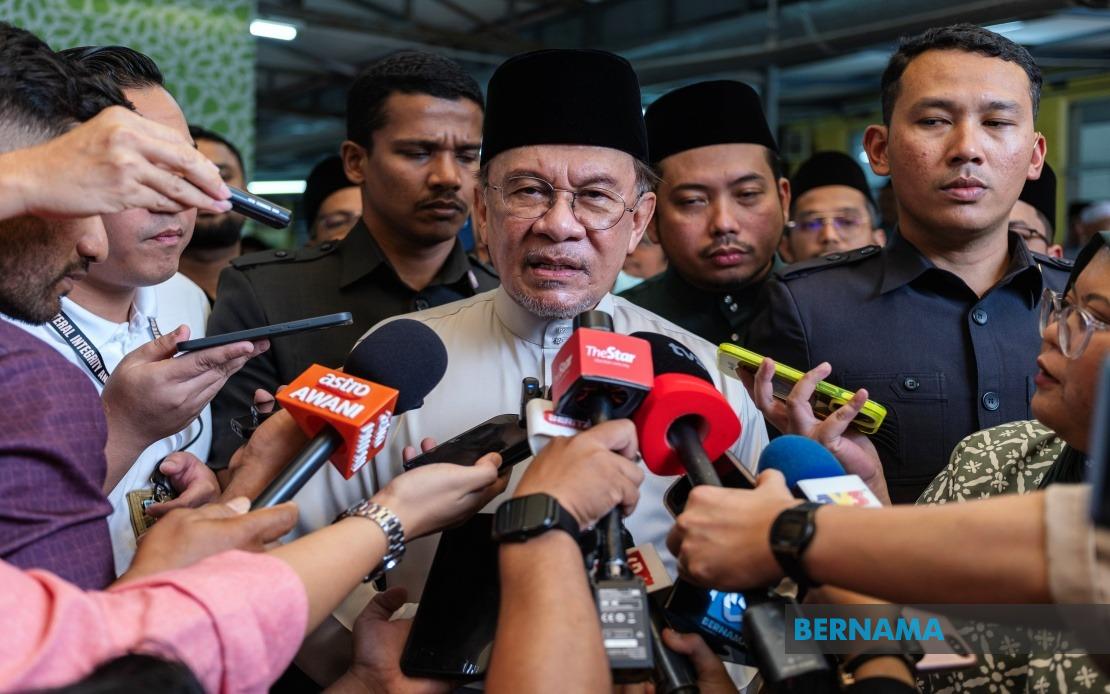
Malaysia will not alter its stance on fugitive businessman Low Taek Jho, popularly known as Jho Low, even as international media reported that he may feature among approximately 250 individuals under consideration for a potential pardon by United States President Donald Trump ahead of America's Independence Day celebrations. Prime Minister Datuk Seri Anwar Ibrahim made this declaration on Friday, emphasising that Malaysia's position remains steadfast regardless of developments emanating from Washington.
Addressing journalists following prayers at Masjid As-Sodiqin in Taman Kobena, Anwar articulated Malaysia's principled approach with clarity. The Prime Minister stated that while Malaysia respects the sovereignty of other nations and recognises that US pardon decisions represent an internal American matter, the country will chart its own course in accordance with established legal frameworks. His remarks underscored a fundamental principle guiding Malaysian governance: allegiance to the rule of law supersedes external pressures or considerations.
The timing of Anwar's comments proved significant, arriving amid heightened speculation about Trump's Independence Day announcements on July 4. The 250th celebration of American independence traditionally serves as an occasion when sitting presidents consider clemency petitions, and media reports had identified Jho Low as one candidate potentially in the running. The fugitive Malaysian businessman has become a polarising figure internationally, entangled in controversies surrounding the 1Malaysia Development Berhad scandal that reverberated across multiple jurisdictions.
Jho Low's status as a fugitive reflects Malaysia's commitment to pursuing accountability through its justice system. The businessman fled Malaysia before facing legal proceedings related to alleged financial impropriety and misappropriation. His continued absence from Malaysian soil has frustrated efforts by authorities to bring him before courts to face charges. Any pardon from the United States would complicate the legal landscape but would not, according to Anwar's statement, deflect Malaysia from its prosecutorial objectives.
The Prime Minister's unequivocal language signalled to both domestic audiences and international observers that Malaysia operates independently in matters of justice and governance. By declaring that Malaysia would remain "not influenced, disturbed or affected by any US decision," Anwar drew a clear boundary between respecting American sovereignty and preserving Malaysian autonomy in pursuing its own legal agenda. This distinction carries particular resonance in Southeast Asia, where smaller nations often navigate complex relationships with powerful external actors.
The broader context reveals ongoing tensions between different jurisdictions pursuing accountability for events connected to the 1Malaysia Development Berhad scandal. The United States has conducted its own investigations and prosecutions related to alleged misconduct involving American financial institutions and assets. Malaysia, meanwhile, has pursued parallel legal action domestically. These parallel tracks occasionally generate friction, as competing claims on jurisdiction and appropriate punishment create diplomatic complications.
Anwar's statements also reflect Malaysia's broader commitment to institutional integrity and legal consistency. A government that wavered based on external pressure would undermine its credibility domestically and internationally. Malaysian citizens expect their Prime Minister to defend the country's judicial independence and to resist suggestions that foreign policy considerations should override legal proceedings. By anchoring his position firmly in the rule of law, Anwar appeals to these expectations while demonstrating principled leadership.
Separately, Anwar announced that Malaysia has received notice of a proposed one million ringgit contribution from the United States designated for restoration work at Tugu Negara, Malaysia's National Monument, in connection with the country's National Day celebrations scheduled for next year. The Prime Minister indicated this matter would receive attention during the Cabinet's forthcoming weekly session, suggesting it warrants formal consideration and potential acceptance by the government.
The National Monument restoration initiative represents a different dimension of Malaysia-US relations, focusing on cultural preservation and development cooperation. This proposal demonstrates that despite disagreements on matters of criminal justice and sovereignty, the two countries maintain channels for constructive collaboration on cultural heritage and national commemorative projects. The distinction between these domains—legal jurisdiction on one hand and development partnerships on the other—illustrates the nuanced nature of contemporary international relations.
Malaysia's handling of the Jho Low question carries implications extending beyond bilateral US-Malaysia relations. Southeast Asian nations increasingly assert agency in managing their own legal and political affairs rather than deferring to external powers. Anwar's clear articulation of Malaysia's position contributes to a broader regional narrative emphasising self-determination and institutional independence. For neighbouring countries facing similar pressures regarding fugitives or contentious individuals, Malaysia's stance provides a template for balancing respect for international partners with protection of national sovereignty.
Looking forward, the extent to which any US pardon affects Malaysia's pursuit of Jho Low remains uncertain. International extradition treaties, bilateral agreements, and practical enforcement capabilities will ultimately determine the tangible consequences of American clemency. Nevertheless, Anwar's declarative commitment signals that Malaysia will not accept external developments as justification for abandoning domestic legal processes. This stance matters both symbolically and practically, reinforcing the principle that Malaysian courts and citizens deserve access to justice through their own institutions.

