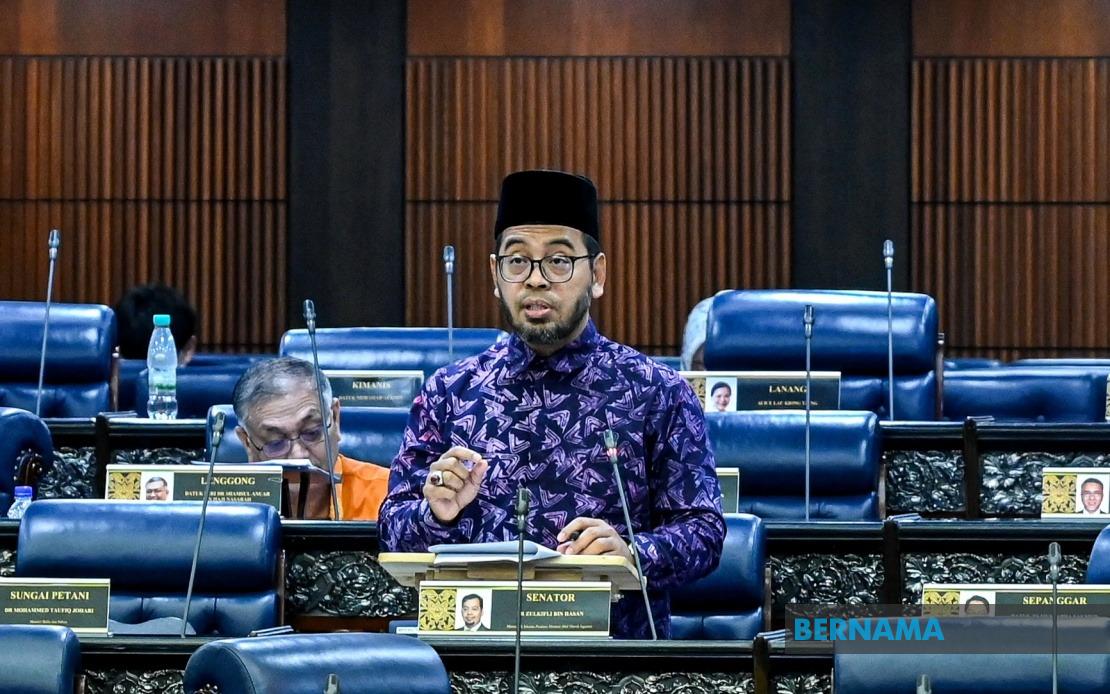
The Malaysian government is mobilising a comprehensive, cross-agency response to counter the rising tide of heterodox Islamic teachings that have migrated from physical gathering places to the internet and encrypted messaging services. Dr Zulkifli Hasan, Minister in the Prime Minister's Department (Religious Affairs), outlined the escalating challenge during parliamentary proceedings, revealing how religious deviancy has become increasingly sophisticated in its methods and presentation, exploiting digital connectivity and the borderless nature of online communication.
The shift from traditional to digital dissemination has fundamentally altered the enforcement challenge facing authorities. Where heterodox groups once operated through clandestine meetings in physical venues, they now leverage digital platforms to reach broader audiences under multiple disguises. These contemporary iterations frequently rebrand themselves as personal development workshops, charitable organisations, wellness providers offering alternative therapies, or informal Islamic study circles. By adopting this veneer of legitimacy, such groups exploit a natural public interest in spiritual growth and religious education, making detection and intervention considerably more difficult for regulators.
The methodological sophistication of these groups extends beyond mere platform migration. Orchestrators employ a carefully calibrated arsenal of persuasion techniques that blend motivational rhetoric with spiritual messaging, psychological manipulation tactics, conspiracy narratives, and the strategic deployment of charismatic personalities or prominent figures as influencers. This multifaceted approach proves particularly effective at attracting individuals seeking community, identity, or answers during periods of personal uncertainty or social disconnection. The fusion of these elements creates a compelling narrative structure that can obscure the underlying theological divergence from mainstream Ahli Sunnah Wal Jamaah interpretations.
Recognising the inadequacy of any single agency's capacity to address this distributed and evolving threat, the Malaysian government has instituted a whole-of-government coordination mechanism. The Department of Islamic Development Malaysia (JAKIM) anchors these efforts alongside state-level Islamic religious authorities, but the response encompasses far broader institutional participation. Law enforcement agencies, including the Royal Malaysia Police, the Malaysian Communications and Multimedia Commission responsible for digital content, the National Security Council, immigration authorities, local government bodies, and the civil registration department all contribute specialised capabilities to this collective endeavour.
This coordinated approach has already generated several high-profile enforcement outcomes. In May, authorities detained 288 followers of Ahmadiyya Qadiani in Sabah following intelligence operations and coordinated action. Subsequently, a raid on a Syiah centre in the Petaling Jaya area of Kuala Lumpur resulted in the apprehension of 226 foreign nationals, suggesting that heterodox Islamic movements in Malaysia maintain transnational networks and attract international membership. These enforcement actions represent tangible manifestations of the government's determination to disrupt organisational operations, though their broader deterrent effectiveness remains to be assessed.
Beyond enforcement and detention, the government has developed a multi-pronged intervention strategy that acknowledges the complex motivations drawing individuals toward deviant teachings. Targeted counselling directed at affected members and leaders seeks to facilitate understanding of theological errors and encourage reintegration into mainstream religious frameworks. More formalised interventions include Syariah court-ordered placement in faith rehabilitation centres, where individuals receive intensive religious education designed to strengthen orthodox understanding and correct misguided interpretations. These rehabilitation programmes operate under supervision of Islamic authorities, ensuring consistency with state-endorsed religious doctrine.
The establishment of the National Steering Committee to Address Threats to Faith represents institutional commitment to preventative measures, with particular emphasis on youth vulnerability. By assembling representatives from the Ministry of Education, Ministry of Higher Education, Ministry of Home Affairs, JAKIM, and other relevant bodies, the committee coordinates programmes that build religious resilience from foundational stages. This early intervention philosophy recognises that young people navigating questions of identity, purpose, and belonging represent particularly susceptible populations to heterodox influence.
The government has expanded several existing and newly designed programmes to operationalise this preventative framework. The Institut Pemantapan dan Perkaderan Akidah Malaysia (IPHAM) offers structured Islamic education focused on doctrinal foundations, while the My Insaniah Programme and Rakan Masjid Programme operate collaboratively with the Ministry of Youth and Sports to embed religious learning within youth-oriented community initiatives. The modernised KAFA 2.0 curriculum, focusing on Quranic studies and fundamental Islamic obligations, has been redesigned to cultivate stronger religious identity and build psychological resilience against heterodox messaging among younger populations.
The digital domain presents particular challenges for regulatory frameworks developed when religious dissidence operated primarily through physical infrastructure. Unlike traditional institutions, online spaces enable rapid message proliferation across geographical boundaries, permit anonymity and pseudonymity that shield operators from identification, facilitate algorithmic amplification based on user engagement patterns, and operate across multiple legal jurisdictions with inconsistent enforcement capacities. For Malaysia, with its multi-religious demographic composition and constitutional commitment to protecting Islam's position whilst respecting minority rights, the regulatory balance remains delicate and constantly tested.
The Malaysian approach reflects broader Southeast Asian concerns about online radicalisation and the instrumentalisation of digital platforms for ideological dissemination. Indonesia, with substantially larger Islamic populations, faces comparable challenges, as do nations like Singapore and Brunei with different demographic profiles but similar governance interests in religious orthodoxy and social cohesion. The transnational character of many heterodox movements necessitates regional intelligence sharing and coordination mechanisms, though frameworks for such cooperation remain underdeveloped throughout the region.
The efficacy of Malaysia's multi-agency strategy will ultimately depend upon sustained coordination, resource allocation, and the government's capacity to adapt enforcement approaches as heterodox groups evolve their digital tactics. Historical experience suggests that purely enforcement-centric responses prove insufficient against movements rooted in ideological conviction rather than mere criminal enterprise. The inclusion of preventative, educational, and rehabilitative elements acknowledges this reality, though measuring success in reducing susceptibility to deviant teachings remains methodologically complex and often relegated to qualitative assessment rather than quantifiable metrics.
For Malaysian citizens, particularly parents and educators concerned about younger people's exposure to online religious content, these coordination efforts signal government attention to a genuine vulnerability within Malaysia's digital information ecosystem. However, the balance between security-oriented monitoring and individual privacy rights continues to generate tension, particularly given the sensitive intersection of religious authority, law enforcement power, and digital surveillance capabilities in the Malaysian context.

