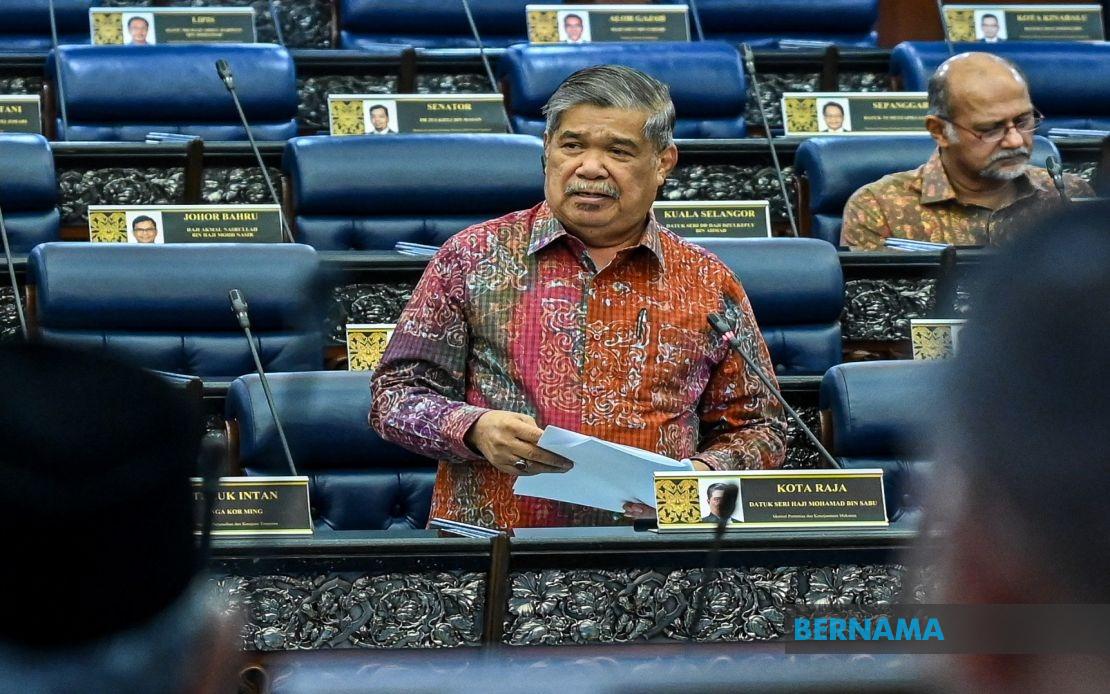
Malaysia's government is deploying a comprehensive strategy to shield the agro-food sector from the intensifying El Niño phenomenon, combining infrastructure upgrades, technological innovation, and direct financial support for vulnerable farming communities. Minister of Agriculture and Food Security Datuk Seri Mohamad Sabu outlined the multi-layered approach during parliamentary questioning on July 16, signalling that policymakers recognise the escalating threat posed by extended dry spells to domestic rice production and broader food security objectives.
The administration is prioritising intelligent water resource management as the cornerstone of its drought-resilience plan. This encompasses real-time surveillance of water reserves held in major dams and surrounding catchment zones, alongside integrated systems designed to optimise the allocation and utilisation of finite water stocks. The deployment of smart irrigation monitoring platforms represents a significant technological leap forward, enabling farmers to track soil moisture conditions and adjust water application with precision, thereby curtailing wasteful runoff and evaporation. Complementing these digital tools, drip irrigation infrastructure is being expanded to concentrate water delivery directly at plant root zones, a method proven to reduce consumption while maintaining or enhancing yields across diverse cropping systems.
Crucial to sustaining paddy production under climatic stress is the acceleration of crop improvement initiatives. The Malaysian Agricultural Research and Development Institute (MARDI) has intensified breeding programmes aimed at developing new rice varieties with enhanced drought tolerance, allowing farmers to maintain reasonable harvests even when rainfall patterns deviate markedly from historical norms. These research endeavours received explicit backing during a Food Security Meeting chaired by the Prime Minister, underscoring the highest political commitment to transforming agricultural resilience through scientific advancement. Alongside conventional breeding, the government continues to engage in cloud seeding operations whenever meteorological conditions prove favourable, providing an additional tool to encourage precipitation during critical growth phases.
The financial safety net erected for rice cultivators reflects government recognition that technology and innovation alone cannot insulate farmers from immediate hardship when drought strikes. Since 2024, assistance schemes have channelled RM45.24 million to 8,224 rice farmers in the initial rollout phase. More substantially, by June 30 this year, cumulative disbursements reached RM38.53 million distributed across 55,058 affected farmers, covering approximately 16,933 hectares of drought-impacted land concentrated in the northern and eastern Peninsula regions where paddy cultivation traditionally dominates the agricultural landscape. These figures underscore the scope of climate-related agricultural distress and the government's determination to provide tangible relief.
Regional rice stocks form another pillar of the food security architecture. The government maintains strategic reserves sufficient to sustain domestic consumption for approximately six months, with continuous replenishment through imports as consumption and market conditions dictate. This buffering approach prevents sudden price spikes or supply disruptions that would ripple through the economy and squeeze household purchasing power, particularly among lower-income segments dependent on affordable staple foods. The maintenance of adequate stockpiles also provides time for domestic production recovery when weather conditions improve, avoiding overreliance on volatile international markets.
Expanding productive capacity through cultivation of underutilised land represents a longer-term dimension of the strategy. The government is championing large-scale paddy development initiatives in Sarawak, Pahang, and other states possessing suitable agro-climatic conditions and available agricultural land. These expansion zones would incrementally reduce import dependency and strengthen self-sufficiency metrics across the region. Complementing traditional field agriculture, controlled environment farming systems—encompassing greenhouses, vertical farming installations, and precision-managed structures—are being promoted to dramatically reduce weather volatility's impact on crop and livestock output. Such innovations prove particularly valuable in densely populated regions near urban centres where land scarcity and labour availability favour capital-intensive, high-yield production methods.
The government's parallel focus on horticultural export markets, particularly durian sales to China, reveals an integrated perspective on agricultural resilience that extends beyond domestic staple security. Recent price collapses triggered by oversupply highlight the vulnerability of specialty crop farmers to market saturation, demonstrating that food security encompasses not merely calories and nutrition but also farmer livelihoods and rural income stability. Mohamad acknowledged that Malaysian durians currently penetrate primarily major Chinese metropolitan areas, with vast untapped demand in smaller municipalities and provincial towns. Governmental negotiations aimed at streamlining logistics infrastructure and accelerating customs processing could unlock significant export volume growth, stabilising domestic prices while broadening income opportunities for horticulture producers.
The multi-pronged approach reflects sophisticated understanding that El Niño's agricultural impacts cannot be countered through single interventions. Water scarcity, crop failures, income collapse among farming households, and potential food price inflation represent interconnected challenges requiring simultaneous action across technological, financial, and market dimensions. For Malaysian policymakers confronting both regional climate volatility and population demands for affordable, secure food supplies, the current strategy balances immediate farmer support with medium-term capacity building and long-term structural transformation.
Southeast Asian observers should note that Malaysia's experience navigating El Niño impacts carries broader relevance for the region. Agricultural sectors across ASEAN face comparable climate pressures, resource constraints, and development imperatives. The integration of scientific crop breeding, precision irrigation technology, strategic stockpiling, and direct farmer assistance offers a potential template for neighbouring nations crafting their own climate adaptation frameworks. As climate models project increasingly frequent and severe El Niño episodes throughout the coming decades, governments must simultaneously build adaptive capacity in farming communities, modernise water infrastructure, and develop market mechanisms that reward sustainable practices while ensuring farmer profitability and food system stability.

