The Prime Minister's Department (Religious Affairs) has unveiled an ambitious new programme designed to democratise access to the intellectual work of prominent Islamic scholars and thought leaders. The Maal Hijrah Lecture Series represents a strategic shift in how Malaysia's government intends to engage the public with contemporary Islamic scholarship, ensuring that sophisticated theological and philosophical ideas permeate beyond university halls and specialist circles into the daily consciousness of ordinary Malaysians.
Dr Zulkifli Hasan, Minister in the Prime Minister's Department (Religious Affairs), articulated the core motivation behind this initiative during the official launch of the Maal Hijrah 1448H/2026 Lecture Series in Putrajaya. He emphasised that allowing the contributions of nationally and internationally recognised Islamic figures to remain confined to elite academic discourse represents a missed opportunity for societal enrichment. By mainstreaming the intellectual output of these scholars, the government seeks to foster a more informed and engaged populace capable of engaging with complex religious and ethical questions that affect contemporary Muslim communities.
The initiative reflects a calculated recognition that Islamic thought need not remain the preserve of university departments, research institutes, or closed study circles. Instead, the government envisions these ideas permeating through multiple layers of Malaysian society, reaching Muslims and non-Muslims alike. This inclusive approach signals a confidence that the insights of leading Islamic figures possess universal relevance and philosophical depth that transcends sectarian boundaries, offering perspectives that can enrich public discourse on matters of ethics, governance, social justice, and human dignity.
The institutional backing for this programme demonstrates considerable coordination among Malaysia's key stakeholders. Universiti Sains Islam Malaysia (USIM) and International Islamic University Malaysia (IIUM) have already pledged their support, signalling that the nation's premier Islamic educational institutions recognise the value of this expanded outreach mission. This collegiate approach suggests that the lecture series will benefit from the academic rigour and intellectual resources these universities command, ensuring that public engagement with Islamic scholarship maintains scholarly integrity while achieving accessibility.
Plans are already underway to expand the initiative beyond these founding partnerships. The government intends to involve additional universities and institutions across Malaysia, creating a nationwide network of venues and platforms through which these lectures can be delivered. Such expansion would represent a significant investment in intellectual infrastructure, effectively creating multiple touch points where citizens from diverse backgrounds and educational levels can encounter and engage with contemporary Islamic thought. This decentralised model offers advantages in terms of accessibility for provincial Malaysians who might otherwise have limited exposure to world-class Islamic scholarship.
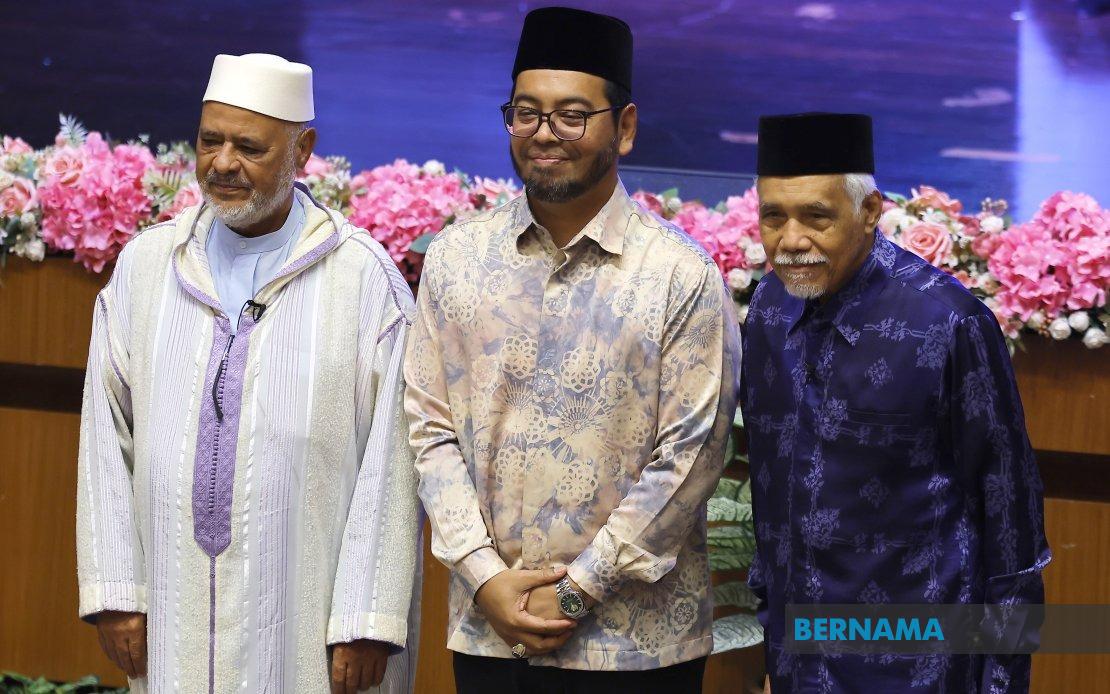
The recognition awarded to this year's honourees underscores the calibre of thinkers the programme aims to feature. Emeritus Professor Osman Bakar, rector of IIUM, received the national Maal Hijrah figure award, while Prof Sheikh Dr Ahmad Al-Raysuni, a distinguished Islamic jurisprudence expert from Morocco, received the international designation. These selections reflect deliberate choices to honour scholars whose work spans both regional and global significance. The dual recognition—one national, one international—suggests the government's desire to position Malaysian Islamic scholarship within a broader Muslim intellectual landscape while celebrating local contributions.
The awards ceremony, held at Masjid Putra during the national-level Maal Hijrah 1448H/2026 celebration, added ceremonial weight to these recognitions. Sultan Nazrin Shah of Perak presented not merely symbolic honours but substantive recognition through cash prizes, trophies, and certificates of appreciation. Such tangible rewards signal the government's commitment to incentivising excellence in Islamic scholarship and establishing visible prestige associated with these academic achievements. For Malaysian audiences, the involvement of royal patronage lends cultural and constitutional significance to the lecture series, framing intellectual engagement as a matter worthy of high-level state attention.
The ambition to reach non-Muslim audiences represents a particularly noteworthy dimension of this initiative. Dr Zulkifli's expressed hope that Maal Hijrah figures' contributions will be appreciated by both Muslims and non-Muslims reflects a sophisticated understanding of Malaysia's plural society. Rather than confining Islamic intellectual discourse to intra-Muslim conversations, the programme implicitly acknowledges that the ethical frameworks, historical analyses, and philosophical insights offered by leading Islamic scholars possess relevance for citizens of all faiths. This universalist approach aligns with Malaysia's constitutional and political identity as a multicultural democracy where interfaith understanding strengthens social cohesion.
From a Southeast Asian perspective, this Malaysian initiative carries broader significance. As the region navigates complex questions about Islamic governance, the relationship between tradition and modernity, and the role of religious thought in public life, the availability of sophisticated Islamic scholarship to general audiences becomes increasingly important. By creating accessible platforms for engagement with internationally recognised Islamic thinkers like Ahmad Al-Raysuni, Malaysia positions itself as a centre for Islamic intellectual discourse within the region, potentially influencing scholarly conversations across Southeast Asia and contributing to a more nuanced public understanding of contemporary Islam.
The practical implementation of this lecture series will ultimately determine its impact. Success requires not merely occasional high-profile events but sustained, systematic engagement that builds momentum over time. The involvement of multiple universities, the promise of expansion to additional institutions, and the demonstrated support of government, religious authorities, and academic leadership suggest the necessary institutional commitments exist. However, the ultimate measure will be the extent to which insights from Maal Hijrah figures genuinely influence how Malaysians across all communities approach ethical questions, understand Islamic history and jurisprudence, and engage with the intellectual heritage of their nation's Muslim communities.

