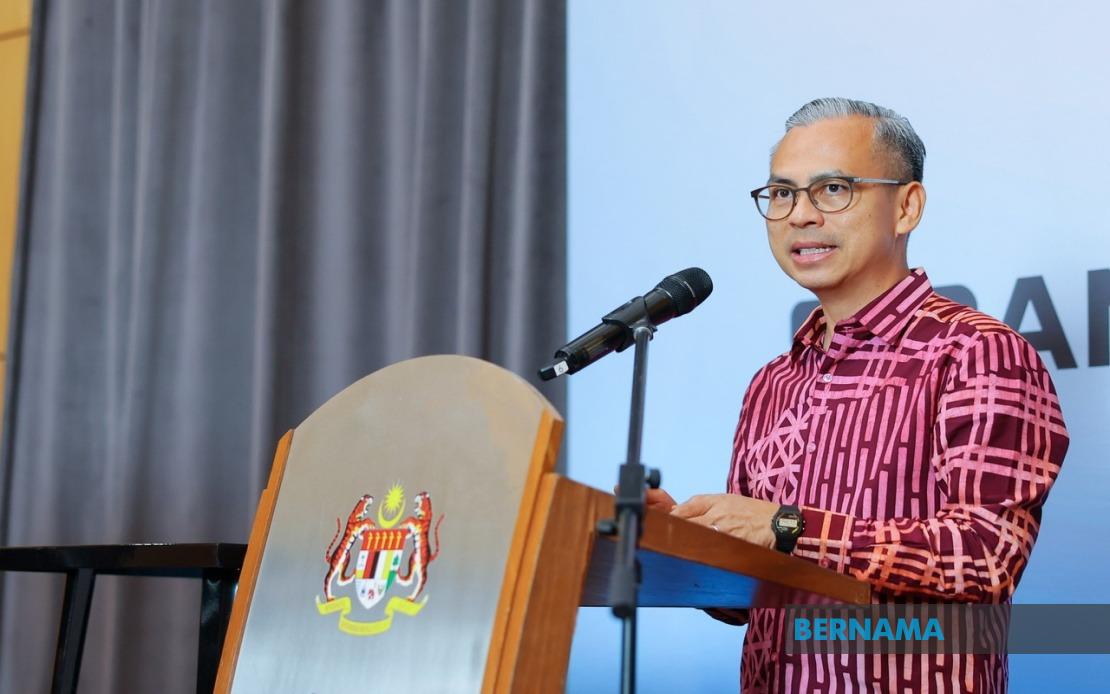
The Malaysian government has taken direct action against the growing menace of online scams by establishing a special cross-agency working committee tasked with coordinating a comprehensive response to digital fraud. Communications Minister Datuk Fahmi Fadzil announced the formation of this committee on July 2, disclosing that the initiative was formally established on June 18 following deliberations at a Cabinet retreat that highlighted the alarming trajectory of scam-related offences across the country.
The announcement represents a significant policy shift toward treating online fraud as a whole-of-government challenge rather than a problem confined to law enforcement alone. Fahmi, who serves as spokesperson for the MADANI Government, characterised the initiative as marking a watershed moment for Malaysia's digital safety strategy. For the first time, the committee will operate as a genuinely integrated platform encompassing various government ministries, federal agencies and statutory departments alongside representatives from the private financial and telecommunications sectors.
What distinguishes this committee from previous anti-crime efforts is the inclusion of major digital platforms and social media companies—entities that have traditionally operated at arm's length from government coordination. By bringing these stakeholders into direct partnership with authorities, the government is acknowledging that online scams operate across multiple technological and commercial domains simultaneously, and that no single agency possesses the comprehensive visibility required to address the problem unilaterally. This represents recognition of the transnational and technically sophisticated nature of modern digital fraud.
The underlying strategic objective is to create an enforcement ecosystem capable of detecting, investigating and prosecuting scam operations with greater speed and precision. The committee will coordinate efforts across three critical dimensions: strengthening law enforcement capabilities through intelligence-sharing and joint operations; modernising and adapting legal frameworks to address evolving fraud methodologies; and improving investigative techniques that can keep pace with scammers' technological sophistication. Collectively, these interventions aim to substantially reduce the vulnerability of Malaysian digital users to fraud schemes.
Fahmi emphasised that the government anticipates tangible outcomes within the near term, though he deliberately withheld specifics regarding the committee's operational strategies. This discretion reflects a pragmatic acknowledgement that publicising anti-scam tactics could allow criminals to adapt their methods in response. The minister compared this approach to previous successful multi-agency initiatives tackling child sexual exploitation crimes, where coordinated action across diverse government and private entities had yielded demonstrable results through sustained special operations.
The escalation of online scams in Malaysia reflects broader Southeast Asian trends. The sophistication of modern fraud operations—ranging from romance scams and investment frauds to business email compromise and fake banking platforms—has outpaced traditional reactive policing. Many victims lack awareness of scam indicators or fall prey to psychological manipulation tactics deliberately designed to circumvent rational decision-making. The financial losses attributable to online fraud schemes across Malaysia have climbed substantially, affecting households across income brackets and creating secondary effects on consumer confidence in digital financial services.
The involvement of the banking and telecommunications sectors carries particular importance. Financial institutions possess transaction monitoring capabilities and customer due diligence expertise that can identify suspicious fund flows associated with scam proceeds, while telecommunications companies control the infrastructure through which scammers operate. By requiring these industries to participate in coordinated information-sharing and vulnerability identification, the government can leverage their technical capabilities and market position to create friction in the scam ecosystem. Social media and major digital platforms similarly control critical infrastructure that scammers exploit for victim recruitment, communication and credential fraud.
However, success of such inter-agency committees historically depends on sustained resource allocation, clear delineation of responsibilities, and mechanisms to drive accountability across entities with divergent operational cultures and priorities. Government agencies operate under hierarchical command structures and statutory obligations, while private sector organisations respond to competitive pressures and shareholder interests. Creating genuinely collaborative frameworks rather than merely symbolic coordination remains a perennial challenge in multi-stakeholder initiatives.
The timing of this announcement reflects political responsiveness to constituent concerns. Online scams have transitioned from a niche cybercrime problem to a mainstream social issue affecting ordinary Malaysians, with victims spanning retirees, small business owners and young professionals. Media coverage of individual scam cases—particularly those involving substantial financial losses—has generated public pressure for government action. By establishing this committee, the administration demonstrates commitment to addressing a tangible security threat that resonates with voters.
For Malaysian digital users and businesses, the committee's establishment signals that authorities recognise the urgency of the problem and are mobilising institutional responses. However, individual vigilance remains essential; no government committee can eliminate scam victimisation entirely, as human vulnerability to manipulation persists regardless of technical safeguards. Consumer awareness campaigns, financial literacy initiatives and ready access to reporting mechanisms remain complementary necessities.
The committee's effectiveness will ultimately be measured by whether scam prevalence declines, investigative case closure rates improve, and prosecution success increases. This will require sustained political will, adequate funding for specialised training and technology, and genuine cooperation from private sector participants who may view security measures as costly operational impositions. The committee's inaugural meeting, when convened, will signal whether the government intends this as substantive institutional reform or primarily a public relations gesture.

